
24/7 全天候客户支持

免费退货

当日/次日达

品质保障

开启新人专享福利: 全场免邮 | 低至 2 折 | 免费试用 30 天 JoyPlus 会员
下载 Joybuy
An insulated food jar can make packed lunches more practical for commuters, office workers, students and families. However, attractive claims do not always reveal whether a container will suit your daily routine. A jar that looks spacious online may be difficult to clean, while a lid described as leakproof may only prevent spills when correctly closed or used in a particular position.
Before buying, focus on the construction, capacity and care instructions rather than colour or promotional wording. The following guide explains the main buying traps and compares suitable options for meals, hydration and travel.
Vacuum insulation helps slow temperature change, but results depend on the starting temperature, fill level, opening frequency and surrounding conditions. A product may advertise a long holding time, yet opening the lid repeatedly during a commute will reduce retention.
For hot food, pre-heating the jar with hot water for a few minutes can help. For chilled food or drinks, pre-chilling with cold water may be useful. Always check whether the listed duration applies to hot contents, cold contents or both.
A leakproof soup thermos needs more than a tight-looking lid. The seal, threads and drinking or venting mechanism all matter. Some containers are leakproof only when a straw is removed or when the lid is fully secured. Others advise users not to invert the jar.
Before carrying one in a backpack, check the care guide and test the seal with water at home. Keeping the container upright is still a sensible precaution, particularly when transporting hot liquids.
A narrow opening can make a container awkward to fill, scrape clean or inspect. Food residue left around a seal may cause unpleasant odours over time. A wide-mouth food jar is usually more convenient for soups, pasta, rice dishes and direct eating.
Capacity also affects portability. A 1.5-litre jar may suit family-sized portions or several servings, but it can be heavy when full. A smaller jar may be more practical for a single lunch or a child’s meal.
Double-wall vacuum insulation creates a space that limits heat transfer. Look for clear information about whether the product is designed for hot food, cold food, drinks or a combination of uses.
A stainless steel food thermos is generally chosen for its durable metal body and resistance to odour and flavour transfer. Some products use 304 stainless steel, while others specify 316 stainless steel. Both are commonly used in food-contact applications, but the steel grade alone does not determine the quality of the lid, seal or insulation.
Check warnings carefully. Some drink tumblers are intended for cold beverages only, and carbonated drinks may create pressure inside a sealed container.
Match the capacity to the portion you normally carry:
A vacuum insulated lunch jar should fit your work bag, locker or lunch bag without placing strain on the zip or seams. Check the product dimensions, not only the fluid capacity.
Look for a removable seal, a straightforward closure and cleaning instructions that suit your routine. Dishwasher compatibility varies by component. For example, one product may allow the lid in the dishwasher but require the stainless steel cup and straw to be washed by hand.
For hot contents, allow food to cool sufficiently before eating directly from the jar. Do not microwave a stainless steel container. Food-contact products sold in the UK should be used according to their instructions and maintained in clean condition.
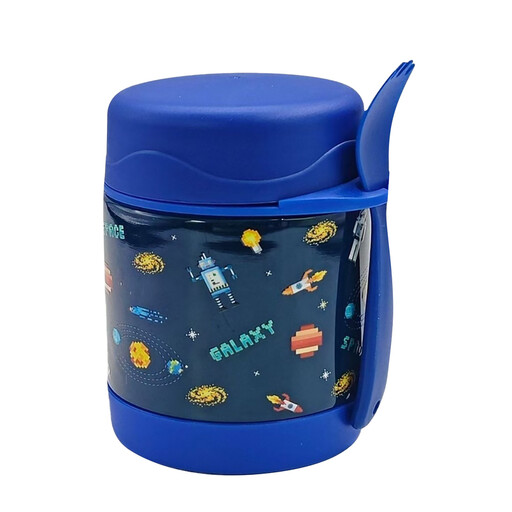
Why This Fits Their Persona: The compact 10 oz format is suited to smaller portions, school bags and parents looking for a straightforward thermal food container.
Its smaller capacity helps avoid paying for a bulky jar that is unsuitable for a child-sized or light lunch portion. Check the full listing for closure and care details before use.
Compact 10 oz size and a thermal food-jar format designed for portable meals.

Why This Fits Their Persona: The 1.5-litre capacity and included lunch bag suit office lunches, family portions and users who want a complete carrying setup.
The wide mouth addresses difficult filling and cleaning, while the separate bag provides a more organised way to transport the jar. The listed thermal retention is 4–6 hours.
316 stainless steel, wide-mouth access, leakproof lid and an included insulated lunch bag.
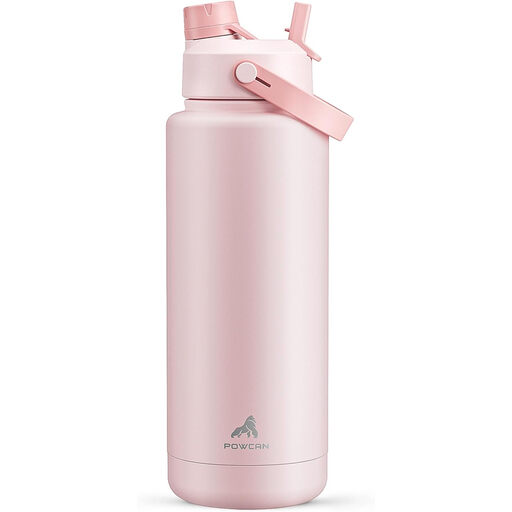
Why This Fits Their Persona: Its large capacity suits gym users, travellers and outdoor enthusiasts who prioritise hydration over compact storage.
The listing clearly notes that the 40 oz bottle does not fit standard car cup holders, helping buyers avoid a common size-related disappointment.
40 oz capacity, 2-in-1 straw and chug lid, 18/8 stainless steel and stated cold retention of up to 24 hours.
We have compiled a complete, real-time list of products that fully satisfy these strict selection criteria and UK safety regulations.
Yes, provided the manufacturer states that it is suitable for hot food or liquids. Choose a wide-mouth design with a secure seal, and fill it according to the instructions. Do not rely solely on the word “thermos”; verify the product warnings and closure guidance.
The duration varies by design and use. The Maxcook food jars listed here specify 4–6 hours of thermal retention, while other products may quote different figures. Pre-heating the jar, filling it promptly and keeping the lid closed can support more consistent results, but no container keeps food at one temperature indefinitely.
Stainless steel is widely selected for reusable food and drink containers because it is durable and does not generally retain flavours as readily as some plastics. The condition of the lid, seal and internal surfaces still matters. Follow the supplied cleaning instructions, and replace a component if it becomes damaged or no longer seals securely.