
24/7 全天候客户支持

免费退货

当日/次日达

品质保障

开启新人专享福利: 全场免邮 | 低至 2 折 | 免费试用 30 天 JoyPlus 会员
下载 Joybuy
Tired of uninspiring sandwiches and expensive takeaway lunches? Bringing a warm, home-cooked meal to work, school or on your travels is a simple way to eat better and save money. The key to a satisfying hot lunch on the go is a reliable insulated food jar for hot food.
However, with so many options available, choosing the right one can feel overwhelming. This guide is designed to cut through the clutter, helping you understand the essential features to look for. As the Joybuy Product Recommendation Officer, my role is to provide practical advice so you can find a product that genuinely meets your needs.
Before we look at specific products, let's cover a few key considerations that will help you make an informed choice.
Most high-quality thermal containers are made from stainless steel, but not all steel is created equal. You will typically see two main grades:
Practicality is paramount for a container you'll use daily. A wide mouth food flask makes a world of difference for three reasons: it's easier to fill without mess, you can eat directly from it with standard cutlery and it simplifies cleaning.
Equally important is a secure, leakproof food jar design. Look for lids with a silicone gasket or seal that creates a tight closure. This is non-negotiable if you plan to carry a soup thermos or saucy meals in your bag.
Consider what a typical lunch portion looks like for you. A large food flask of around 1.4L or 1.5L is ideal for a substantial meal, a large serving of soup or even enough to share. However, remember that a larger capacity also means more weight and bulk. If your commute involves a long walk or crowded public transport, you might want to balance capacity with portability. Some models also come with dedicated carry bags, which can be a convenient feature.
Based on features that offer practicality and reliability, here are our recommendations for your consideration.

Why It Stands Out: This model stands out for its use of 316 stainless steel, providing enhanced corrosion resistance. It also comes as a complete set with its own insulated lunch bag, adding a layer of convenience and further thermal protection.
Pros:
Who is it for? This is an excellent choice for individuals who want a complete, ready-to-go solution and frequently pack diverse meals like curries or tomato-based dishes.
View Details for the Maxcook 1.5L 316 Steel Jar
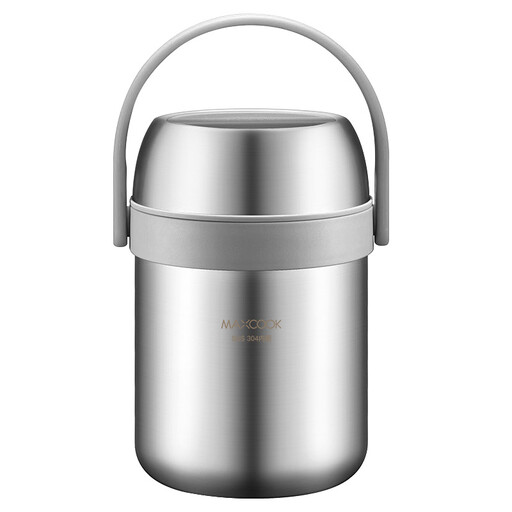
Why It Stands Out: This is a dependable and robust thermal lunch box that focuses on the essentials. Its durable 304 stainless steel build and large capacity make it a workhorse for daily hot lunches.
Pros:
Who is it for? Ideal for anyone needing a large, straightforward and sturdy food thermos for hot food for everyday meals like pasta, rice dishes or stews.
View Details for the Maxcook 1.5L 304 Steel Jar

Why It Stands Out: Offering a slightly more compact profile, this 1.4L jar provides a great balance between capacity and portability. It retains the key features of a reliable food flask in a marginally smaller and lighter package.
Pros:
Who is it for? A great option for daily commuters or students who want a substantial hot meal but are mindful of the weight and size of their lunch container.
View Details for the Maxcook 1.4L 304 Steel Jar
Now that you have a reliable container, you need something delicious to fill it with. A warm, hearty soup is a perfect companion for a cold day. If you're looking for convenient and wholesome options, why not explore a new recipe?
Explore our selection of organic soups
To maximise thermal performance, always pre-heat your food jar. Simply fill it with boiling water, secure the lid and let it stand for 5–10 minutes. Pour the water out just before you add your piping hot food. This simple step warms the stainless steel interior and helps your meal stay hotter for much longer.
It is generally not recommended to put a vacuum insulated food jar in the dishwasher. The high heat and harsh detergents can damage the vacuum seal, compromising its insulating properties. The best practice is to hand wash the jar with warm, soapy water. Always check the manufacturer's specific care instructions.
The terms are often used interchangeably. Historically, a soup thermos might have had a narrower opening and a cup-style lid. However, modern designs favour a wide mouth food flask as it is more versatile for both liquids (like soup) and solid foods (like chilli or pasta). The most important features to look for, regardless of the name, are effective thermal retention and a leak-proof seal.