
24/7 Customer Support

Free returns

Same-day & Next-day Delivery

Quality Guaranteed

Unlock Your Welcome Offers: FREE Delivery | Up to 80% OFF | Free 30-day JoyPlus trial
Download the APP
An insulated stainless steel water bottle can make commuting, exercise and everyday hydration more convenient, but product pages often make similar promises. The differences are usually found in the details: lid construction, bottle dimensions, cleaning instructions and the amount of liquid you genuinely need to carry.
Before choosing a reusable water bottle, watch for these common buying pitfalls.
A bottle may be described as leakproof, yet its performance still depends on the lid being fully closed and correctly assembled. Straw lids, flip spouts and removable mouthpieces also create more seals to clean and inspect.
For a leakproof water bottle, check whether the product instructions require the lid to be securely closed, whether the straw must be removed for full sealing and whether replacement seals are available. Avoid carrying hot drinks in a straw bottle unless the manufacturer clearly permits it.
A large capacity water bottle reduces refilling, but a 40 oz bottle can be heavier when full and may not fit a standard car cup holder. Conversely, an 18 oz bottle is easier to carry but may require refilling during a long hike, gym session or school day.
Capacity should be matched with your routine rather than selected by appearance alone. For reference, 18 oz is approximately 532 ml, 24 oz is approximately 710 ml, 26 oz is approximately 769 ml, and 40 oz is approximately 1,183 ml.
Double-wall vacuum insulation can help reduce heat transfer, but actual results vary with starting temperature, fill level, opening frequency and the surrounding environment. Product listings may state that a bottle keeps drinks cold for up to 24 hours or warm for up to 12 hours; these are stated product specifications, not a guarantee for every use.
A bottle that is opened frequently on a warm train or during a workout will not behave in exactly the same way as one left closed indoors.
Look for a stainless steel water flask made from a clearly specified grade. Several options in this guide use 18/8 stainless steel, while the Hy-Pro bottle lists 304 stainless steel. These materials are commonly used for reusable drinkware and are described in the product information as resistant to rust, dents or flavour transfer.
A BPA-free water bottle refers to the stated material composition of relevant plastic components, such as the cap, straw or seal. It does not mean that every bottle is suitable for every drink. Check warnings about boiling liquids, carbonated drinks and dry ice before use.
A double-wall vacuum insulated bottle has an inner and outer wall with a vacuum layer between them. This construction is designed to slow temperature exchange and can also reduce condensation on the exterior.
For practical UK use, compare:
A sports water bottle with straw supports frequent sipping while walking, cycling or exercising. A spout or chug opening is more suitable when you want to drink quickly or pour. A 2-in-1 water bottle combines both formats, but the lid may have more parts that need regular cleaning.
A water bottle with carry handle is useful for larger capacities and travel. Also check the base diameter: an 18 oz or 26 oz bottle may suit a car cup holder, whereas the 40 oz POWCAN models are specifically listed as unsuitable for standard cup holders.
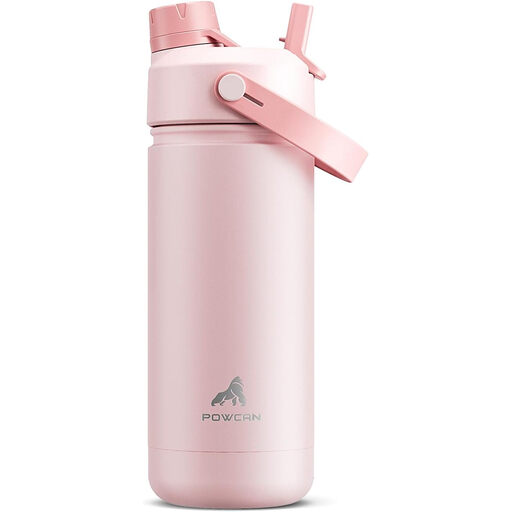
Why This Fits Their Persona: The 532 ml capacity is manageable for school, office desks, gym bags and shorter journeys, while the handle makes carrying straightforward.
Its stated 2-in-1 lid provides a straw and spout, so buyers can choose the more convenient opening rather than relying on one format.
18/8 stainless steel, BPA-free construction, double-wall vacuum insulation and a listed leakproof lid.
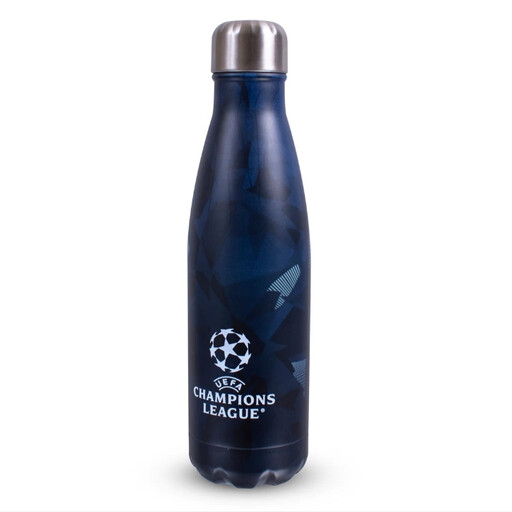
Why This Fits Their Persona: Its 500 ml format suits commuters, office workers and gym users who want a compact stainless steel water flask with a screw cap.
The product information specifies the cap material, silicone seal and hand-wash guidance, making the construction and care requirements clearer.
304 stainless steel, BPA-free polypropylene cap, double-wall vacuum insulation and a stated sweat-resistant exterior.
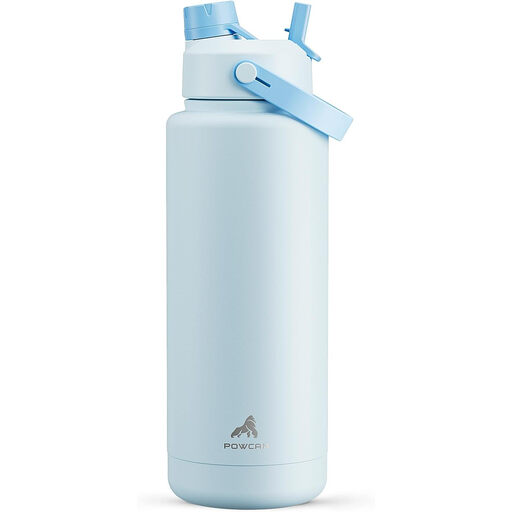
Why This Fits Their Persona: The 1,183 ml capacity is intended for all-day hydration during training, hiking, camping, travel or long office days when frequent refills are inconvenient.
The listing clearly notes that this large bottle does not fit standard car cup holders, helping buyers avoid a common portability mismatch.
Large capacity, carry handle, 2-in-1 straw and spout lid, and stated cold retention for up to 24 hours.
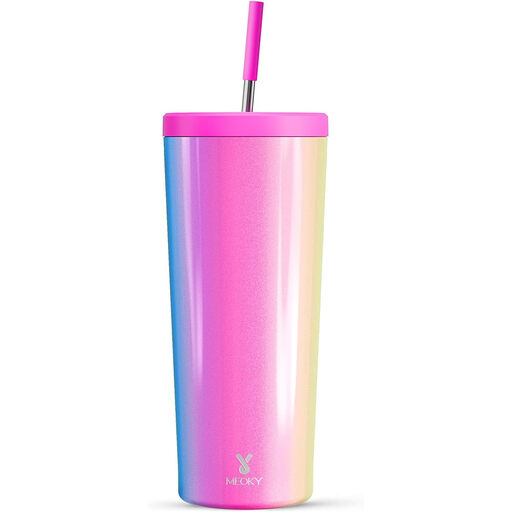
Why This Fits Their Persona: The tapered shape is listed as suitable for most car cup holders, making it practical for driving, commuting and desk use.
The listing explains that the lid is fully leakproof when the straw is removed, an important detail for carrying it inside a work or travel bag.
24 oz capacity, 18/8 stainless steel, BPA-free materials, non-slip base and straw with a silicone tip.
We have compiled a complete, real-time list of products that fully satisfy these strict selection criteria and UK safety regulations.
It can be useful if you want a reusable water bottle that reduces the need for disposable drinks and helps maintain beverage temperature. For daily commuting, a 500–769 ml bottle is generally easier to carry, while larger capacities suit people who have limited access to refilling.
Lifespan depends on impact, cleaning, seal wear and general handling. Stainless steel can remain serviceable for a long time, but dents may affect the lid alignment or insulation, and silicone seals can eventually require replacement. Inspect the bottle regularly and stop using it if cracks, leaks or damaged components appear.
It can require more maintenance than a simple screw-cap bottle because the straw, mouthpiece and seals need separate cleaning. If convenience matters, choose a lid that can be dismantled safely and check whether the lid is dishwasher-safe. Several products above specify hand-washing for the bottle while allowing dishwasher cleaning for the lid only.