
24/7 Customer Support

Free returns

Same-day & Next-day Delivery

Quality Guaranteed

Unlock Your Welcome Offers: FREE Delivery | Up to 80% OFF | Free 30-day JoyPlus trial
Download the APP
A reusable cup can look practical on a product page yet prove awkward after a few journeys. UK shoppers often discover that a large tumbler does not fit their car’s cup holder, a supposedly secure lid leaks in a work bag or a narrow straw is difficult to clean. Choosing between insulated travel mugs and tumblers requires more than comparing colour and capacity.
The most useful approach is to match the design to your routine, then check the specifications that affect comfort, safety and maintenance.
A double-wall insulated mug or vacuum insulated tumbler can reduce heat transfer, but temperature retention varies according to the drink, starting temperature, lid design, filling level and surrounding conditions. Marketing phrases such as “keeps cold all day” should be treated as product claims rather than a guarantee for every situation.
Look for clear information about the insulation construction and intended use. A stainless steel travel mug with double-wall or vacuum insulation is generally suited to commuting and outdoor use, while a glass thermal mug may be more appropriate for home, office or careful serving.
A lid may be splash-resistant rather than fully sealed. Straw openings, sliding covers and removable silicone parts can all create potential leakage points. Some products only state that the lid is leak-proof when the straw is removed, so check how the cup is intended to be carried.
For a work bag or rucksack, prioritise a secure closure and read the care instructions. Even a well-sealed lid should be kept upright unless the manufacturer specifically describes the product as suitable for horizontal storage.
A large capacity water tumbler reduces refilling, but it can also be heavy when full. A 1.2-litre tumbler may suit a gym session or a long day outdoors, yet be inconvenient on a crowded train. Dimensions matter just as much as millilitres: check height, base width, handle position and whether the shape is described as cup holder compatible.
A stainless steel travel mug is usually selected for portability and resistance to everyday knocks. Food-contact drinkware should be free from rust, unusual odours and poorly finished edges. Listings may specify food-grade stainless steel or BPA-free components; always review the product information and care instructions before buying.
Borosilicate glass is heat-resistant and allows you to see the drink inside, making it appealing for tea, coffee and cold infusions. However, it remains breakable if dropped or struck. Double-walled glass can reduce exterior condensation and make hot or cold drinks more comfortable to hold, but it requires careful handling.
Remember that the usable capacity may be lower than the headline capacity if you need to leave space for a lid, ice or safe expansion.
A leak-proof tumbler with straw can make frequent sipping convenient, especially during exercise or while working. However, straws and silicone seals need regular cleaning and complete drying. Some products are dishwasher safe, while others require hand washing to protect the finish or insulation.
Do not assume a straw-equipped tumbler is suitable for hot drinks. Check the warnings carefully: hot liquid can create a burn risk, and some silicone straw designs are intended for cold beverages only. Insulated drinkware should not be placed in a microwave unless the product instructions specifically permit it.

Why This Fits Their Persona: Its 240ml capacity and portable hanging design suit shoppers who want a compact coffee cup for short commutes, office use or travel.
The smaller format avoids the weight and storage problems associated with oversized tumblers. Its listed stainless steel double-wall vacuum construction provides clearer specification detail than a vague “thermal” label.
240ml capacity; stainless steel body; foldable filter and hanging-ear style design.
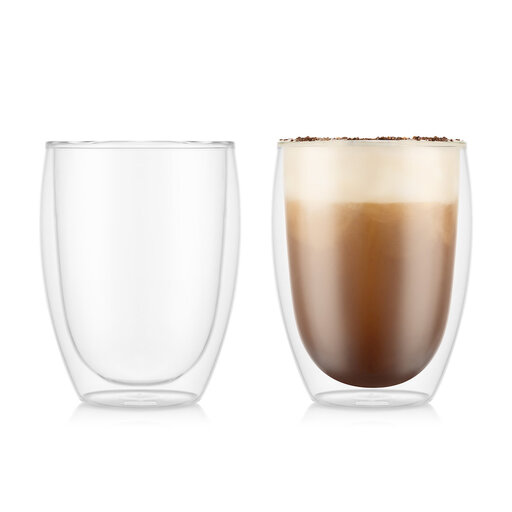
Why This Fits Their Persona: These 350ml glasses suit coffee and tea drinkers who value presentation, visibility and a serving set for home or the office.
The product description identifies heat-resistant borosilicate glass and a silicone pressure-equalising vent, while also explaining that the glasses remain fragile if dropped.
Set of two; 350ml size; dishwasher, microwave, oven and freezer compatibility listed, with an oven limit of 180°C.
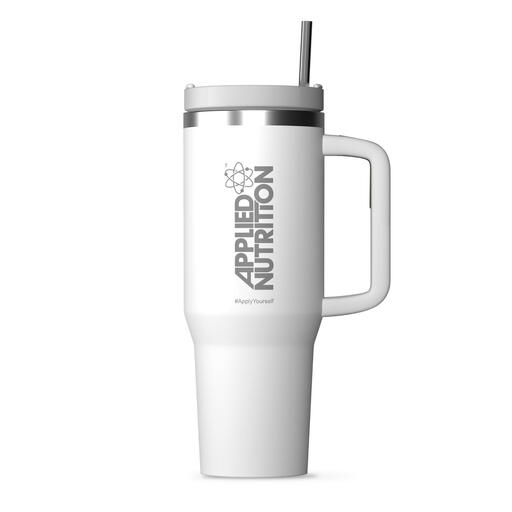
Why This Fits Their Persona: The 1200ml capacity, handle and built-in straw are suited to gym sessions, desk use, travel and outdoor activities where fewer refills are useful.
The listing states the capacity, handle and splash-resistant lid clearly. It also warns against extremely boiling water, carbonated drinks and rough impact.
1200ml stainless steel construction; double-wall vacuum insulation; handle and built-in straw.
We have compiled a complete, real-time list of products that fully satisfy these strict selection criteria and UK safety regulations.
To help an insulated mug last, wash the cup after each use and pay particular attention to the lid, gasket and straw. Dry removable parts separately so moisture does not remain inside narrow channels. Avoid abrasive cleaners on printed finishes, and do not place stainless steel drinkware in a microwave.
For hot drinks, check the temperature before sipping, especially when using a sealed lid. For cold drinks, avoid carbonated beverages unless the instructions specifically permit them, as pressure can build inside a closed container.
Yes, many are designed for hot drinks, including a stainless steel travel mug or thermal coffee mug. Check the lid instructions, drinking opening and warnings before use. Straw-equipped models may be intended for cold drinks only.
There is no fixed lifespan. Daily handling, drops, dishwasher use, seal wear and cleaning habits all affect durability. Stainless steel bodies can withstand regular use, but lids, silicone seals and straws may eventually need replacement if parts are available.
Not automatically. Compare the tumbler’s base diameter with your vehicle’s cup holder before ordering. A tapered design is more likely to fit than a straight-sided large capacity water tumbler, but the vehicle’s holder dimensions remain the deciding factor.