
24/7 Customer Support

Free returns

Same-day & Next-day Delivery

Quality Guaranteed

Unlock Your Welcome Offers: FREE Delivery | Up to 80% OFF | Free 30-day JoyPlus trial
Download the APP
As a Joybuy Product Recommendation Officer, my role is to help you navigate the crowded market of everyday items. When it comes to the humble insulated travelling mug, it’s easy to make a quick purchase you later regret. A reusable coffee cup should be a reliable daily companion, not a source of frustration.
Before you buy, let's look at a couple of common pitfalls that often lead to disappointment. Understanding these will help you choose a product that genuinely fits your routine, saving you from wasted money and inconvenient spills.
Pitfall 1: The "100% Leak-Proof" Claim That Isn't Many mugs are marketed as completely leak-proof, a feature essential for anyone who carries their mug in a bag. However, the reality is often hidden in the small print. Many designs are only spill-resistant when kept upright, and the pressure from very hot liquids can compromise the seal, leading to drips or even pops. A truly secure leak-proof travel cup needs a robust sealing mechanism, like a screw-top lid with a quality silicone gasket.
Pitfall 2: Impressive Insulation Times vs. Real-World Use You'll often see claims like "keeps cold for 24 hours." While technically possible in a controlled environment, this rarely reflects daily use. The number of times you open the lid, the starting temperature of your drink and the ambient temperature all affect performance. Instead of focusing on the hours, it's more practical to look at the construction. A double-wall vacuum insulated body is the key feature for effective temperature retention.
To avoid the traps above, focus on the fundamental design elements. These three factors are far more indicative of quality and usability than marketing headlines.
The gold standard for any insulated mug is double-wall vacuum insulation. This design features two walls of stainless steel with the air between them removed, creating a vacuum. This vacuum layer dramatically reduces heat transfer, keeping hot drinks hot and cold drinks cold. Look for mugs made from 18/8 or 304 food-grade stainless steel, as this material is resistant to rust, durable and won't impart a metallic taste to your beverage. This construction is what makes a quality stainless steel water bottle so effective.
The lid is where most travelling mugs succeed or fail. Consider how you plan to use it:
insulated tumbler with straw is excellent for cold drinks and easy sipping at a desk or in the car. For transport, many require the straw to be removed to be fully leak-proof.Always check that the lid components can be easily disassembled for thorough cleaning. Trapped moisture in complex lid mechanisms is a common cause of unpleasant odours and mould growth.
Think about your daily routine. A 350ml mug might be perfect for a morning flat white, but if you want all-day hydration, a large flask with handle of 900ml or more might be better. Also, check the base diameter if you plan to use it in a car; not all large-capacity mugs fit standard cup holders. An ergonomic handle can make a heavy flask much easier to carry throughout the day.
Based on these practical criteria, here are a few options from our catalogue matched to different user needs.
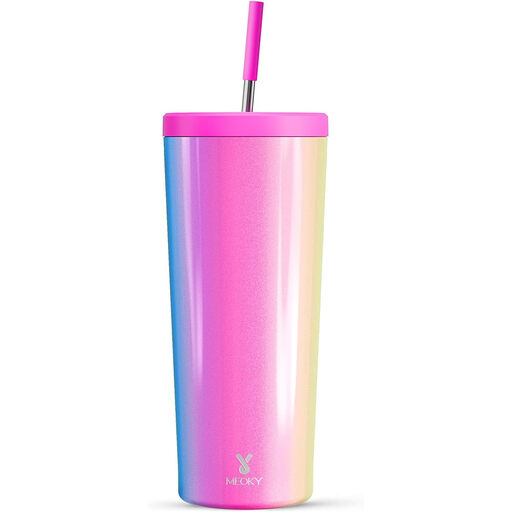
Why This Fits Their Persona: This tumbler is designed for life on the move. Its tapered base fits most car cup holders, and the lid is engineered for security during transit, which is a key concern for anyone navigating public transport or a bumpy car ride.
It directly addresses the "leak-proof" pitfall by stating it is fully leak-proof when the straw is removed, giving you a secure option for stowing it in a bag.
Construction: Made from 18/8 food-grade stainless steel with double-wall vacuum insulation. Practicality: Cup-holder friendly design and a non-slip base for stability.
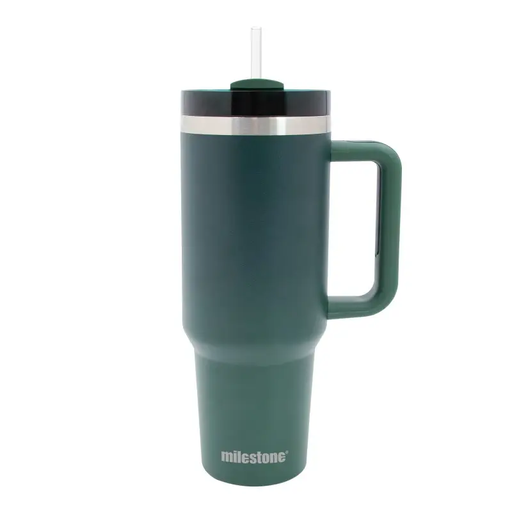
Why This Fits Their Persona: For those who need serious capacity for water, iced tea or coffee to last the entire workday. The large 1200ml volume minimises refills, while the handle makes it manageable to carry from desk to meeting room.
Instead of over-promising on leak-proofing for a large-volume flask, it focuses on practical usability with a versatile 360-degree rotary lid offering both straw and direct-sip options.
Capacity: A very generous 1200ml (40oz) size. Convenience: Features an ergonomic silicone handle and a design that fits most car cup holders despite its large size.
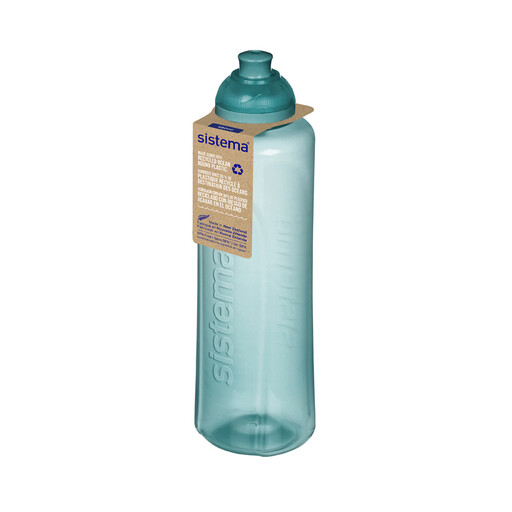
Why This Fits Their Persona: This is an ideal choice for those prioritising sustainability. It's a durable, reusable and practical `eco-friendly drinks bottle` for cold liquids, perfect for school, the gym or daily errands where insulation isn't the primary need.
This bottle doesn't make insulation claims it can't meet. It focuses on its core strengths: hygiene, reusability and its positive environmental story.
Material: Made with 35% recycled ocean-bound plastic. Hygienic Design: The Twist ‘n’ Sip lid means you don't have to touch the sipper top to open it.
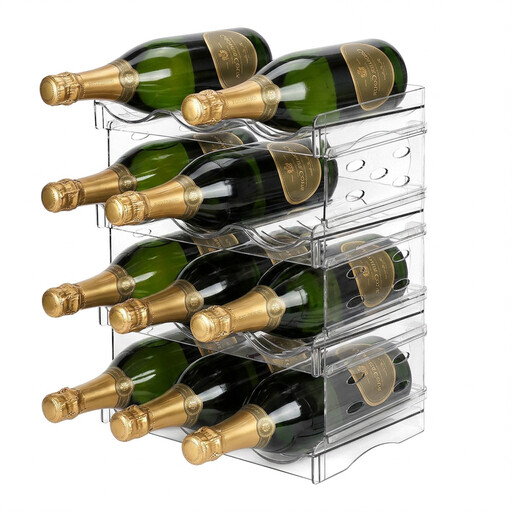
Why This Fits Their Persona: Once your family has a collection of reusable bottles, they can quickly create clutter in the cupboard. This modular rack is a simple and effective solution for organising them neatly, whether in a pantry, on a countertop or in the fridge.
This isn't a drinking vessel, but a solution to a problem they create. It avoids the pitfall of a disorganised cupboard full of rolling bottles, providing a stable and visible home for them.
Versatility: This `stackable bottle rack` holds not just travelling mugs but also wine, soda and standard water bottles. Visibility: The transparent design lets you see every bottle at a glance.
We have compiled a complete, real-time list of products that fully satisfy these strict selection criteria and UK safety regulations.
The key is to clean it promptly after each use, especially after holding milk-based drinks. Disassemble the lid completely and wash all parts with warm, soapy water. Use a small brush to get into the nooks of the lid and seal. For a deep clean, you can soak the parts in a solution of water and bicarbonate of soda overnight to neutralise any lingering odours. Always allow all components to air dry completely before reassembling.
It depends on the manufacturer. Some mugs are dishwasher-safe, but many are not. High temperatures and harsh detergents in a dishwasher can damage the vacuum seal, compromising the insulation, or harm the exterior finish. Always check the product's care instructions. When in doubt, hand washing is the safest option to ensure the longevity of your mug.