
24/7 全天候客户支持

免费退货

当日/次日达

品质保障

开启新人专享福利: 全场免邮 | 低至 2 折 | 免费试用 30 天 JoyPlus 会员
下载 Joybuy
Staying hydrated is a simple goal, but choosing the right container can feel surprisingly complex. The market is flooded with options, all promising to keep your drinks at the perfect temperature for hours on end. As a Joybuy Product Recommendation Officer, my role is to help you see past the marketing jargon and focus on what truly matters for your daily life in the UK.
Many of us have bought a reusable water bottle only to be disappointed. It leaks in your bag, fails to keep your coffee hot through the morning commute, or develops an odd taste after a few weeks. These common issues often stem from a few overlooked design flaws and over-hyped features. Before you make another purchase, let's look at the most common pitfalls.
To avoid these frustrations, focus on a few core parameters that define a quality bottle. Understanding these will help you select a product that is reliable, safe and genuinely useful.
The foundation of any good stainless steel flask is the metal itself. Look for bottles made from 18/8 or 18/10 food-grade stainless steel. These numbers refer to the percentage of chromium and nickel in the alloy. In practical terms, this composition makes the steel highly resistant to rust, corrosion and flavour transfer. This means your water won't taste like metal, and your bottle won't degrade from holding acidic drinks like fruit juice or coffee. It’s the industry standard for durability and purity.
The lid is the most critical component for preventing spills. There are three common types, each with its own pros and cons:
Consider how and where you'll use your bottle most.
Based on these practical criteria, we've matched several products to different user needs. Instead of a one-size-fits-all approach, this helps you find a bottle that genuinely suits your lifestyle.
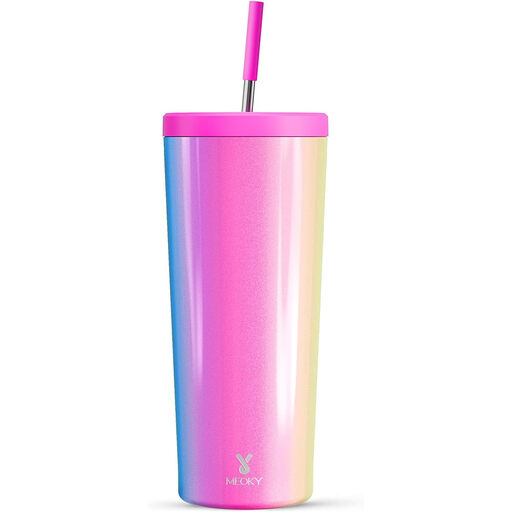
Why This Fits Their Persona: Its tapered base is specifically designed to fit in car cup holders, a key requirement for UK commuters. The 24 oz (approx. 710ml) capacity is a good balance for daily hydration without being bulky, and the straw lid makes for easy sipping on the go.
The lid is described as fully leak-proof when the straw is removed, addressing the common failure point of straw-based designs during transport in a bag.
Made from 18/8 food-grade stainless steel. Features a non-slip base for stability on desks or train tables.
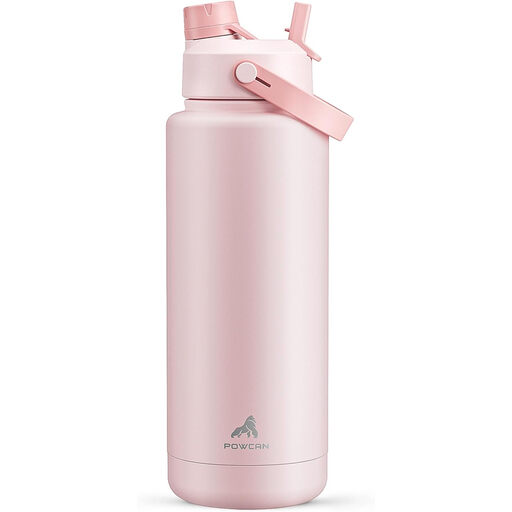
Why This Fits Their Persona: The generous 40 oz (approx. 1.2L) capacity is ideal for long workouts or a full day away from a water source, minimising refill trips. This user prioritises volume over fitting into a small cup holder.
It directly addresses the capacity vs. portability trade-off by stating it does not fit in standard car cup holders, managing expectations. The 2-in-1 lid offers both a straw and a chug spout, providing versatility without complex, leak-prone mechanisms.
Made from durable 18/8 stainless steel. The wide mouth makes it easy to add ice cubes and to clean thoroughly with a brush.
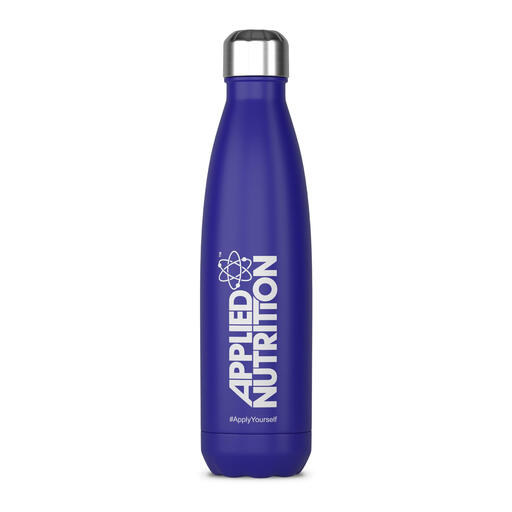
Why This Fits Their Persona: This is a classic, no-fuss flask for everyday use. The compact 500ml capacity is highly portable and ideal for throwing in a bag for a walk, a trip to the office, or general daily hydration without the bulk.
Its simple screw-top lid is one of the most reliable designs for preventing leaks. By avoiding complex mechanisms, it focuses on doing one job well: keeping liquid contained securely.
Crafted from high-grade stainless steel for durability and corrosion resistance. It is also dishwasher safe for easy cleaning.
We have compiled a complete, real-time list of products that fully satisfy these strict selection criteria and UK safety regulations.
A well-made stainless steel flask body can last for many years, if not a lifetime, with proper care. The components that are most likely to fail are the plastic or silicone parts, such as the lid, seals and straws. These can degrade, crack or get lost over time. To extend the life of your bottle, handle the lid with care and clean it according to the manufacturer's instructions.
Yes, high-quality 18/8 or 18/10 stainless steel is non-reactive and perfectly safe for hot beverages like coffee and tea, or acidic drinks like fruit juice. However, it is crucial to avoid putting carbonated drinks in a sealed insulated bottle. The pressure build-up from the carbonation can damage the seal or cause the lid to fail, leading to leaks or even forceful ejection of the cap.
Always check the manufacturer's care instructions first. As a general rule, hand washing is the safest method for the bottle's body, especially if it has a coloured or printed finish, as harsh dishwasher detergents can cause it to fade or chip. A simple bottle brush with warm, soapy water is effective. Many lids, straws and silicone components are top-rack dishwasher safe, which can help with thorough sanitisation. Always allow all parts to dry completely before reassembling to prevent mould growth.