
24/7 Customer Support

Free returns

Same-day & Next-day Delivery

Quality Guaranteed

Unlock Your Welcome Offers: FREE Delivery | Up to 80% OFF | Free 30-day JoyPlus trial
Download the APP
A reliable insulated food jar can make a packed lunch more convenient for commuters, office workers, students, parents and outdoor enthusiasts. It may help you carry soup, porridge, pasta or chilled meals without relying on workplace facilities. However, product listings often focus on capacity and temperature claims while overlooking the details that affect everyday use.
Before choosing a stainless steel food thermos or thermal lunch container, check the seal, opening, cleaning instructions, weight and realistic carrying conditions. A large jar that leaks in a rucksack or is awkward to wash can quickly become an expensive cupboard item.
A listing may state that a vacuum insulated food jar keeps contents hot or cold for several hours. In practice, results depend on the starting temperature, the quantity of food, how often the lid is opened and the surrounding temperature.
For example, a jar filled with a small portion may lose heat more quickly than one filled closer to its stated capacity. Pre-heating or pre-chilling the container can improve the starting conditions, but it does not turn the jar into a refrigerator or heated appliance.
A tight-sealing lid is important, but some product instructions still advise users not to invert or tip the container. Pressure can also build up with carbonated drinks or very hot contents. Check whether the lid includes a silicone seal, how it should be closed and whether the manufacturer gives handling warnings.
For commuting, place the leakproof soup thermos upright in a separate section of your bag where possible. Avoid carrying it loose alongside laptops, books or paperwork.
A 1.4 or 1.5-litre insulated lunch container may suit group portions, family outings or a full day outdoors, but it can be bulky for a short train commute. Capacity should be considered alongside dimensions and weight.
A wide-mouth food jar is easier to fill and eat from, yet its wider shape may take up more room than a narrow flask. Compare the listed measurements with your lunch bag, backpack or locker before ordering.
For one standard office lunch, smaller portable food storage may be sufficient. Larger containers are more suitable for sharing, long journeys or meals with several components. Remember that the stated capacity usually refers to the container’s internal volume, not the space available after leaving room for safe sealing.
The Maxcook 1.5-litre model has approximate package dimensions of 22 x 17.5 x 17.5 cm and a listed weight of about 1.02 kg. The 1.4-litre version measures approximately 22.5 x 16.5 x 16.5 cm and weighs around 0.83 kg. These figures make the difference between nominal capacity and carrying comfort clear.
The Maxcook food jars listed here use 304 stainless steel or 316 stainless steel, with polypropylene lids and silicone seals on the 304 model. Vacuum insulation creates a reduced-air layer between the inner and outer walls, limiting heat transfer more effectively than an ordinary plastic lunch box.
Material grade alone should not decide the purchase. Also check whether the lid is removable for cleaning, whether replacement seals are available and whether the product is suitable for hand washing only. Do not microwave a stainless steel food thermos.
Look for a clearly described lid and sealing ring rather than relying only on a “spill-proof” title. A wide opening can make it easier to remove thick food, serve directly from the jar and clean the inside.
After use, wash the jar with warm soapy water and dry it fully. Pay particular attention to the silicone seal, threads and lid cavity, where food residue may collect. The supplied Maxcook instructions recommend hand washing and advise against prolonged immersion of the lid’s seal area or dishwasher use.
For hot food, allow the contents to cool sufficiently before eating directly from the jar. Keep containers away from children when they hold very hot soup or other heated food.
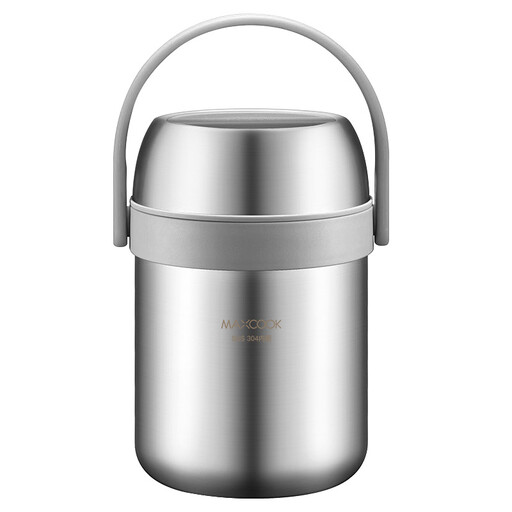
Why This Fits Their Persona: A practical choice for office lunches, family portions and short trips where generous capacity matters more than compact size.
The listing states the material, capacity, approximate size and hand-wash guidance, making it easier to assess fit before purchase.
1.5-litre capacity; 304 stainless steel body; wide mouth; vacuum insulation; silicone seal.

Why This Fits Their Persona: Suitable for buyers who prioritise a specified 316 stainless steel construction for regular commuting, travel or outdoor meal use.
The product information gives clear care instructions and warns against tipping, microwaving and carbonated beverages.
316 stainless steel body; vacuum insulation; wide opening; approximate weight of 0.86 kg.
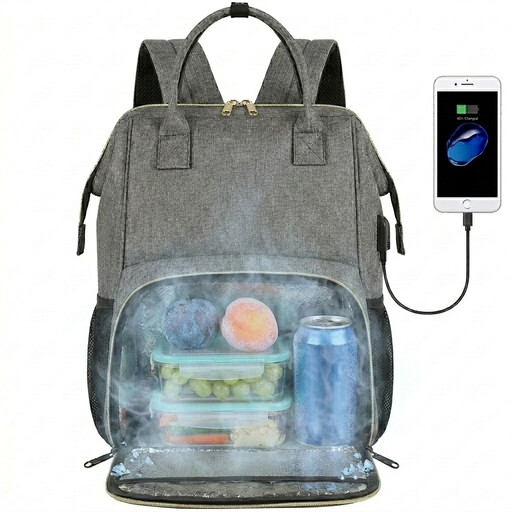
Why This Fits Their Persona: A multifunctional option for university, business travel and daily commuting when you need food storage alongside a laptop compartment.
Its listed insulated compartment dimensions and 9-can capacity help set more realistic expectations than a general “large” description.
Fits laptops up to 15.6 inches; water-resistant Oxford fabric; leak-proof-lined insulated section; USB port requires an external power bank.
Choose a hot food flask when you mainly carry one meal and want to eat directly from the container. A jar is usually simpler to wipe and store, although larger models can be heavy when full.
An insulated lunch container or waterproof cooler bag is more flexible for sandwiches, fruit, drinks and several snack boxes. A backpack may be more practical for cycling, university or train travel because it distributes weight across the shoulders. The Summer Cooler Bag models listed above include insulated compartments, pockets and luggage straps, but their stated 2–4-hour warming or cooling period is shorter than the 4–6-hour figure listed for the Maxcook jars.
For longer outdoor trips, use suitable ice packs for chilled food and avoid assuming that insulation alone controls food temperature throughout the day.
We have compiled a complete, real-time list of products that fully satisfy these strict selection criteria and UK safety regulations.
The duration varies by product and use. The Maxcook 304 and 316 models list approximately 4–6 hours of thermal retention, while the backpack compartments list around 2–4 hours. Pre-heating the jar with hot water, filling it appropriately and keeping the lid closed may support more consistent results.
Check the individual care instructions. The Maxcook information recommends hand washing and advises against prolonged immersion of the lid seal area. Hand washing is also a practical way to protect the vacuum-insulated body and sealing components.
They are designed for foods such as soup, but contents may be extremely hot. Seal the lid correctly, transport the jar upright and allow food to cool before eating directly from it. Do not microwave the jar or use it for carbonated drinks, and follow the product’s handling guidance.