24/7 Customer Support

Free returns

Same-day & Next-day Delivery

Quality Guaranteed

Unlock Your Welcome Offers: FREE Delivery | Up to 80% OFF | Free 30-day JoyPlus trial
Download the APP
The British kitchen has quietly evolved. Once a purely functional space, it is now the gravitational centre of the home. It is where morning light first pools on the floorboards, where conversations unfold over steaming mugs and where the day’s plans are made and unmade. In this shift, a new design philosophy has taken root: the pursuit of visual quiet. This is not about stark minimalism, but about creating a backdrop of calm, where the textures of daily life—a wooden board, a ceramic bowl, a stack of linen napkins—can come to the fore.
The largest objects in the room, our appliances, present the greatest challenge to this harmony. A freestanding refrigerator, however beautifully designed, is an interruption. It breaks the clean lines of cabinetry and introduces a separate visual element. The solution lies in concealment, in making the essential invisible.
Achieving a seamless kitchen rests on the principle of the unbroken plane. This is where the integrated fridge freezer becomes less an appliance and more a piece of architectural strategy. By fitting it with a door panel that matches the surrounding cabinetry, the refrigerator disappears, contributing to a serene, cohesive wall of texture and colour. The result is a space that feels larger, calmer and more intentional.
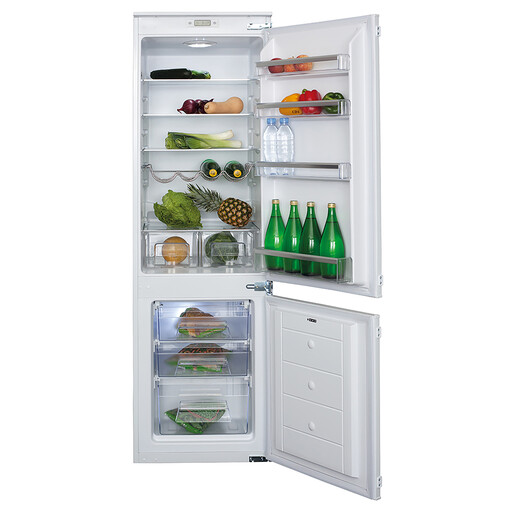
This approach offers a spectrum of solutions tailored to different homes and habits. For many, a balanced 50/50 integrated fridge freezer provides an equal measure of fresh and frozen storage, neatly contained within a single tall housing unit. Others, favouring fresh, seasonal produce, might opt for a 70/30 split, dedicating more volume to chilled goods. The decision is a reflection of one’s own culinary rhythm.
The practicalities of integration are as important as the aesthetics. A sliding hinge system, for instance, allows the appliance door and the cabinet door to move independently, connected by runners. This is often a practical choice for replacing older integrated models without altering the existing kitchen furniture. A fixed hinge, by contrast, connects the two doors directly for a more robust, unified feel. For those planning a new kitchen, understanding these mechanisms is key to a flawless fit. Beyond the mechanics, modern quiet kitchen appliances are engineered for the open-plan home, with noise levels so low they blend into the ambient sound of a peaceful house.
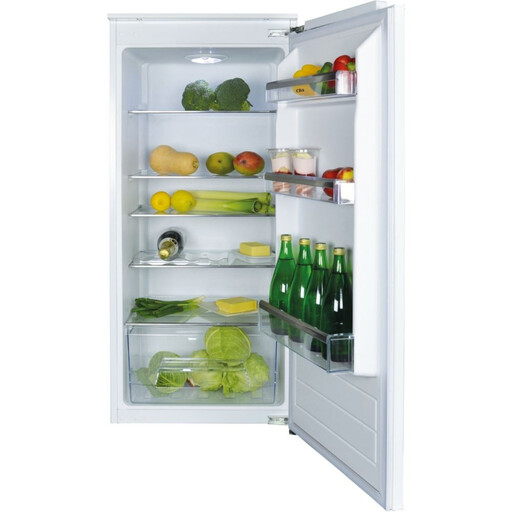
The path to a visually quiet kitchen is paved with thoughtful choices. For those who already have a separate chest freezer in a utility room or garage, a dedicated built-in larder fridge offers an expansive volume for fresh ingredients. A model like the tall Bosch Series 2 KIR81NSE0G provides an impressive 319 litres of capacity, all concealed behind a single cabinet door. Its exceptionally low 37 dBA noise level ensures it performs its duty without ever announcing its presence, making it ideal for kitchens that flow into living areas. The inclusion of features like Eco AirFlow helps maintain a consistent temperature, preserving the life of fresh produce.
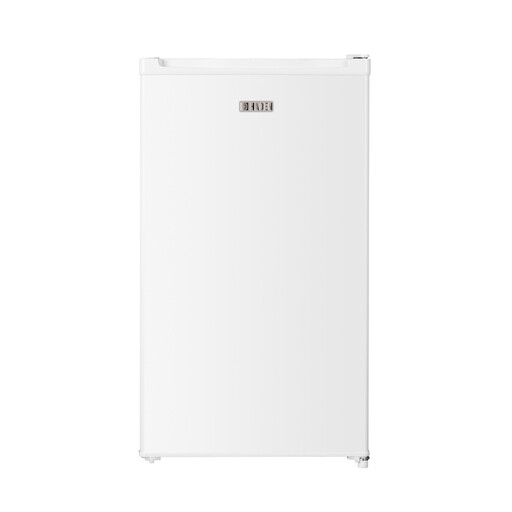
In more compact urban dwellings or secondary kitchens, an under counter fridge is a space-saving necessity. These units can be fully integrated, continuing the line of base cabinets without interruption. Some, like the Bosch KUR21VFE0G Series 4, are designed as ‘built-under’ models that sit on the floor, often allowing for a slightly larger capacity within the standard 60cm integrated fridge aperture. For those seeking a balance of fresh and frozen storage in a tall unit, a frost free fridge freezer is a practical imperative. The chore of manual defrosting is a ritual of the past; models such as the Bosch Series 2 KIN86NSE0G use air circulation to prevent ice build-up, which also contributes to more consistent and efficient performance.
Ultimately, the selection process is a dialogue between space, habit and a desire for order. It is about finding the right configuration that supports your way of life while contributing to a sense of domestic tranquility. The modern E rated energy classification, seen across many of these appliances, signifies a considered approach to consumption, aligning the function of the home with a lighter environmental footprint.
For those seeking to explore a wider curation of objects designed for a seamless home, the complete 嵌入式冰箱 registry offers further inspiration.