
24/7 Customer Support

Free returns

Same-day & Next-day Delivery

Quality Guaranteed

Unlock Your Welcome Offers: FREE Delivery | Up to 80% OFF | Free 30-day JoyPlus trial
Download the APP
Integrated kitchen appliances can create a clean, coordinated look, but the concealed design can make specification mistakes expensive. A dishwasher that does not accept your cabinet door, a fridge freezer with the wrong hinge system or a hob that needs more electrical capacity than expected may cause delays and additional installation costs.
Before comparing prices, check the following common pitfalls.
A fully integrated dishwasher or fridge freezer is usually supplied without the decorative furniture door. You attach a matching door from your kitchen cabinetry using the appliance’s fixing kit or hinge system. Check the required door dimensions, weight and hinge type before ordering.
Sliding and fixed hinge systems are not interchangeable in every kitchen. If you need replacement or compatible fittings, you can also browse the door hinges range.
UK appliances use the A to G energy label, but the letter is only part of the comparison. Look at the quoted annual electricity use in kWh, then consider how often the appliance will run. An energy-efficient kitchen appliance may have a higher purchase price but could suit households that use it frequently.
For dishwashers, also compare capacity, programme duration, water consumption and drying performance rather than relying on the rating alone.
A Wi-Fi dishwasher can provide remote monitoring and programme control, but it still needs the correct plumbing, electrical connection and wireless signal. Smart functions are useful when they solve a real household need; they should not distract from width, capacity, noise and installation requirements.
Measure the available cabinet opening rather than relying on the appliance name. A 45 cm dishwasher is designed for narrower kitchen spaces, while a standard full-size built-in dishwasher generally requires a wider opening. Confirm:
For example, the Bosch SPV2HKX42G measures approximately 815 x 448 x 550 mm, making it suitable for a slimline cabinet opening when the surrounding units are correctly prepared.
Place settings offer a useful dishwasher comparison, although basket flexibility matters too. A 9-place-setting built-in dishwasher may suit a couple or smaller household, while larger families may need more capacity or more frequent cycles.
For fridge freezers, look at the separate fridge and freezer volumes. A 70/30 fridge freezer gives more space to fresh food than a 50/50 model, which may be practical for households that buy fresh ingredients regularly but use less frozen food.
An induction hob can require a dedicated hardwired connection. The CDA CRI621 technical information specifies a 7.4 kW connected load and 32-amp fuse rating, with installation by a qualified electrician. Do not assume an existing cooker socket is suitable.
A built-in induction hob also needs compatible magnetic cookware, an appropriate worktop cut-out and sufficient clearance beneath the surface. The listed cut-out dimensions for this model are approximately 560 mm wide by 490 mm deep.
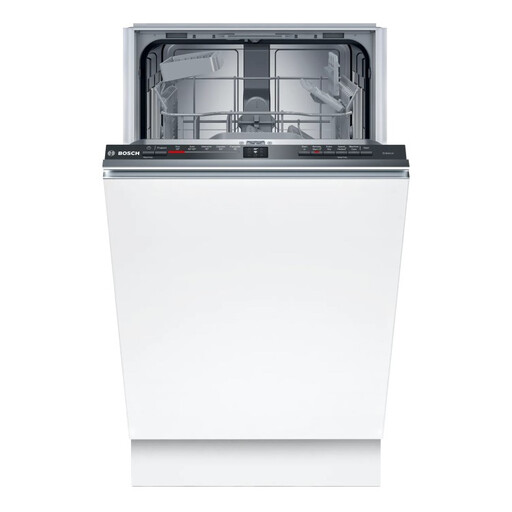
Why This Fits Their Persona: Its 45 cm width suits flats, compact kitchens and smaller households that need a dishwasher without giving up a full cabinet run.
The product information clearly states that the decorative door is not included, helping buyers plan the cabinet installation correctly.
9-place-setting capacity, Home Connect Wi-Fi control, red InfoLight, Extra Dry option and a stated 48 dB noise level.
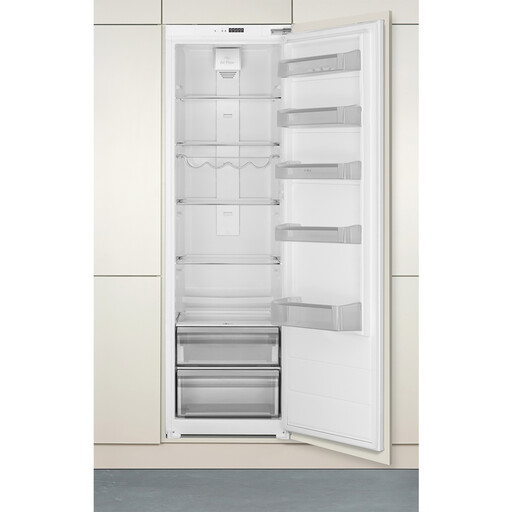
Why This Fits Their Persona: This built-in larder fridge has a sliding hinge and an integrated design, making it suitable for a coordinated contemporary kitchen where fresh-food storage is the priority.
The product listing identifies the appliance as a built-in larder fridge with a sliding hinge, helping buyers check door compatibility before ordering. Confirm the product dimensions and installation requirements before purchase.
Built-in larder-fridge design, sliding door hinge and E energy rating for integrated fresh-food storage.
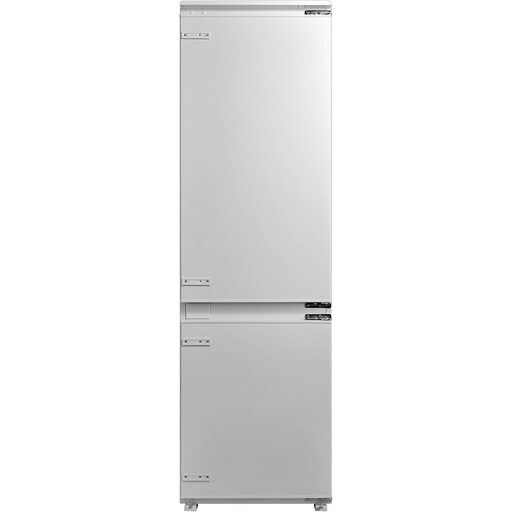
Why This Fits Their Persona: Its 248-litre capacity and 70/30 split are suited to couples and medium-sized families managing regular fresh-food shopping.
The total capacity is separated into 180 litres of fridge space and 68 litres of freezer space, making the storage balance clear before purchase.
Total No Frost, Multi Air Flow, humidity-control crisper, reversible door, stated 41 dB noise level and E energy rating.
Before buying integrated kitchen appliances, confirm:
We have compiled a complete, real-time list of products that fully satisfy these strict selection criteria and UK safety regulations.
Replacement is manageable when the new appliance matches the cabinet dimensions, hinge arrangement and connection points. A fully integrated dishwasher may require transferring the existing furniture door, while a sliding-hinge fridge freezer may need different door alignment hardware. Measure carefully before removal.
A frost-free fridge freezer uses a fan and automatic defrost system, so its electricity use depends on the model and operating conditions. Compare the annual kWh figure on the UK energy label rather than assuming frost-free technology will always cost more or less to run.
Running cost depends on electricity tariffs, cooking time, pan size and user habits. Induction heats compatible cookware directly and offers rapid adjustment, but the appliance’s connected load and installation requirements must be considered alongside its everyday use.