
24/7 Customer Support

Free returns

Same-day & Next-day Delivery

Quality Guaranteed

Unlock Your Welcome Offers: FREE Delivery | Up to 80% OFF | Free 30-day JoyPlus trial
Download the APP
Interactive dog ball toys can turn a short walk or garden break into a more engaging activity. However, choosing the right one involves more than selecting a bright colour or a promising product title. Size, construction, visibility and your dog’s play style all affect whether a toy remains useful after a few sessions.
For UK owners comparing dog fetch balls, electronic options and traditional football-shaped toys, these are the main buying pitfalls to avoid.
A thick rubber core, woven cover or bite-resistant material can support regular play, but no dog ball is suitable for every chewing style. Strong chewers may puncture, split or detach parts from toys marketed as durable. Product warnings should be taken seriously, particularly where the toy includes a squeaker, strap, battery compartment or inflatable inner section.
Always supervise play and inspect the toy before and after use. Discontinue use if you notice cracks, loose threads, exposed electronics, flattening or detached pieces.
A ball that is too small can present an ingestion risk, while one that is too large may be difficult for a puppy or smaller dog to carry. Diameter alone is not enough: consider your dog’s mouth size, jaw strength and preferred way of playing.
For example, the 4.8cm Petface Mini Super Tennis Balls are intended for smaller mouths and gentler indoor play. By contrast, 7.3cm large dog balls are more appropriate for many medium and larger dogs, although individual suitability still depends on the dog.
Squeakers, flashing lights, glow surfaces, self-moving mechanisms and rechargeable batteries can add interest, but they also introduce cleaning, charging or storage considerations. A flashing toy may be useful during low-light play, whereas a simple high-bounce ball may be more practical for a daytime park visit.
Check whether the feature matches your routine rather than treating it as an automatic upgrade.
Measure the ball against your dog’s mouth and compare the stated diameter with a toy they already use safely. Small dog balls may suit puppies and toy breeds, while large dog balls offer more substance for bigger mouths. Avoid assuming that a product labelled “for all breeds” will suit every individual dog.
A 15cm or 18cm football-style toy may be easier to kick and chase than to carry, making it more suitable for owner-led games than extended solo chewing.
Look for clear material information, such as natural rubber, TPR, PU fabric, woven nylon or polyester. A smooth rubber surface is generally easier to rinse after muddy UK walks. Woven or strapped designs can provide additional grip for fetch and tug-of-war, but should be checked regularly for fraying.
For water play, confirm that the toy is described as buoyant or amphibious. Water-friendly dog toys should still be rinsed and dried after use, particularly following beach trips where sand and salt may remain in seams.
Bright colours can make dog fetch balls easier to locate in grass or on a beach. Glow-in-the-dark dog toys normally need exposure to light before use, while flashing dog toys may rely on sealed, non-replaceable button cells or rechargeable power.
For rechargeable dog toys, check the charging method, charging time and whether the toy should be kept away from water during charging. Self-moving dog toys also need an open, obstacle-free area and close supervision, especially indoors around furniture or stairs.
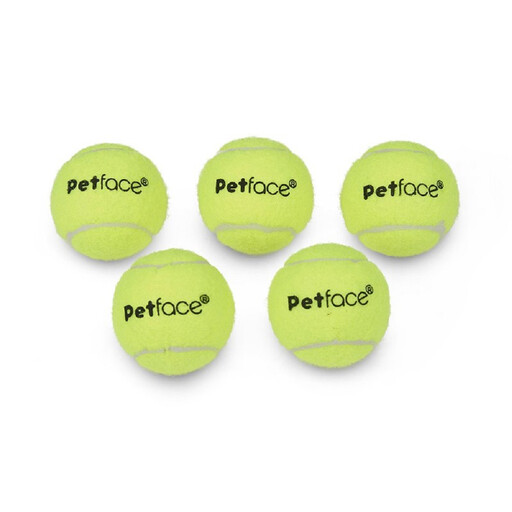
Why This Fits Their Persona: A five-ball pack gives puppy and small-dog owners spares for rotation, indoor play or outdoor fetch in parks and gardens.
The stated 4.8cm size helps avoid guessing for smaller mouths. The product warning also makes clear that it is not indestructible.
Five balls per pack, Grade A rubber core and high-bounce design for fetch and training.
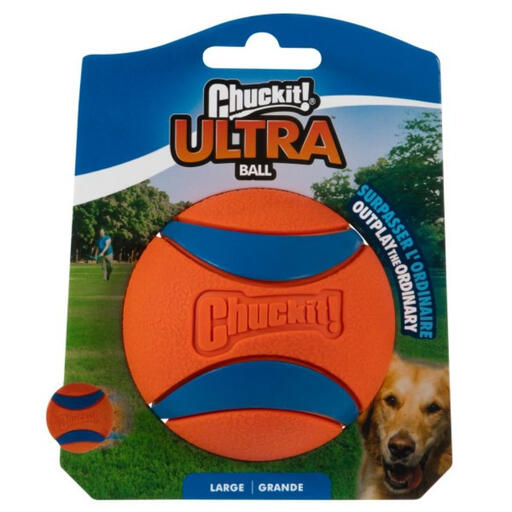
Why This Fits Their Persona: Suits owners who prioritise a launcher-compatible ball for repeated park, garden or beach fetch sessions.
The product specifies an extra-thick natural rubber core and clearly states that it is not a chew toy, helping set realistic expectations.
7.3cm diameter, high bounce, buoyancy, bright colours and a smooth surface that is easy to clean.
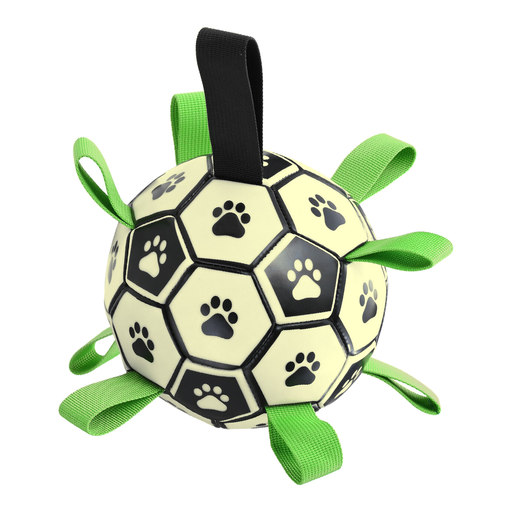
Why This Fits Their Persona: A practical match for active owners who combine evening walks, water play and dog toys for fetch and tug-of-war.
The instructions explain that the fluorescent effect needs light exposure first, while the warnings exclude aggressive chewers.
15cm diameter, amphibious design, glow effect and integrated nylon tug strap.
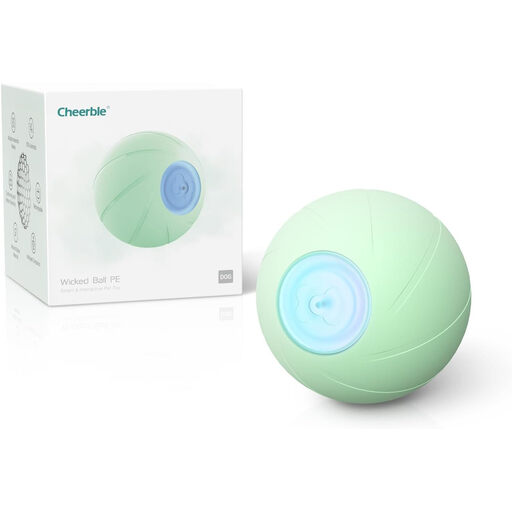
Why This Fits Their Persona: Designed for medium and large dogs that respond to movement and benefit from supervised indoor activity during wet UK weather.
The specification lists three play modes, approximate charging time and play time, so running requirements are clearer before purchase.
95mm diameter, LED lights, obstacle sensors, three modes and rechargeable power.
We have compiled a complete, real-time list of products that fully satisfy these strict selection criteria and UK safety regulations.
They can be, provided the size, material and play mode suit the puppy. Choose a ball that cannot fit fully into the mouth, avoid unsupervised squeaky or electronic toys, and stop play if the puppy begins tearing the surface. Puppies over 12 weeks may be listed as suitable for some products, but always follow the individual product guidance.
Lifespan depends on chewing strength, frequency of use, environment and construction. A toy used on wet grass, sand or concrete may show wear faster than one used indoors. Rotate several toys, clean them after outdoor play and inspect them regularly rather than relying on a stated durability label.
Rechargeable dog toys use mains electricity through their supplied cable or charging dock, while some flashing toys use sealed button cells. Running cost depends on charging frequency and local electricity prices. Before buying, check whether batteries are replaceable, how charging is managed and whether the toy must be kept dry while powered or charging.