
24/7 Customer Support

Free returns

Same-day & Next-day Delivery

Quality Guaranteed

Unlock Your Welcome Offers: FREE Delivery | Up to 80% OFF | Free 30-day JoyPlus trial
Download the APP
Interactive dog toys can support chewing, fetch, training and independent play, but the wrong choice may become unusable quickly or create avoidable safety risks. UK dog owners often compare sound, texture and durability first, yet size, construction and supervision requirements are just as important.
Marketing language such as “tough”, “long-lasting” or “bite-resistant” does not mean a toy cannot be damaged. A powerful chewer may split rubber, detach fabric or expose an internal squeaker in a short time.
Look for specific information about materials and construction, such as natural rubber with a nylon core or double stitching. Even then, inspect the toy before and after use. Replace it if you see cracks, tears, loose threads, exposed sound mechanisms or detached sections.
A toy can look compact online but be unsuitable for your dog’s mouth. Small dog toys may be easier for puppies and smaller breeds to carry, while medium and large dog toys generally need more substantial materials and dimensions.
Check the listed measurements against your dog’s size and chewing style. A small ball may present a choking risk to a larger dog, while an oversized chew toy may be difficult for a small dog to grip.
Squeaky dog toys and grunting toys can attract attention, but sound is not suitable for every household or dog. Some pets quickly remove the squeaker, while others may become overstimulated or lose interest once the sound stops.
Sound toys work most effectively when matched with an activity, such as fetch, tug or short training sessions. For quieter independent play, consider a chew toy or treat dispensing dog toy instead.
The material should match the way your dog plays:
Avoid assuming that a dental chew toy for dogs replaces brushing or professional veterinary care. Textured surfaces may provide chewing stimulation, but they should be treated as a toy feature rather than a medical benefit.
Measure the toy and consider whether your dog can carry it without struggling. A bone shape may be easier to hold between the paws, while a ring or steering wheel shape can suit owner-led games.
For puppies, choose puppy teething toys that are sized for the current stage of growth and inspect them frequently. Dogs with strong chewing habits need products clearly marked for an appropriate size range, but no toy should be described as completely indestructible.
Choose the main activity before buying:
Select washable surfaces where possible, follow the product’s cleaning instructions and store toys in a dry place away from heat and direct sunlight.
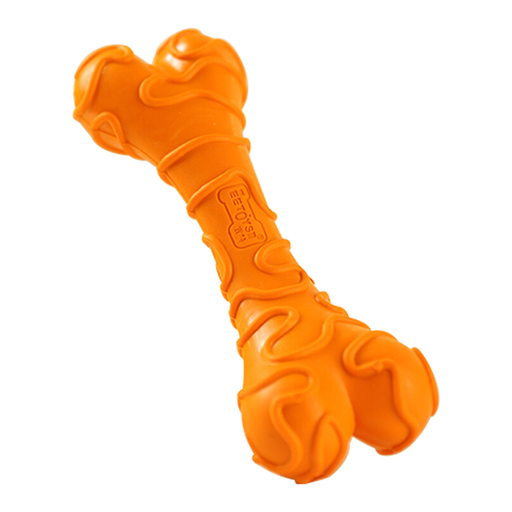
Why This Fits Their Persona: Its compact 10.7 × 4 cm form is listed for small dogs and puppies, making it a practical starting option for everyday chewing and interactive play at home.
The stated dimensions and small-dog recommendation make size easier to assess than choosing a toy from its appearance alone. It should still be checked for cracks and damage.
Rubber construction; lightweight cheese-bone shape; suitable for chewing and owner-led interaction.
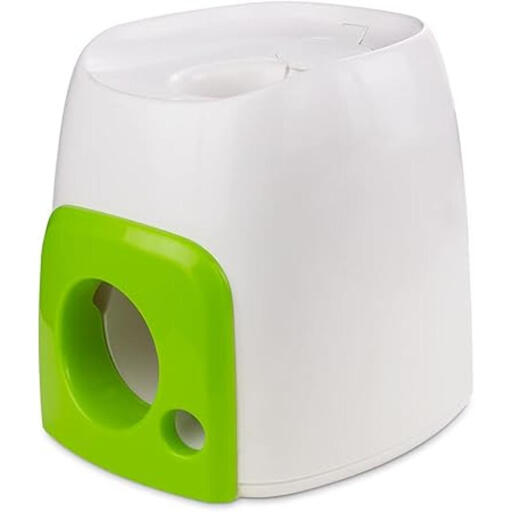
Why This Fits Their Persona: This option combines fetch with food-based exploration, which suits owners looking for a more structured enrichment activity rather than a simple chew or squeaker.
The interactive function is clearly defined: a ball enters the top opening and treats can be placed in separate compartments. It does not rely on sound alone to hold attention.
Battery-free operation; included tennis ball; treat compartments; can be introduced gradually for independent play.
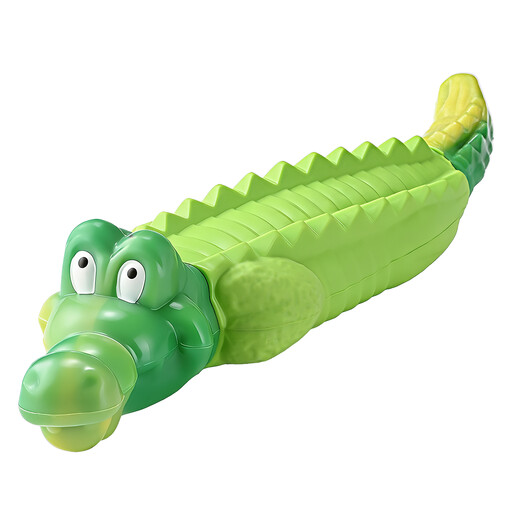
Why This Fits Their Persona: Made for medium and large dogs, its 24 × 6 cm size and rubber-and-nylon construction suit owners seeking a toy for fetch, tug and outdoor play.
The product specifies its intended dog size and materials, reducing the risk of matching a small toy with a larger, stronger bite. It must still be inspected after play.
Nylon core with natural rubber exterior; textured crocodile shape; suitable for fetch, tug and outdoor interaction.
We have compiled a complete, real-time list of products that fully satisfy these strict selection criteria and UK safety regulations.
Start with a short supervised session. Let your dog sniff the toy, demonstrate how it works and use praise or a suitable treat where appropriate. For treat dispensing dog toys, begin with an easy setting or a small number of treats before increasing the difficulty.
There is no fixed lifespan. A gentle fetch toy may last longer than a toy used for daily chewing, while squeakers and fabric seams can wear quickly with determined dogs. Inspect the toy regularly and replace it at the first sign of splitting, loose parts or exposed internal components.
Most do not require ongoing costs. Battery-free toys avoid battery replacement, while treat dispensing models require suitable treats. Factor in cleaning, replacement frequency and supervision rather than comparing the purchase price alone.