
24/7 Customer Support

Free returns

Same-day & Next-day Delivery

Quality Guaranteed

Unlock Your Welcome Offers: FREE Delivery | Up to 80% OFF | Free 30-day JoyPlus trial
Download the APP
Choosing interactive dog toys can be more complicated than it first appears. A toy may look sturdy in a product photograph but prove unsuitable for a powerful chewer, while an electronic toy may provide movement without being practical to charge or clean.
For UK dog owners, the right choice depends on your dog’s size, bite strength, play style and usual environment. Whether you are comparing dog chew toys, squeaky dog toys, dog tug toys or rechargeable dog toys, these checks can help you avoid spending money on a toy that is quickly abandoned or damaged.
No dog toy is suitable for every chewing style. Product descriptions may use terms such as tough, rugged or bite-resistant, but these do not mean a toy cannot be torn, cracked or swallowed.
A toy designed for gentle carrying may not suit an aggressive chewer. Likewise, a fabric tug toy should not automatically be used as a long-duration chew toy. Always check the stated use, material and size recommendations, then inspect the toy before and after play.
A small ball may be easy for a small dog to carry but can create a choking risk for a larger dog. Conversely, an oversized toy may be difficult for a small breed to grip, carry or move.
Pay attention to the actual measurements rather than relying only on labels such as “small”, “medium” or “large”. Toys for small dogs should be light enough to handle but not so small that they can be swallowed. Toys for medium and large dogs need an appropriate diameter, grip and construction for the dog’s mouth and strength.
Squeakers, flashing lights, random movement and sound effects can encourage engagement, but not every dog responds to the same stimulus. Some dogs enjoy chasing movement, while others prefer tugging, retrieving or chewing.
Electronic features also introduce practical considerations. A smart dog toy may need regular charging, and sealed batteries or exposed sound modules require careful handling. Consider how the toy fits into your routine before paying more for additional functions.
Start with your dog’s weight, breed type and play habits. Product dimensions are particularly important for balls, bones and chew toys. A 15 cm glow-in-the-dark dog toy, for example, is described as suitable for small to medium dogs, while a 95 mm self-moving ball is specified for medium and large dogs.
Do not assume that a toy labelled for “all breeds” is automatically suitable for every individual dog. A strong chewer may need a different construction from a dog that mainly carries soft toys.
The material should match the activity:
Claims about dental support should be understood realistically. Textured chewing may contact the tooth surface, but dog toys are not a substitute for veterinary dental care.
Outdoor dog fetch toys should be easy to rinse and dry, especially after use in wet grass, puddles or shallow water. Fabric toys may require more frequent inspection because moisture can collect inside.
For rechargeable dog toys, check the charging method and estimated play time. Keep USB cables and charging docks away from pets. Toys with non-replaceable button-cell batteries should be removed from use when the light or sound function stops, with disposal handled according to local requirements.
Store toys in a clean, dry location and replace them when cracked, torn, split or loose.
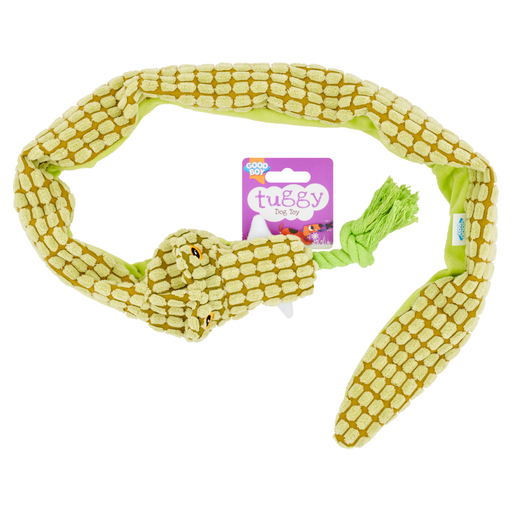
Why This Fits Their Persona: A straightforward choice for owners introducing interactive play at home or in the garden. Its lightweight format is designed for supervised tugging with an owner.
The listing clearly states that it is not a chew toy, helping buyers distinguish tugging from unsupervised chewing.
Synthetic fabric construction, reinforced stitching and a design intended for owner-led tugging.
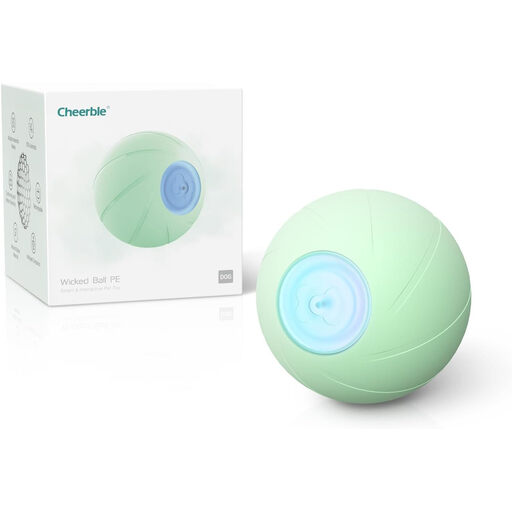
Why This Fits Their Persona: Suitable for owners looking for a hands-off play option for medium and large dogs, particularly when indoor activity is useful during poor weather.
The specifications identify three play modes, a rechargeable battery and a stated approximate play time, making running requirements easier to assess.
Three modes, LED lights, infrared obstacle sensors and a magnetic DC charging system.
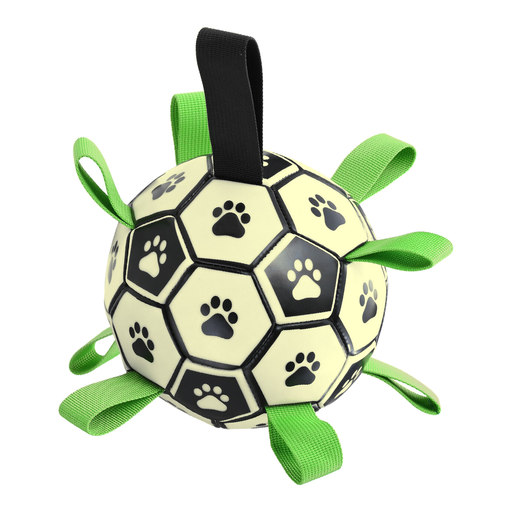
Why This Fits Their Persona: A practical option for active households that combine fetch, tugging, outdoor walks and low-light play in the UK.
Its recommended size range is stated for small to medium dogs, so owners can check suitability rather than guessing from the ball shape.
15 cm diameter, nylon grab strap, TPR construction and glow-in-the-dark visibility after exposure to light.
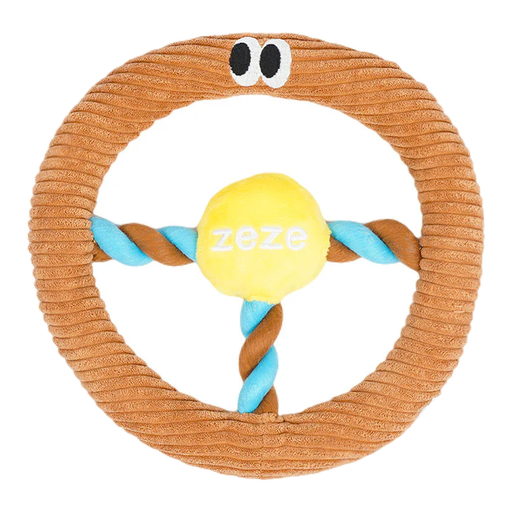
Why This Fits Their Persona: Designed for dogs attracted to sound, textured surfaces and role-play. Its compact shape can work well for interactive sessions in the home.
The listing gives exact dimensions and warns owners to remove the toy if the sound module or any part becomes exposed.
23 x 23 x 3.5 cm dimensions, built-in beep sound, woven fabric, rope and EVA plastic components.
We have compiled a complete, real-time list of products that fully satisfy these strict selection criteria and UK safety regulations.
Follow the instructions supplied with each product and supervise your dog during play. This is particularly important when introducing squeaky dog toys, chew toys, toys with straps or products containing electronic components.
A sensible routine includes:
Dental chew toys for dogs should also be monitored closely. Replace them when sharp edges develop or the material begins to break apart. If a dog swallows a fragment, contact a veterinary professional promptly.
Some are designed for independent entertainment, including selected moving balls and treat-based formats. However, independent play does not mean unsupervised play. Check the toy regularly, keep charging accessories away from pets and stop use if damage appears.
Lifespan varies according to material, chewing strength, frequency of use and whether the toy is used for its intended purpose. A fabric toy may last longer with gentle play, while an aggressive chewer can damage even a firm nylon product quickly. Regular inspection is more useful than relying on a promised lifespan.
They avoid the need for regular disposable batteries, but they still require charging and careful storage of the cable or charging dock. Check the stated charging time and play duration, and keep the device dry unless the product specifically permits water exposure.