
24/7 Customer Support

Free returns

Same-day & Next-day Delivery

Quality Guaranteed

Unlock Your Welcome Offers: FREE Delivery | Up to 80% OFF | Free 30-day JoyPlus trial
Download the APP
Choosing interactive dog toys can be more complicated than it appears. A brightly coloured ball or flashing feature may attract attention online, but the wrong size, material or play mechanism can leave you with a toy your dog ignores—or damages within days.
This guide from the Joybuy Product Recommendation Officer focuses on practical details for UK dog owners, including puppies, adult dogs, senior dogs and different breed sizes.
Many toys are described as tough, chew-resistant or suitable for active play. These terms do not mean that a toy will withstand every dog. A strong chewer may split rubber, pull apart woven sections or expose electronic components.
Always check the product warning and inspect the toy during use. If it cracks, deflates, splits or develops loose parts, remove it immediately. Toys for large dogs should generally offer enough size and structure to avoid easy swallowing, while toys for small dogs need to be manageable for smaller mouths.
A flashing dog toy may suit evening play, but it will not necessarily interest a dog that prefers treats or chasing movement. Similarly, an automatic dog toy can provide independent play, but some dogs need an introduction before they understand how it works.
Consider whether your dog prefers:
Rechargeable dog toys need charging and safe cable storage. Toys containing sealed button cell batteries require careful disposal when the flashing function stops. Treat dispensing dog toys need regular cleaning, while inflatable football-style toys may need occasional air adjustment.
A simple toy that is easy to wipe and store may be more suitable than a feature-rich product that is difficult to maintain.
Do not rely only on broad descriptions such as “for all breeds”. Check the actual dimensions where available. The Blinkit football toy measures approximately 18 cm, while the Petgravity Smart Bouncy Ball measures 56 mm and is specifically intended for smaller dogs.
Small tennis balls can be useful for puppies and small breeds, but they may be unsuitable for larger dogs. Conversely, a large dog ball can be awkward for a small dog to carry.
Rubber, PU fabric, plastic, woven straps and electronic components each behave differently during play. Look for:
Tennis balls for dogs should also be checked frequently for punctures, splitting or flattening. “Durable dog toys” still require replacement when damaged.
For electronic or automatic toys, check the power source and operating method. USB-C or magnetic rechargeable designs avoid disposable battery replacement, but they must be charged away from pets. LED features can improve visibility in low-light conditions, though outdoor play should still take place away from roads and other hazards.
A dog ball launcher is better suited to open gardens, parks or secure exercise areas than confined indoor spaces. Always consider your dog’s stamina and allow breaks during energetic fetch.
The following recommendations focus on distinct use cases rather than one product supposedly suiting every dog.
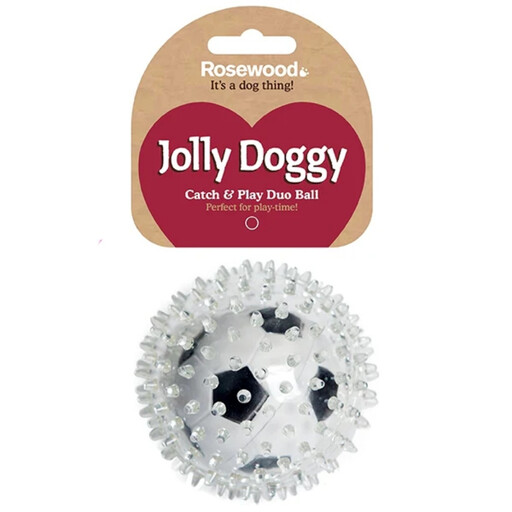
Why This Fits Their Persona: A straightforward option for owners introducing fetch at home, in the garden or on regular UK walks. Its football shape and spiky texture provide surfaces for gripping and rolling.
It does not depend on batteries, sensors or complicated training. The product warning also clearly advises against use with dogs showing excessive bite force.
Rubber construction, football styling and a textured surface for throwing, retrieving, rolling and supervised solo play.
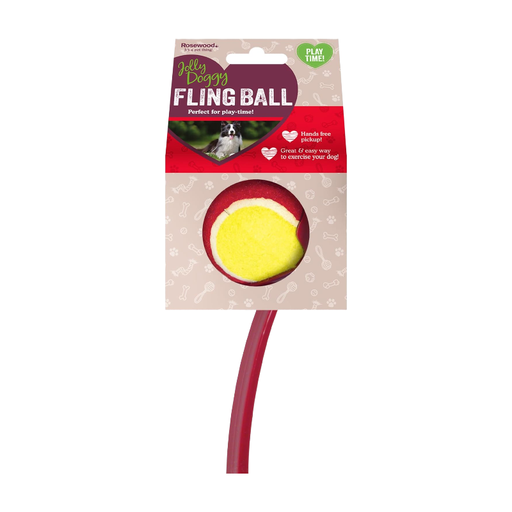
Why This Fits Their Persona: Suitable for owners who want longer outdoor throws without repeatedly bending down to pick up the ball. It fits active garden or park-based fetch sessions.
The included tennis ball and manual launcher avoid reliance on rechargeable motors or replaceable batteries. The outdoor-use warning encourages safer play away from roads.
Includes one launcher and one tennis ball, with a handle designed for throwing and hands-free ball collection.
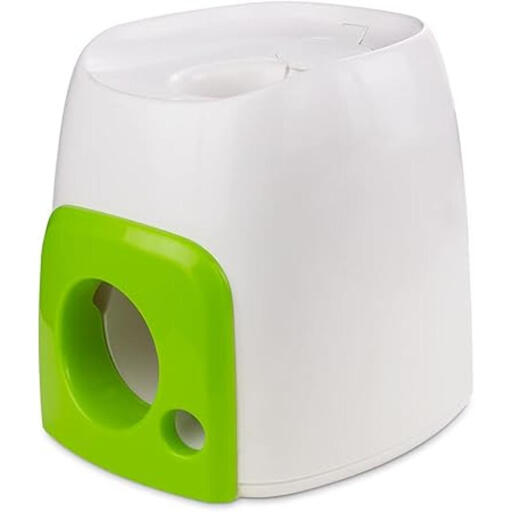
Why This Fits Their Persona: A practical choice for rainy-day enrichment or dogs that enjoy working for food. It combines a tennis ball mechanism with separate treat-hiding compartments.
It is battery-free, so there is no charging schedule or battery compartment to manage. Owners can introduce the ball action first, then add hidden treats gradually.
Automatic treat release when the included tennis ball is inserted, plus compartments for additional treats.
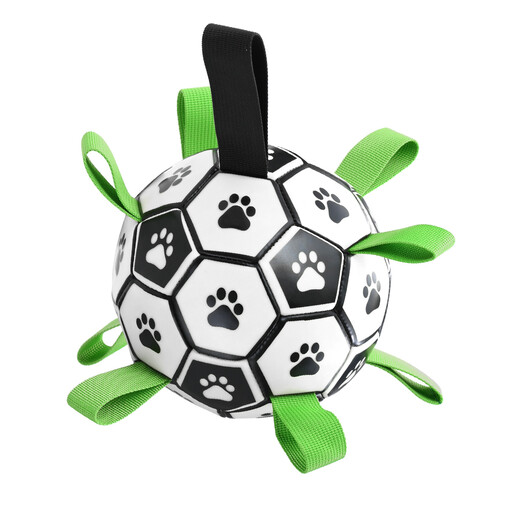
Why This Fits Their Persona: The approximately 18 cm football shape suits owners seeking a portable toy for kicking, chasing and retrieving during frequent outdoor play.
Its inflatable design can be deflated for storage and transport, but the instructions still require checking inflation and stopping use if damage appears.
PU fabric outer construction, woven structure, repeated inflation and compact storage when deflated.
We have compiled a complete, real-time list of products that fully satisfy these strict selection criteria and UK safety regulations.
They can be, provided the size, movement and difficulty match the dog. Puppies may need simple fetch or treat-release activities first. Senior dogs may prefer lighter toys, slower play and easily accessible treats. Supervise every session and avoid forcing strenuous movement.
There is no universal lifespan. It depends on bite strength, frequency of use, material and whether the toy is used for chewing or fetching. Check it before every session and replace it immediately if it becomes cracked, split, deflated or loose.
They require electricity for charging but do not use disposable batteries. Keep the cable away from pets, charge according to the product instructions and store the toy safely when not in use. For a lower-maintenance option, consider manual dog fetch toys or a battery-free treat dispensing dog toy.