
24/7 Customer Support

Free returns

Same-day & Next-day Delivery

Quality Guaranteed

Unlock Your Welcome Offers: FREE Delivery | Up to 80% OFF | Free 30-day JoyPlus trial
Download the APP
Choosing interactive dog toys can be more complicated than it first appears. A colourful ball may look engaging online, yet prove too large for a small dog, too fragile for a persistent chewer or too demanding for an older pet. The right choice depends on your dog’s size, play style, available space and how much supervision you can provide.
As the Joybuy Product Recommendation Officer, I focus on separating useful features from vague marketing language. Before buying, watch for these common pitfalls.
Terms such as chew-resistant, “tough” and “bite-proof” describe intended construction, not a guarantee against damage. A determined chewer can eventually tear fabric, loosen stitching or crack plastic. Every toy should be checked regularly, particularly around seams, covers, valves, battery compartments and small detachable parts.
If your dog chews forcefully, avoid toys marked as unsuitable for aggressive chewers. No interactive dog toy should be left unattended if it becomes damaged.
An automatic dog toy or self-moving dog ball may be entertaining for a confident, chase-driven dog, but sudden movement, lights or motor noise can unsettle nervous pets. Electronic toys also need charging and may be unsuitable for outdoor use in wet conditions unless the product information specifically permits it.
For puppies and senior dogs, simple rolling, treat-finding or owner-led games may be easier to introduce than fast, unpredictable movement.
A stated breed range does not replace checking the actual dimensions. A 56mm ball may suit smaller dogs but be inappropriate for a large dog that could swallow it. Conversely, a large football-style toy may be awkward for a puppy or older dog to carry.
Measure your dog’s current toys and compare them with the listed diameter. The toy should be large enough to reduce swallowing risk, but not so large that your dog cannot comfortably push, carry or retrieve it.
For indoor use, choose toys that roll predictably and are less likely to damage furniture. Outdoor games can accommodate larger dog football toys, dog fetch toys and launchers, provided you have a secure area away from roads, cyclists and other hazards.
An 18cm or 15cm inflatable football can be easier to kick and chase than a small ball. However, large toys may not suit dogs with smaller mouths. Always follow the product’s size guidance and supervise initial play.
Look for clear information about the outer material, internal structure and removable components. Woven or knitted coverings can provide a textured surface for carrying, while rubber or PU fabric may offer flexibility and rebound. These materials still require inspection after repeated chewing.
For a treat dispensing dog toy, check whether the compartments are easy to clean and whether treats can become lodged inside. Only use treats appropriate for your dog’s size, age and dietary needs.
A rechargeable dog toy is convenient when you do not want to replace disposable batteries, but consider charging time, play duration and cable storage. Keep every charging cable away from pets. A battery-free toy, such as a manual launcher or treat dispenser, can be simpler for regular use.
Inflatable toys offer useful storage flexibility: deflate them for travel, then inflate them before play. Do not over-inflate, and stop using the toy if it leaks, splits or loses structural support.

Why This Fits Their Persona: A straightforward option for owners introducing a puppy or adult dog to kicking, chasing and retrieving games at home or in a garden.
The listed 15cm diameter and deflatable design make size and storage easier to assess than an unspecified novelty toy. It should still be inspected after chewing.
Inflatable woven construction; suitable for throwing, kicking and chasing; folds down for travel and storage.
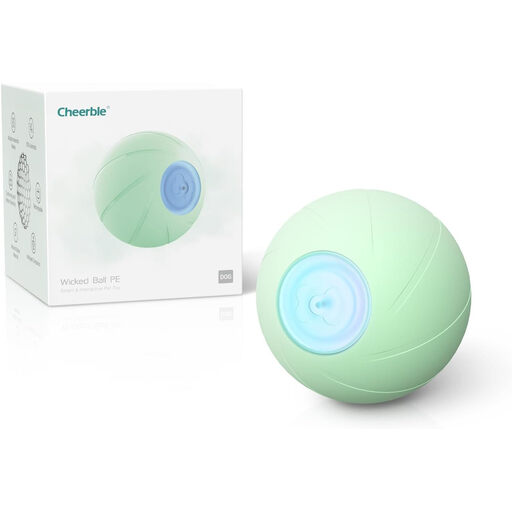
Why This Fits Their Persona: Designed for medium and large dogs whose owners want a hands-free indoor play option during wet UK weather or busy periods.
Its stated 95mm diameter, three modes and defined charging information provide practical details to compare. It is not intended for aggressive chewers.
Three play modes; LED lights; rechargeable battery; stated play time of up to 90 minutes per charge.
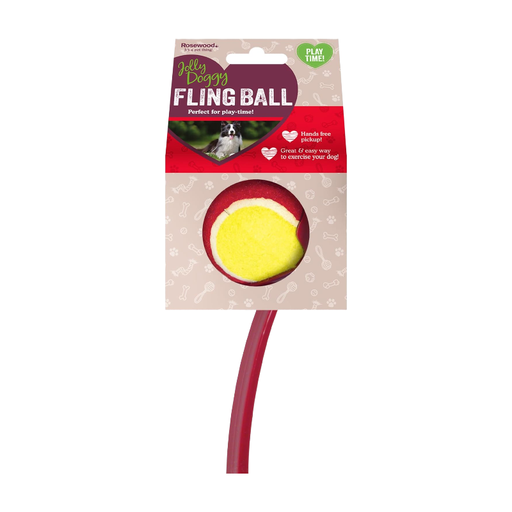
Why This Fits Their Persona: A practical match for energetic dogs and owners who regularly play fetch in a garden, park or other open space.
It is a manual dog ball launcher, so there are no batteries, charging cycles or motor components to maintain. The ball and launcher still need regular damage checks.
Includes a tennis ball; supports longer throws; allows hands-free collection from the ground.
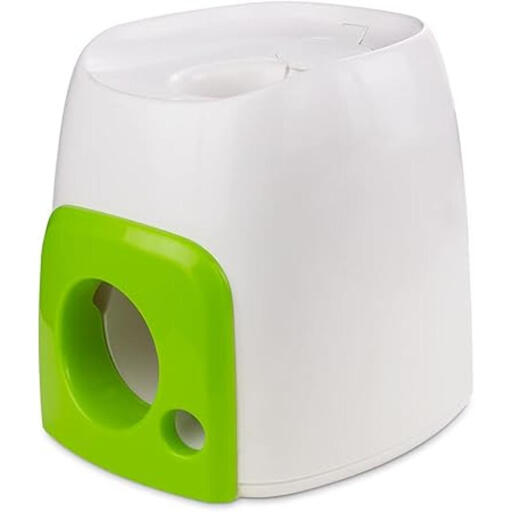
Why This Fits Their Persona: Suitable for owners who want to combine fetch with food-based problem-solving and gradually teach independent play.
The toy uses no batteries, avoiding power-related running costs. It still requires training, supervision and suitable treats rather than being a fully automatic solution.
Treat compartments; included tennis ball; battery-free operation; can be introduced to dogs at different life stages.
We have compiled a complete, real-time list of products that fully satisfy these strict selection criteria and UK safety regulations.
Start with short sessions and observe your dog’s behaviour. Stop if your pet becomes frustrated, overly tired or starts chewing the toy aggressively. Electronic toys should be used according to the product instructions, while fetch games require breaks and access to water.
Not always. Supervision is particularly important for puppies, strong chewers, toys with fabric covers, treat compartments, electronic components or small parts. Remove the toy immediately if it cracks, splits, deflates or exposes internal material.
The ongoing cost is generally limited to electricity for charging, but the practical cost depends on charging frequency, battery lifespan and replacement availability. Battery-free options such as a dog ball launcher or manual treat toy avoid charging altogether. For any rechargeable model, keep the cable away from your dog and follow the supplied charging instructions.