
24/7 Customer Support

Free returns

Same-day & Next-day Delivery

Quality Guaranteed

Unlock Your Welcome Offers: FREE Delivery | Up to 80% OFF | Free 30-day JoyPlus trial
Download the APP
Interactive dog toys can make daily play more varied, but choosing one based only on a colourful design or a “durable” label can lead to disappointment. The right option depends on your dog’s size, age, chewing habits and preferred way to play.
For UK households, three common buying traps are worth avoiding:
Different materials suit different activities:
Always read the product warning rather than relying on a general category label. For example, some tug toys are specifically marked not a chew toy, while certain plush and rope designs are not suitable for aggressive chewers.
For dog toys for puppies and dog toys for small and medium dogs, practical dimensions matter more than appearance. Your dog should be able to pick up the toy without struggling, but it should not be small enough to fit entirely into their mouth.
For larger dogs, consider whether the toy has enough length for comfortable tugging and enough surface area to carry. A lightweight design may work well indoors or for smaller dogs, while a larger squeaky plush toy can be easier for a medium or large dog to find and retrieve.
Ask what you want the toy to do:
Inspect toys before and after play. Look for frayed rope, cracked rubber, loose stitching, damaged squeakers, torn fabric or broken plastic. Remove the item immediately if parts become loose or could be swallowed. Cleaning instructions also matter: many plush toys are intended for wiping with a damp cloth rather than machine washing.
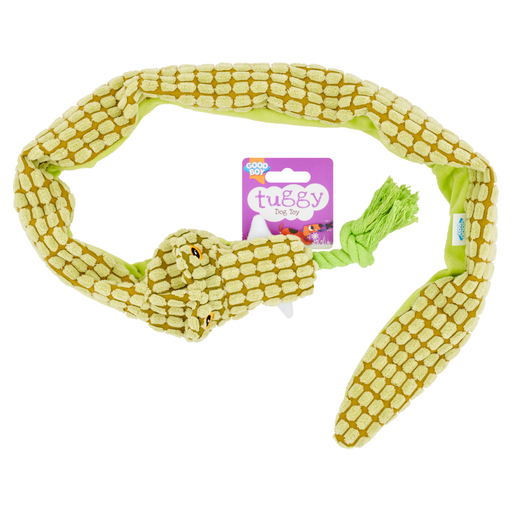
Why This Fits Their Persona: A straightforward option for owners introducing interactive play at home, on a walk or in the garden. Its lightweight construction is designed for gripping during tugging games.
The product information clearly warns that it is not a chew toy, helping set realistic expectations rather than suggesting unlimited durability.
Synthetic fabric, reinforced stitching and a lightweight shape for supervised tugging and bonding play.
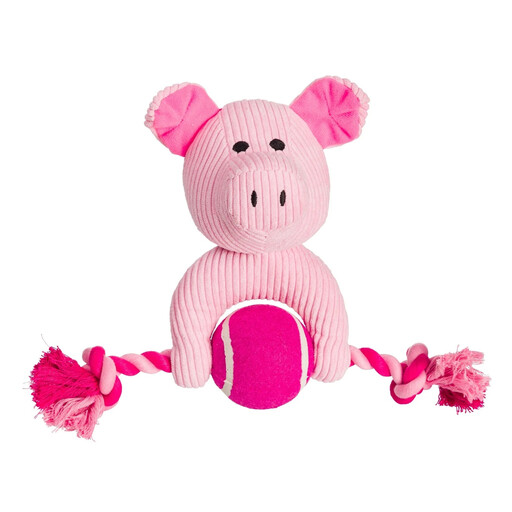
Why This Fits Their Persona: Suitable for owners wanting several play textures in one supervised toy, including plush fabric, a twisted rope, a tennis ball and a squeaker.
The multiple components are listed clearly, along with warnings to remove the toy if the rope frays or the tennis ball cracks.
Combines tugging, fetching and sound stimulation in a soft pig-shaped design.
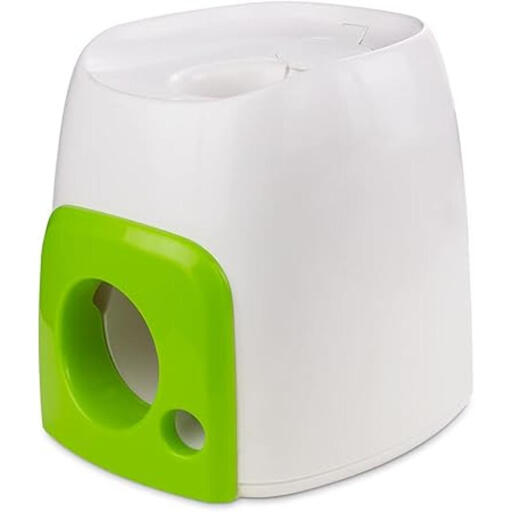
Why This Fits Their Persona: A practical choice for dogs that enjoy problem-solving and food-led activities, including owners who want to build towards independent play.
It explains how the ball mechanism and treat compartments work, so buyers can assess whether their dog will understand the interaction.
Battery-free operation, a ball-triggered treat hatch and separate hiding compartments.
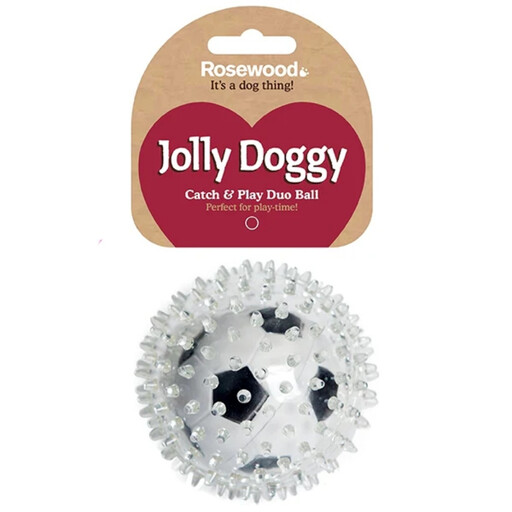
Why This Fits Their Persona: Designed around throw-and-retrieve play, it suits owners with access to a secure garden, park or suitable indoor space.
The listing specifies rubber construction and warns against use by highly aggressive chewers, rather than presenting it as universally indestructible.
Football shape, textured surface and a two-function design for fetching or supervised solo play.
We have compiled a complete, real-time list of products that fully satisfy these strict selection criteria and UK safety regulations.
Rotate two or three toys rather than leaving every item available all the time. This can maintain interest without encouraging constant chewing on one object. Begin new games gradually:
For puppies, choose manageable sizes and avoid overwhelming mechanisms. For older dogs, select toys that are easy to grip and do not require excessive force. Owners of small and medium dogs should pay particular attention to the dimensions of balls, squeakers and detachable components.
Many are suitable for puppies, but suitability depends on the toy’s size, materials and warnings. Begin with supervised plush, soft rope or simple treat-based play. Remove any toy that becomes damaged or produces loose threads or small parts.
There is no fixed lifespan. It depends on chewing strength, frequency of use, cleaning and the toy’s intended function. A fetch toy used occasionally may last longer than a plush toy subjected to daily chewing. Inspect every toy regularly instead of waiting for a set replacement date.
The toy itself may be battery-free, but you will need suitable treats or kibble. To manage cost and calorie intake, use part of your dog’s normal daily food allowance where appropriate and follow feeding guidance from your vet or the food manufacturer.