
24/7 Customer Support

Free returns

Same-day & Next-day Delivery

Quality Guaranteed

Unlock Your Welcome Offers: FREE Delivery | Up to 80% OFF | Free 30-day JoyPlus trial
Download the APP
Choosing interior emulsion paint 2.5L can seem straightforward until the colour looks different at home, the finish marks easily or one tin does not cover as much wall as expected. For UK homeowners, tenants, landlords and DIY decorators, the right choice depends on more than shade and price.
This guide explains the practical specifications to check, highlights common buying traps and matches several options to different decorating needs.
A standard matt emulsion can provide an attractive flat finish, but it may not be designed for repeated wiping. In hallways, staircases, children’s bedrooms and family rooms, everyday scuffs can quickly become visible.
If frequent cleaning is likely, look for washable wall paint, a tough matt formulation or stated stain-repellent technology. A decorative matt paint for a quiet bedroom may not be suitable for a busy entrance hall.
A colour viewed on a website or small label may appear different depending on daylight, artificial lighting and surrounding furnishings. Warm off-whites can look creamier in north-facing rooms, while grey or green shades may appear cooler in bright daylight.
Order or view a sample where possible, and check the colour on the actual wall before committing to several tins. For larger projects, make sure every tin uses the same colour reference and mix tins together before application to reduce visible variation.
Coverage is normally given for smooth, prepared surfaces. Porous plaster, textured walls, strong existing colours and heavy repairs can require additional paint or a suitable primer.
The products below state coverage of around 13–14m² per litre, but your usable coverage may be lower. Measure the wall area, account for doors and windows and allow for two coats where the product instructions recommend them.
A flat matt finish helps reduce reflected light and can minimise the appearance of minor surface imperfections. It is commonly chosen for living rooms, bedrooms, ceilings and hallways.
For bathrooms, ordinary wall paint may not be the right option. Look for a dedicated bathroom emulsion paint with moisture, steam or mould-resistant properties. A soft sheen finish can also be practical because it is generally easier to wipe than a standard matt surface.
For kitchens, a dedicated kitchen emulsion paint with stain-repellent or grease-resistant features is more appropriate around everyday cooking areas. Paint is not a substitute for tiles or splashbacks in areas exposed to constant water.
Check the stated coverage, recommended number of coats and recoat period together. Several 2.5L products listed here allow a second coat after approximately 2–4 hours, although bathroom products may require longer before exposure to condensation.
A 2.5L tin is useful for medium-sized decorating projects, but the exact result depends on surface condition, application method and colour change. Use a good-quality roller for broad walls and a brush for edges and corners.
A water-based, low odour interior paint is usually convenient for indoor decorating and allows brushes and rollers to be cleaned with warm, soapy water. “Low odour” does not mean that ventilation is unnecessary. Keep windows open where practical during application and drying.
Before painting, surfaces should be clean, dry and free from grease, dust and loose material. In kitchens, degreasing is particularly important. For older surfaces, follow the paint manufacturer’s preparation and safety guidance. Pre-1990 paint may require special precautions because it could contain lead.
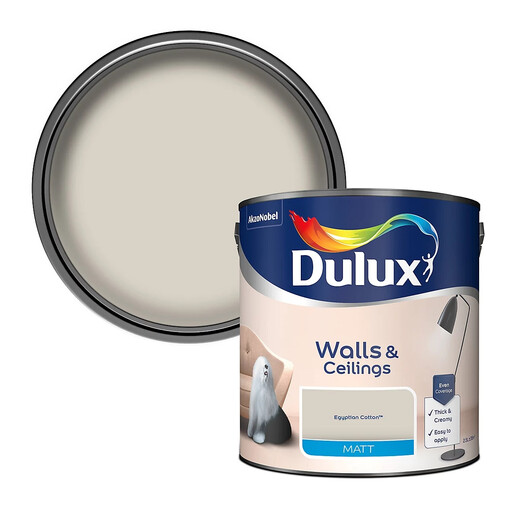
Why This Fits Their Persona: A practical choice for general walls and ceilings in living rooms, bedrooms and hallways, particularly when a warm off-white is preferred over brilliant white.
It is positioned as a standard matt paint rather than a specialist bathroom or heavy-duty coating, helping buyers match expectations to the room.
Water-based, low VOC and low odour formula; stated coverage up to 13m² per litre and recoat time of 2–4 hours.
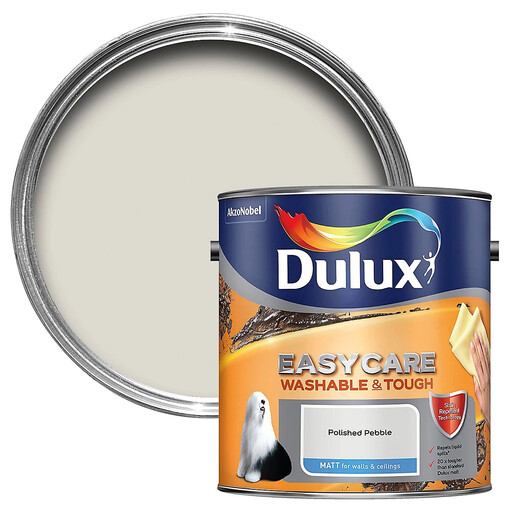
Why This Fits Their Persona: Suitable for shoppers prioritising a neutral colour and a finish designed for regular cleaning in family rooms, dining areas and hallways.
Its stated washable and stain-repellent features address the common problem of choosing an attractive matt finish that cannot cope with everyday marks.
Stain-repellent technology; water-based formula with stated coverage up to 13m² per litre.
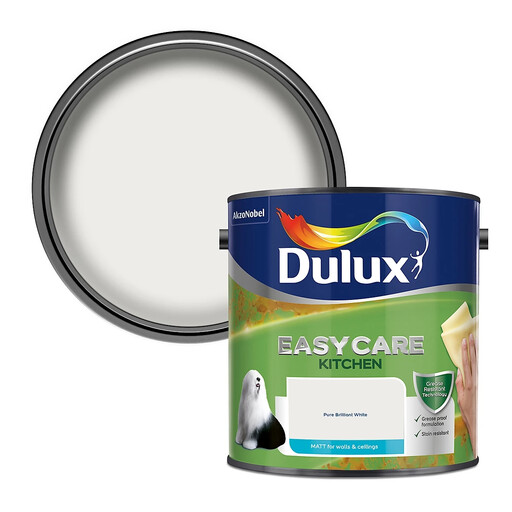
Why This Fits Their Persona: Designed for kitchen walls and ceilings where cooking marks, grease and frequent cleaning are part of normal use.
It is a kitchen-specific formula rather than a general-purpose emulsion, reducing the risk of using standard paint in a grease-prone room.
Stated resistance to kitchen grease and stains; washable matt finish and low odour, water-based formula.
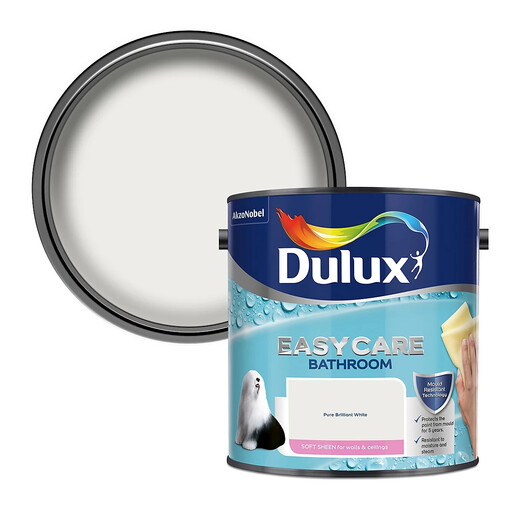
Why This Fits Their Persona: A dedicated option for bathroom walls and ceilings exposed to steam, splashes and condensation, provided the surfaces and ventilation meet the instructions.
Its bathroom-specific moisture and steam-resistant specification is more suitable than using a standard matt emulsion in a humid room.
Soft sheen finish; stated mould-resistant and washable formulation for bathroom walls and ceilings.
We have compiled a complete, real-time list of products that fully satisfy these strict selection criteria and UK safety regulations.
It depends on wall size, surface condition and the number of coats. At a stated rate of 13m² per litre, a 2.5L tin provides a theoretical coverage of up to 32.5m². Porous plaster, textured walls or a significant colour change can reduce this figure.
Use a dedicated bathroom emulsion paint where possible. Bathroom formulations are designed with features such as moisture, steam or mould resistance. Ensure adequate ventilation and follow the product’s drying instructions before exposing freshly painted surfaces to condensation.
Lifespan depends on traffic, cleaning, damp levels, surface preparation and application quality. Washable or tough matt paint can be more suitable for frequently used rooms, while standard matt emulsion may be sufficient for lower-contact ceilings and bedrooms. Repaint when the finish is visibly marked, faded or damaged, after addressing any underlying damp or surface problem.