Navigating the requirements for fire safety in your home can feel complex, especially with the specific legislation now in place across Scotland. If you're a homeowner or landlord, ensuring your property is fitted with a compliant system of interlinked smoke and heat alarms is a legal responsibility. The goal is simple: when one alarm detects a fire, all alarms sound, giving everyone in the property the earliest possible warning.
This guide is designed to simplify the process. We'll explain the key features to look for in a compliant system and provide some practical recommendations to help you protect your property and its occupants.
Your Guide to Choosing a Compliant Fire Alarm System
Meeting the scottish fire alarm legislation doesn't have to be a challenge. By focusing on a few key criteria, you can confidently select a system that is both effective and compliant.
1. Understanding Interlinking
The core of the Scottish standard is the requirement for alarms to be interlinked. This means that if a fire is detected in the kitchen, the alarm in the upstairs bedroom will also sound instantly. You can achieve this through two methods:
- Hard-wired: These alarms are connected by physical wiring and must be installed by a qualified electrician. They are often fitted during new builds or major renovations.
- Wireless Interlinked: These alarms connect to each other via radio frequency. They are typically battery-powered and are much easier to install, making them an ideal choice for retrofitting in existing homes. Many now come with a 10 year battery smoke alarm sealed unit, meaning no low-battery chirps for a decade.
2. Smoke vs. Heat Alarms: Where to Place Them
A compliant system requires a mix of alarm types placed in specific areas:
- Smoke Alarms: One should be installed in the room you use most for general daytime living purposes (e.g., the living room), as well as in every circulation space on each storey, such as hallways and landings. Look for alarms with photoelectric sensors, which are effective at detecting slow, smouldering fires.
- Heat Alarms: One must be installed in every kitchen. Heat alarms are designed to detect a rapid increase in temperature and are used in kitchens to avoid false alarms from cooking fumes.
3. Checking for Certification
To ensure an alarm meets the required safety and performance standards, check that it is certified to the relevant British Standards. For smoke alarms, this is EN14604 certified smoke alarm, and for heat alarms, it is BS 5446-2:2003. Reputable products will clearly state these certifications on their packaging or product description.
Our Top Product Recommendations
Here are a few options that meet the technical requirements for a modern, compliant fire safety system.
Wisualarm Interlinked Smoke and Heat Alarm Scotland Bundle

- Why It Stands Out: This smoke and heat detector bundle is specifically designed as an all-in-one solution for Scottish compliance. The units come pre-linked from the factory, which removes the most technical step of the setup process. You simply activate them and mount them in the correct locations.
- Pros:
- Includes 2 smoke alarms and 1 heat alarm, covering the minimum requirements for most homes.
- Pre-linked for straightforward, tool-free setup.
- Sealed 10-year battery life in all units.
- Certified to both EN14604 (smoke) and BS 5446-2:2003 (heat).
- Expandable system, allowing up to 24 units to be linked.
- Who is it for? Homeowners and landlords looking for the most direct and convenient way to become compliant, without the need for technical pairing procedures or hiring an electrician.
Black + Decker Connected Smoke Alarm
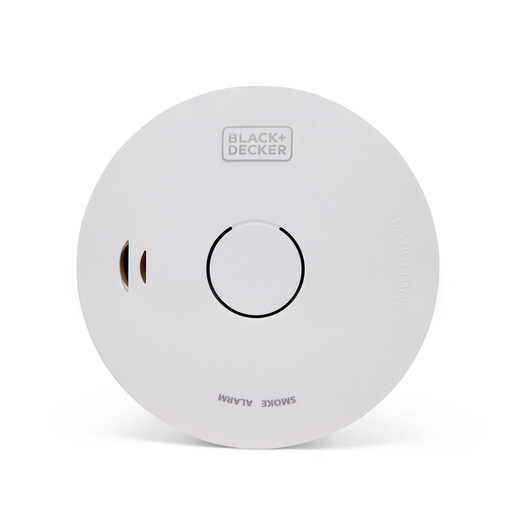
- Why It Stands Out: This alarm from a well-known brand offers the flexibility to build a custom wireless interlinked smoke alarms system. Each unit can be paired with up to 20 other compatible Black + Decker alarms, allowing you to create a network tailored to the specific size and layout of your property.
- Pros:
- Features wireless interlinking capability.
- Sealed 10-year sealed lithium battery for long-term operation.
- Optical sensor is suitable for living rooms, hallways and bedrooms.
- Large, easy-to-use test and silence button.
- Who is it for? Individuals who need to add a single interlinked smoke alarm to a compatible system or prefer to purchase components individually to build a custom setup. Note that you will also need to purchase compatible heat alarms separately for full compliance.
HEIMAN Mini Smoke Detector (5-Pack)
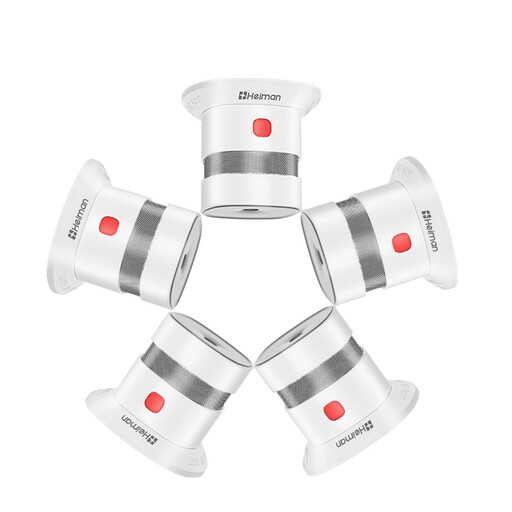
- Why It Stands Out: This multi-pack offers excellent value for covering multiple rooms and hallways with high-quality smoke detection. The units are exceptionally small and discreet, blending easily into any ceiling. They are fully certified and feature a long-life battery.
- Pros:
- T?V and EN14604 certified for reliability.
- Sealed 10-year battery provides a decade of service.
- Compact and minimalist design.
- Photoelectric sensor helps reduce nuisance alarms from cooking.
- Who is it for? Those who need to install multiple standalone smoke alarms. It is important to note that these specific units are not interlinked. They function as individual alarms and would need to be part of a broader system including interlinked alarms and a heat alarm to meet the full Scottish legal standard.
Looking for More Options?
If these recommendations don't quite fit your property's unique layout, or if you're looking for different features, there are many other solutions available. You can explore a wider variety of models and bundles to find the perfect fit for your home.
[Explore our full range of wireless smoke alarms here](https://www.joybuy.co.uk/explore/wireless-smoke-alarm/vMfXYNyh)
Frequently Asked Questions (FAQ)
1. What are the fire alarm rules in Scotland? As of February 2022, all homes in Scotland are required to have an interlinked fire alarm system. This means one smoke alarm in the main living room, one smoke alarm in every circulation space (hallways, landings) on each storey and one heat alarm in the kitchen. All alarms must be interlinked.
2. Do I need both smoke and heat alarms in Scotland? Yes. The legislation requires at least one heat alarm in the kitchen and smoke alarms in living areas and circulation spaces. A system with only smoke alarms or only heat alarms is not compliant.
3. How long do 10-year smoke alarm batteries actually last? Alarms with a sealed 10-year battery are designed so that the battery will power the unit for its entire service life, which is typically ten years. This eliminates the need for annual battery changes. However, you must still test the alarm regularly (usually weekly or monthly) using the test button to ensure it is functioning correctly. The entire unit must be replaced after ten years.


