
24/7 Customer Support

Free returns

Same-day & Next-day Delivery

Quality Guaranteed

Unlock Your Welcome Offers: FREE Delivery | Up to 80% OFF | Free 30-day JoyPlus trial
Download the APP
Navigating the requirements for home fire safety in Scotland can feel complex. Since the introduction of new legislation, many homeowners and landlords are seeking clear, practical advice on how to ensure their properties are both safe and compliant. The standard now requires an interlinked system, where all alarms sound simultaneously if one is triggered, providing the earliest possible warning in an emergency.
This guide is designed to help you understand the current scottish fire alarm legislation and select a suitable system for your home. We will outline key features to look for, such as alarm types and battery life, and present some of our top recommendations to simplify your purchasing decision.
Making the right choice is about more than just ticking a box. It’s about securing peace of mind. Here are a few key considerations when selecting your fire alarm system.
An interlinked system ensures that if a fire is detected in one room, alarms throughout the entire property will sound. This is a critical safety feature, especially in larger homes or over multiple floors.
Not all alarms are the same. Placing the correct type of detector in the right location is essential for both safety and avoiding nuisance alarms.
One of the most significant advancements in alarm technology is the sealed 10 year battery smoke alarm. While the initial cost may be slightly higher than alarms with replaceable batteries, they offer a decade of uninterrupted power. This eliminates the late-night chirping of a low battery and the recurring cost and hassle of replacements, providing a "fit and forget" solution for long-term safety.
Here are a few options that meet the technical standards for compliant smoke alarms uk, selected to address the needs of homeowners and landlords in Scotland.

Why It Stands Out: This bundle is a complete, out-of-the-box solution specifically designed to meet the Scottish legislation. It includes two smoke alarms and one heat alarm that are pre-linked, meaning they are ready to communicate with each other as soon as they are activated. The system is entirely wireless and powered by sealed 10-year lithium batteries.
Pros:
Who is it for? Homeowners and landlords in Scotland looking for a straightforward, all-in-one package to make their property compliant with minimal fuss.
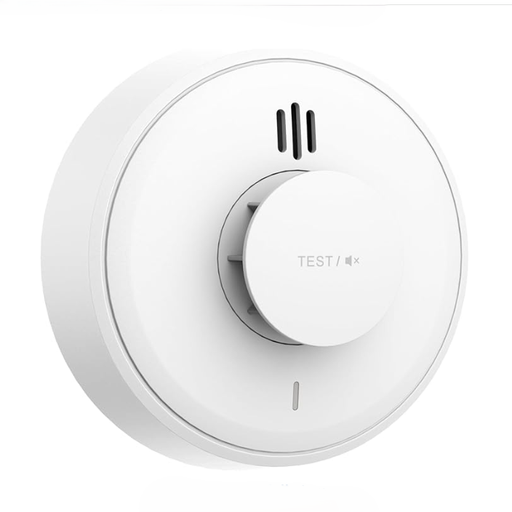
Why It Stands Out: This is a standalone heat detector ideal for areas prone to fumes or dust, like kitchens and garages. It features a high-precision thermistor designed to trigger an alarm when temperatures rise to between 54°C and 65°C, reducing the likelihood of false alarms from cooking. It conforms to the BS 5446 standard.
Pros:
Who is it for? Anyone needing to add a compliant heat alarm to their kitchen or garage. Note that this is a standalone unit and does not interlink with other alarms unless you purchase the interlinked version.
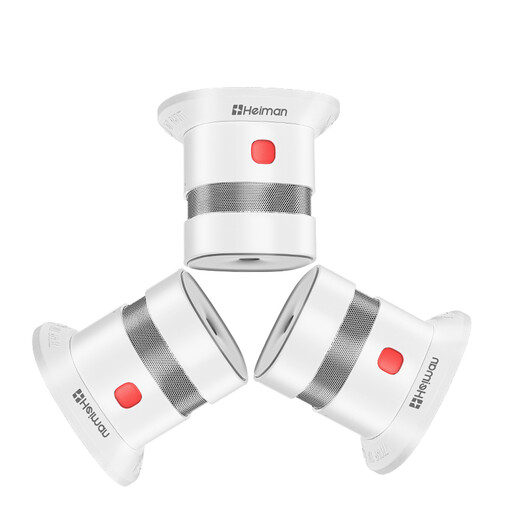
Why It Stands Out: This compact smoke detector offers reliable performance in a discreet package. It is certified to T?V and EN14604 standards and uses a photoelectric sensor, which is effective for detecting smouldering fires. Its main appeal is the combination of a 10-year battery and a very small footprint.
Pros:
Who is it for? Those who need a standalone, certified smoke alarm for a specific room, such as in a small flat, caravan or as a replacement for an expired unit. This is not an interlinked alarm and would not fulfil the Scottish requirement on its own.
If the recommendations above don't quite fit your needs, or if you are looking to build a custom system, there are many other models available. You can explore a wider variety of alarms, including different brands and feature sets.
[Explore our full range of smoke detectors here](https://www.joybuy.co.uk/explore/smoke-detector/bc8271JZ)
As of February 2022, all homes in Scotland are required to have an interlinked fire alarm system. This means if one alarm goes off, they all go off. The standard requires:
Not necessarily. If you choose a wireless smoke alarm bundle with sealed batteries, installation is typically a straightforward DIY job that does not require mains wiring. These alarms connect wirelessly and can be mounted with screws or strong adhesive pads. However, if you opt for a hardwired system, you must hire a qualified electrician.
For a typical two-storey home in Scotland, you would need a minimum of: