
24/7 Customer Support

Free returns

Same-day & Next-day Delivery

Quality Guaranteed

Unlock Your Welcome Offers: FREE Delivery | Up to 80% OFF | Free 30-day JoyPlus trial
Download the APP
An ionic hair dryer can be a useful choice if your routine involves static, flyaways or long drying times. However, product listings often emphasise ion counts, motor speed and wattage without explaining how those figures affect everyday use. A suitable dryer should match your hair type, styling habits, storage space and tolerance for noise—not just its headline specification.
Wattage indicates electrical power consumption, but it does not describe airflow on its own. A 2,100W dryer may provide strong heat, while a high-speed model with a brushless motor may move air efficiently at a lower rated wattage. Look for information about airflow speed, motor design and heat control alongside wattage.
Terms such as “millions of negative ions” or “dual ion technology” can sound impressive, but ion output is not the only factor affecting the finish. Frizz can also be influenced by heat exposure, brushing technique, humidity and whether the dryer includes a concentrator or diffuser. Ionic function may help reduce static, but it should be considered alongside adjustable settings and suitable attachments.
A dryer that feels manageable for two minutes may become uncomfortable during a full blow-dry. A lightweight hair dryer can reduce wrist strain, while noise levels matter if you dry your hair early in the morning or share a home. Also check whether the attachments are included, securely fitted and appropriate for your hair texture.
A high-speed hair dryer may use a brushless motor rated at 110,000 RPM, while more traditional models may list power in watts and airflow speed instead. RPM is useful for comparing motor design, but it does not directly guarantee drying time. For practical comparison, check whether the product also provides airflow information, heat settings and a cool-shot function.
The BABONIR FZ201, for example, lists a 20,000 RPM motor and 22m/s airflow, while selected high-speed dryers list 110,000 RPM motors. These are different measurements, so avoid comparing them as though they describe the same performance category.
At least two speed settings and several temperature options give you more control over dampness, hair density and styling. A fast-drying hair dryer should not require maximum heat throughout the session. Models with circulating hot-and-cold air or intelligent temperature control may be more convenient for users who want to limit prolonged exposure to high temperatures.
For curly and textured hair, a lower heat setting and diffuser can help distribute airflow more evenly. For a smooth finish, a concentrator nozzle directs air along a section of hair while you brush.
Check the listed weight before buying, especially if you have long, dense or textured hair. Compact and foldable designs can be practical for smaller bathrooms or travel, but a folding joint should still feel secure and the dryer must be allowed to cool before storage.
For use in Britain, check that the appliance is suitable for 220–240V UK mains electricity and that the package includes the correct plug or approved adaptor. Look for relevant UK product marking and follow the supplied instructions. Hair dryers are not waterproof: keep them away from baths, showers and basins, unplug them after bathroom use, and keep air vents free from lint and hair.
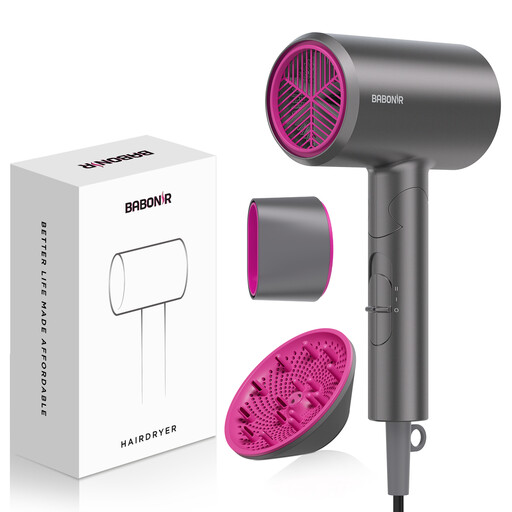
Why This Fits Their Persona: A practical option for everyday home drying, compact bathrooms and short UK trips, with a foldable handle and listed weight of 330g.
Its specifications include airflow speed, motor speed and six heat-and-power combinations, rather than relying only on a wattage headline.
1800W power, diffuser and concentrator included, plus a foldable design for storage.
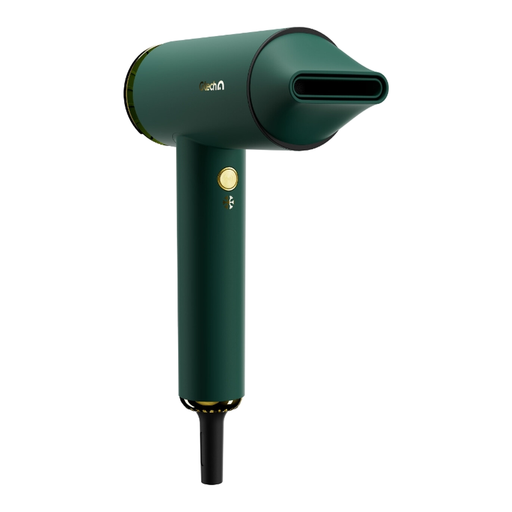
Why This Fits Their Persona: Suitable for shoppers seeking detailed control, quick drying and a compact appliance for home or travel use.
The product lists four heat levels, four airflow speeds and approximate temperature settings, making control clearer than a simple hot/cold switch.
110,000 RPM brushless motor, magnetic diffuser and concentrator, memory function and a listed two-year warranty.
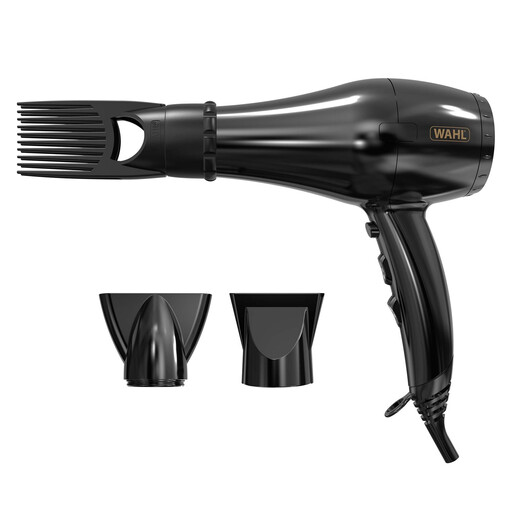
Why This Fits Their Persona: Designed around afro, curly and textured hair routines where root access, volume and attachment choice are important.
It provides a pik attachment and two concentrator nozzles, so the dryer is not limited to one general-purpose airflow pattern.
1800W power, ionic conditioning, three heat settings, two speeds, cool shot and a 3m cord.
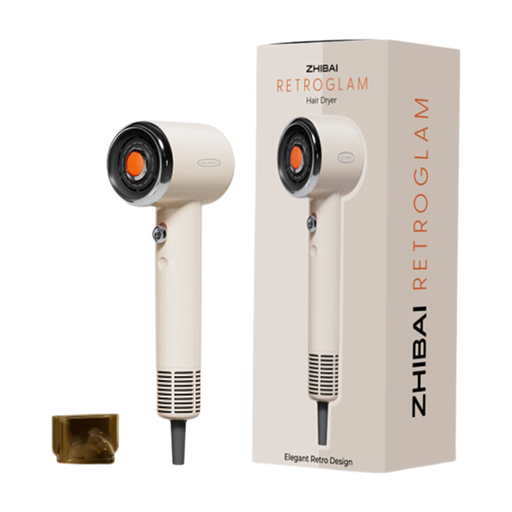
Why This Fits Their Persona: A lightweight option for users who value a quieter listed operating level and automatic temperature management.
It lists an approximate 56dB noise level, 378g weight and four temperature modes, giving useful details beyond its 110,000 RPM motor claim.
Dual-ion feature, removable anti-suction filter and hot, warm, cold and circulating-air modes.
It can be, provided it has appropriate airflow control and a diffuser or pik attachment. Use a lower heat setting where practical, avoid holding the nozzle too close to the scalp, and select a diffuser that distributes air rather than concentrating it in one area.
Not necessarily. Motor speed and electrical consumption are different measurements. Check the product’s rated wattage, such as 1,600W or 1,800W, and consider how long the dryer takes to complete your routine. A shorter drying session may affect total usage, but actual running cost depends on wattage, duration and your electricity tariff.
Lifespan depends on frequency of use, motor construction, filter maintenance and storage. Clean removable filters regularly, keep vents unobstructed and allow hot attachments to cool before putting the dryer away. Stop using the appliance if the cord, plug or casing becomes damaged, and follow the manufacturer’s care instructions.