
24/7 Customer Support

Free returns

Same-day & Next-day Delivery

Quality Guaranteed

Unlock Your Welcome Offers: FREE Delivery | Up to 80% OFF | Free 30-day JoyPlus trial
Download the APP
An ionic hair dryer can make everyday styling quicker and help create a smoother-looking finish, but a high RPM figure or large ion count does not automatically make a dryer suitable for your hair. UK shoppers should look beyond headline claims and check the controls, attachments, weight and electrical details before buying.
The most common purchasing pitfalls include:
A brushless motor hair dryer can offer a compact design and high rotational speed. However, RPM is not the same as drying speed. Check the rated power, speed controls and whether the dryer provides a useful cool shot.
For example, the Gtech DryOnic is listed with a 110,000 RPM brushless motor, 1,600W rated power, four heat settings and four airflow speeds. This combination offers more adjustment than a dryer with only one or two fixed modes.
A high-speed hair dryer should let you reduce airflow around the roots, fringe or fragile ends. Thick hair may benefit from stronger airflow, while fine or colour-treated hair generally calls for lower heat and shorter exposure.
Look for at least two heat levels, although four settings provide more flexibility. A dryer offering stated temperature levels makes comparison easier. The Gtech model lists approximately 40°C, 60°C, 80°C and 100°C, while other models may use less specific low, medium and high labels.
Lower heat is practical for fine, dry or colour-treated hair. Higher settings may be useful for thick hair, but holding hot air too close to one section can cause discomfort and unnecessary heat exposure. Keep the dryer moving and finish with the cool shot where available.
A lightweight hair dryer is easier to hold while sectioning hair or creating volume with a round brush. Check the listed weight rather than relying on words such as “compact”. The Huikeda model is listed at 450g, while the Gtech DryOnic is approximately 0.6kg.
Also check whether the product includes:
A travel hair dryer should be compact, but dual voltage is important if you plan to use it outside the UK. Never use a dryer near water, cover the air inlet or leave it plugged in unattended.
The right choice depends on whether you mainly want faster drying, smoother hair, root volume or a complete styling system. These are our top recommendations by user profile.
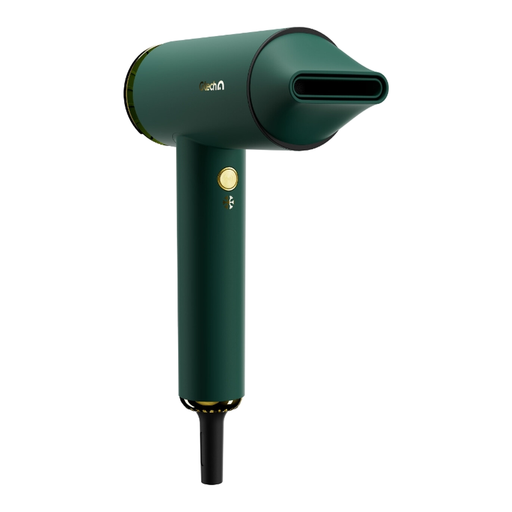
Why This Fits Their Persona: A practical starting point for UK shoppers wanting a fast-drying hair dryer with more control than a basic model.
Its four heat and four speed settings avoid the limitations of a single high-temperature mode.
110,000 RPM brushless motor, magnetic concentrator and diffuser, memory function and approximately 0.6kg weight.
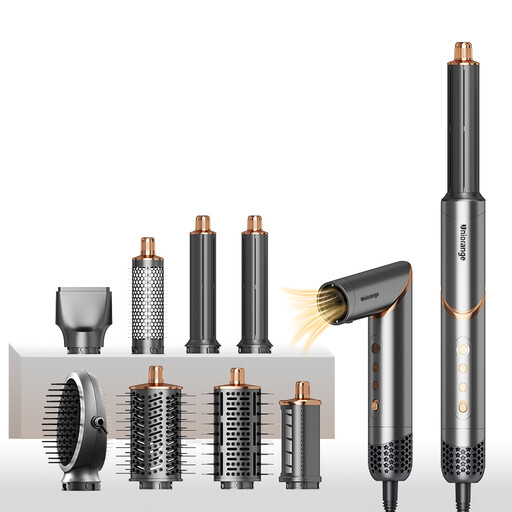
Why This Fits Their Persona: Suitable for shoppers who want one salon-quality hair styling tool for drying, smoothing, curling and adding volume.
The listed attachment system makes the styling functions clear instead of relying on a vague “multi-styler” label.
Eight attachments, 4 heat and 3 speed settings, 110,000 RPM brushless motor and automatic left/right curling barrels.
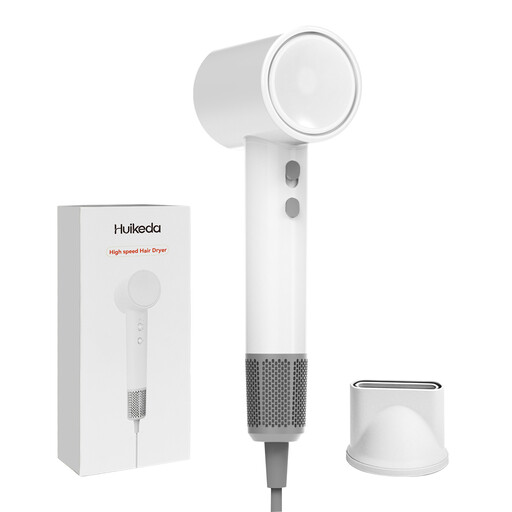
Why This Fits Their Persona: A compact option for frequent home use or travel, particularly where low weight and quick drying matter.
The removable filter addresses a commonly overlooked maintenance point and supports regular cleaning.
Listed 450g weight, 110,000 RPM motor, four heat modes, cool shot and magnetic smoothing nozzle.
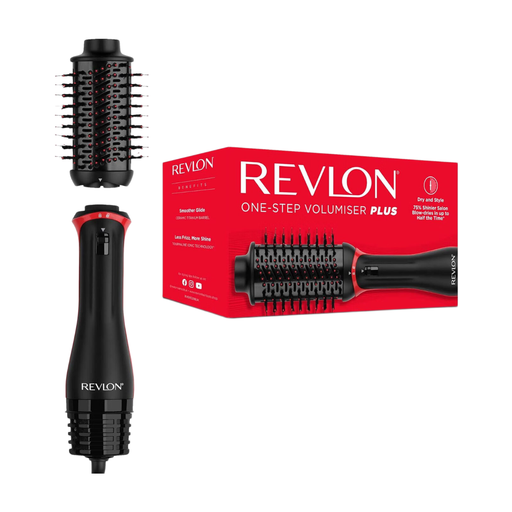
Why This Fits Their Persona: Designed for shoppers who prefer a brush-led blowout with root lift rather than a separate dryer and styling brush.
The detachable head and four heat options make storage and temperature selection more practical.
30% smaller detachable oval head, ionic technology, ceramic titanium tourmaline coating and wet-and-dry styling design.
It can be, but use a lower heat and airflow setting to avoid flattening the roots. If volume is your priority, consider a diffuser, concentrator or volumising brush rather than relying only on ionic technology.
Not necessarily. Running cost depends mainly on wattage and usage time. A 1,600W dryer used for a shorter period may consume a similar amount of electricity to a lower-powered dryer used for longer. To estimate cost, multiply the appliance’s kilowatt rating by usage hours and your electricity tariff.
Lifespan depends on construction, frequency of use and maintenance. Clean a removable filter regularly, keep the inlet clear and stop using the appliance if it becomes unusually hot, emits smoke or makes abnormal noises. Check the retailer’s warranty and retain proof of purchase.