
24/7 Customer Support

Free returns

Same-day & Next-day Delivery

Quality Guaranteed

Unlock Your Welcome Offers: FREE Delivery | Up to 80% OFF | Free 30-day JoyPlus trial
Download the APP
As a Joybuy Product Recommendation Officer, my role is to help you navigate the crowded market of phone accessories. With the arrival of the iPhone 16 Pro Max, the need for robust screen protection is clear. However, for many UK professionals and commuters, safeguarding digital information is just as crucial as preventing physical damage. An iPhone 16 Pro Max privacy screen protector is the solution, but not all are created equal.
Before you buy, it's important to be aware of common marketing claims that don't always match reality. Many users find themselves disappointed with protectors that peel, bubble or fail to provide the privacy they were promised.
To ensure you get a product that delivers on both protection and privacy, focus on these key technical specifications.
The industry standard for a quality tempered glass screen protector is 9H hardness. This rating refers to the material's ability to resist scratches from a 9H pencil, the hardest of the standard graphite pencils. This means it can effectively withstand scratches from everyday objects like keys and coins in your pocket or bag. Look for protectors made from high-alumina-silicate glass, which offers enhanced durability against drops and impacts compared to standard soda-lime glass.
The core of a privacy screen protector is its micro-louver technology. These tiny, angled slats control the viewing angle of your screen.
A screen protector shouldn't compromise your phone's usability. The top layer is typically treated with specific coatings to enhance the user experience.
Based on these criteria, we've matched a few options to different user needs.
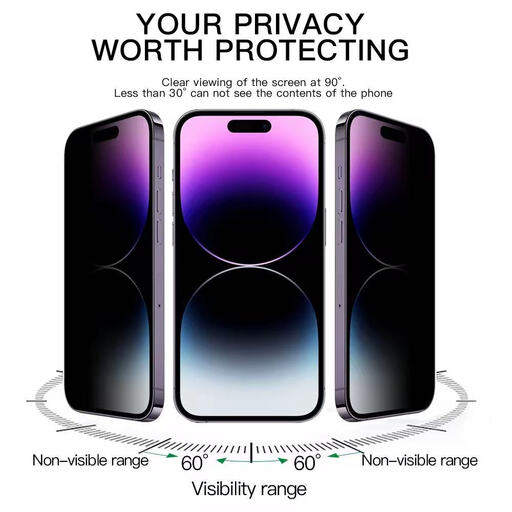
Why This Fits Their Persona: This protector is built for those who frequently use their phone on public transport or in busy cafes. The 360-degree privacy filter ensures that sensitive work emails or personal messages are shielded from prying eyes from any angle.
It directly addresses the "bubble-free myth" by using an automatic adsorption adhesive and including an applicator, simplifying the installation process for a clean fit.
Features 360-degree privacy for comprehensive security and is made with 9H hardness tempered glass for reliable anti-scratch protection.
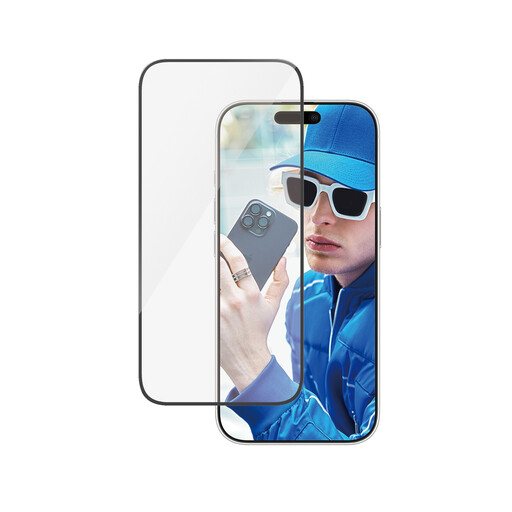
Why This Fits Their Persona: For users who prioritise brand reputation and sustainability. PanzerGlass uses 60% recycled glass in its construction and focuses on reduced, recyclable packaging. Note: This link is for the iPhone 16 Pro model, but represents the quality and features available from the brand.
Its "Ultra-Wide Fit" is specifically engineered to be case friendly, covering the maximum screen area while leaving just enough room at the edges to prevent lifting from a case.
Includes an "EasyAligner" tool made from recycled plastic for a precise, guided installation. The smudge-free coating effectively reduces fingerprint traces.
We have compiled a complete, real-time list of products that fully satisfy these strict selection criteria and UK safety regulations.
A high-quality privacy screen protector is designed with precise cutouts for the TrueDepth camera system. This ensures that Face ID functionality is not affected. However, poorly manufactured or incorrectly installed protectors can sometimes obstruct the sensors, so choosing a reputable product with a good alignment tool is important.
You should expect a noticeable reduction in screen brightness, typically between 15% and 25%. This is an inherent trade-off for the micro-louver technology that creates the privacy effect. You will likely need to operate your phone at a slightly higher brightness level than you would with a standard clear protector, which may have a minor impact on battery life.
It is not advisable. The adhesive layer on a tempered glass screen protector is designed for a single, clean application. Once removed, the adhesive loses its integrity and is likely to attract dust and lint. Attempting to re-apply it will almost certainly result in air bubbles and a less secure fit. If your first attempt fails, it is better to use a new protector.