
24/7 Customer Support

Free returns

Same-day & Next-day Delivery

Quality Guaranteed

Unlock Your Welcome Offers: FREE Delivery | Up to 80% OFF | Free 30-day JoyPlus trial
Download the APP
As a Joybuy Product Recommendation Officer, my role is to help you navigate the crowded market of phone accessories. With the launch of the iPhone 16 Pro Max, the search for a quality screen protector begins. But not all protectors are created equal, especially when you need an iPhone 16 Pro Max privacy screen protector. Many products make bold claims, but often fall short, leaving you with a compromised user experience.
This guide will walk you through the common pitfalls to avoid and the key features to look for, ensuring your investment is protected from both prying eyes and physical damage.
Before you add a protector to your basket, be aware of these frequent issues that can make an otherwise promising product a poor choice.
case friendly screen protector models, yet they extend too close to the edges. When you fit a case, its lip pushes against the glass, causing it to lift. This creates an entry point for dust and air, leading to unsightly bubbles and eventual peeling. A truly case-friendly design leaves a fractional millimetre gap around the perimeter.anti-spy screen protector iPhone is to obscure the view from the side. However, some manufacturers use an overly aggressive filter. This can make the screen too dark for you to view comfortably, even head-on, and may distort colours. The viewing angle becomes so narrow that sharing your screen with a friend is impossible.bubble-free installation is more about the tools provided than the glass itself. Protectors that come without a plastic alignment frame make a perfect, dust-free application nearly impossible. Without a guide, aligning the glass with the screen's edges and cutouts is a frustrating process that often traps dust and results in bubbles.To ensure you get a protector that performs as expected, focus on these non-negotiable specifications.
You will frequently see the term 9H screen guard in product descriptions. This refers to the hardness of the material on the Mohs scale, where 9H is the level of hardness of a pencil. In practical terms, a tempered glass for iPhone 16 Pro Max with a 9H rating offers substantial resistance to scratches from everyday objects like keys, coins and zips. This makes it an effective anti-scratch screen protector. It is important to remember this rating relates to scratch resistance, not its ability to prevent the screen from shattering from a significant drop.
A privacy filter is created by embedding a micro-louver layer into the glass. These tiny vertical blinds block light from being seen at an angle.
The surface treatment of the glass significantly impacts daily use. An oleophobic coating is essential for an anti-fingerprint phone screen cover. This coating repels oils from your skin, reducing smudges and making the screen easier to clean. It also contributes to a smoother touch experience, ensuring the protector feels as responsive as the phone's native screen.
Instead of a single "one-size-fits-all" recommendation, we have matched a few options to different user needs.
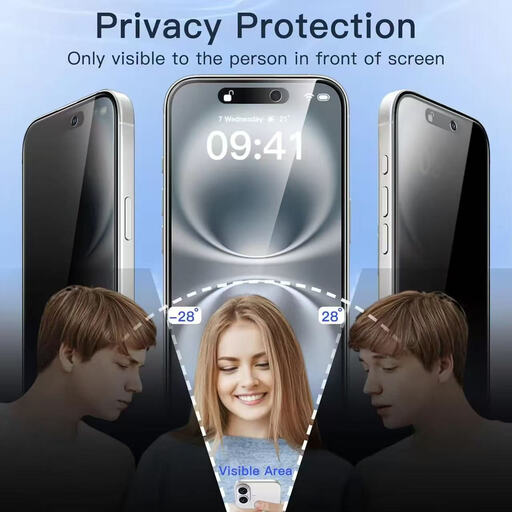
Why This Fits Their Persona: This type of protector is ideal for commuters and professionals who frequently handle sensitive information in public. The 35-degree privacy angle is effective on crowded public transport without being overly restrictive for the user. Note: Ensure you select the correct iPhone 16 Pro Max model on the product page.
It specifies a 35-degree viewing angle, avoiding the trap of overly aggressive filters that make the screen too dark for the user.
Features include an AR anti-reflective coating and multiple layers for dust and fingerprint resistance, alongside the core privacy function.
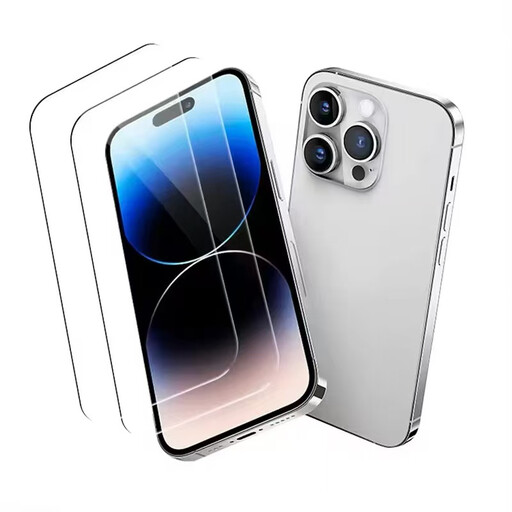
Why This Fits Their Persona: For users who prioritise the iPhone's brilliant display quality above all, a standard ultra-clear protector is the right choice. This option forgoes privacy filtering to maximise light transmittance, preserving the original image quality for photos, videos and daily use.
By being a clear protector, it completely avoids the issue of screen dimming and colour distortion associated with lower-quality privacy filters.
Includes an applicator for a straightforward, bubble-free installation and features a hydrophobic and oleophobic coating to resist fingerprints and oils.
We have compiled a complete, real-time list of products that fully satisfy these strict selection criteria and UK safety regulations.
A well-designed privacy screen protector for the iPhone 16 Pro Max will not interfere with Face ID. These protectors feature a precise cutout for the TrueDepth camera and sensor array located in the Dynamic Island. It is crucial to choose a protector made specifically for your phone model to ensure these cutouts are perfectly aligned.
The key to a bubble-free application is preparation. First, clean your screen thoroughly in a well-lit, dust-free area using the included wet wipe, dry wipe and dust-absorber sticker. The most critical tool is an installation alignment frame, which should be included with the protector. Place the frame over your phone, peel the film from the protector, and lower it into place using the frame as a guide. The adhesive should spread automatically. If small bubbles remain, you can gently push them to the edge with a microfibre cloth.
It is generally not advisable to re-apply a tempered glass screen protector. The adhesive is designed for a single application. Removing it compromises the adhesive's integrity and introduces a high risk of trapping dust and lint underneath, which will cause bubbles and prevent the protector from adhering properly a second time.