
24/7 Customer Support

Free returns

Same-day & Next-day Delivery

Quality Guaranteed

Unlock Your Welcome Offers: FREE Delivery | Up to 80% OFF | Free 30-day JoyPlus trial
Download the APP
A screen protector is a small purchase that can prevent an expensive display repair, but choosing the wrong one can create new frustrations. UK commuters, office workers and frequent travellers often need more than basic scratch protection: they may also want privacy on the train, smooth touch response, easy fitting and compatibility with a protective case.
The VoxorAI iPhone 17 screen protector range includes clear 9H tempered glass options and privacy versions for the iPhone 17, iPhone 17 Pro, iPhone 17 Pro Max and iPhone 17 Air. Before choosing, however, it is worth checking the details rather than relying on broad marketing language.
The iPhone 17 family includes several models with different dimensions and screen layouts. A protector listed for the iPhone 17 Pro Max should not automatically be used on an iPhone 17 Pro or iPhone 17 Air.
Check the product’s applicable model and dimensions before ordering. Also be cautious with listings that mention several models in one description but provide only one size. The product page should clearly identify the intended phone.
A 9H tempered glass screen protector is designed to help resist everyday scratches and abrasions. The hardness rating does not mean the protector, or the phone beneath it, is immune to cracks, drops or impact damage. A phone case remains useful, particularly around the device’s corners and edges.
Look for transparent information about the material, finish and installation method instead of assuming that a hardness number covers all risks.
A privacy screen protector can make the display harder to view from the side, which is useful on public transport or in shared offices. However, privacy filters may reduce apparent brightness or viewing comfort when the phone is not held directly in front of you.
A listed “360-degree privacy screen protector” is intended to restrict visibility from multiple side angles. It is still sensible to check the viewing-angle description and read the installation instructions, as dust, misalignment or trapped bubbles can affect the result.
The protector should align with the active display without covering the front camera or interfering with touch sensitivity. A case-compatible screen protector normally leaves enough clearance around the edges for a phone case, but case designs vary.
Before fitting, remove the case and compare the protector’s stated size with your phone model. Once installed, refit the case carefully. If the case presses against the glass, it may lift an edge over time.
VoxorAI listings specify 9H hardness, smooth tempered glass and coatings intended to resist fingerprints, oil and dust. An anti-fingerprint screen protector generally uses oleophobic or hydrophobic surface treatments to make marks easier to wipe away; it does not mean the screen will never show fingerprints.
Some models also list anti-reflective, dust-resistant and water-resistant coating processes. These are useful user-perceivable features, but coating performance can diminish through repeated cleaning or heavy use.
A bubble-free screen protector depends on both the adhesive and the fitting process. Alignment trays or applicators can reduce positioning errors, while automatic adsorption helps the adhesive spread from the centre towards the edges.
VoxorAI models are described as using 380AB glue and an OCA optical adhesive process. Their listings also specify high light transmittance, intended to preserve image clarity and touch response. Clean the display thoroughly before fitting: a single speck of dust can create a permanent-looking bubble.
An anti-blue-light screen protector may be attractive to users who prefer this type of display filter. Treat it as a product feature rather than a medical or therapeutic benefit.
The following options are organised by practical use case, making it easier to compare a clear protector with a privacy model.
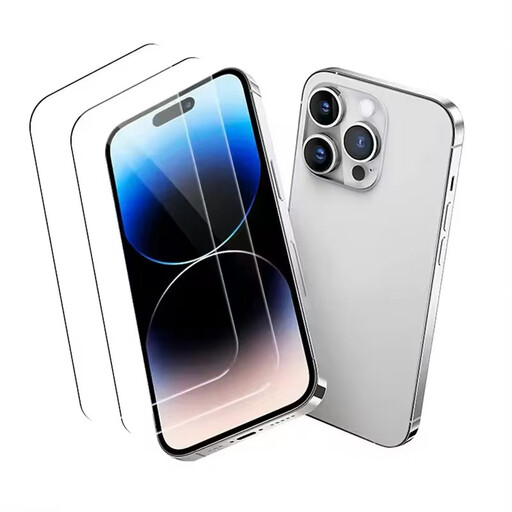
Why This Fits Their Persona: A straightforward option for iPhone 17 owners who want clear display protection without adding a privacy filter.
The listing identifies iPhone 17 compatibility and describes an easy, bubble-free application process. Check the phone model before purchase.
9H tempered glass, high-definition transparency, anti-fingerprint features and stated case compatibility.
Why This Fits Their Persona: Suits iPhone 17 Pro owners who prioritise a clean, high-transparency appearance and a neat fit with a case.
It avoids the usual privacy-filter trade-off by using a clear design while retaining stated scratch and fingerprint resistance.
9H tempered glass, OCA adhesive process, anti-blue-light feature and an included screen protector applicator.
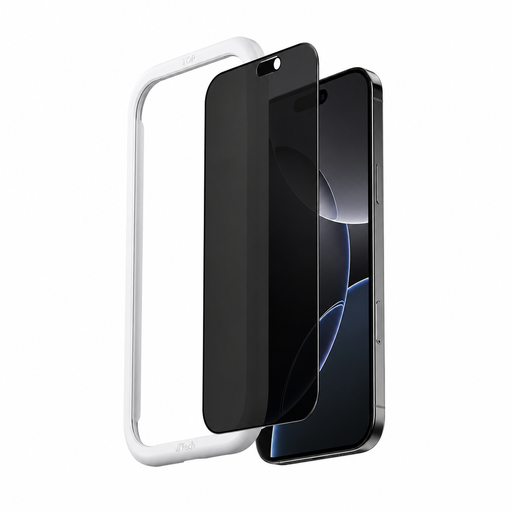
Why This Fits Their Persona: Designed for people who regularly use an iPhone 17 on trains, buses, in cafés or at shared desks.
Its listing specifies 360-degree privacy viewing and an automatic adsorption installation method, helping address side viewing and fitting concerns.
9H glass, anti-fingerprint coating, alignment accessories and a front-facing privacy design.
Why This Fits Their Persona: A practical match for Pro Max users who handle work messages, passwords or sensitive information in public spaces.
The product description clearly presents it as a privacy model rather than a standard clear protector. Do not reuse it after removal, as the adhesive may not re-stick correctly.
9H tempered glass, side-view privacy, anti-fingerprint treatment and included application tools.
Avoid repeatedly peeling and reapplying a protector. Dust contamination can prevent proper adhesion, while repeated removal may affect the phone’s oleophobic surface.
We have compiled a complete, real-time list of products that fully satisfy these strict selection criteria and UK safety regulations.
The clear VoxorAI listings described above state compatibility with phone cases. Even so, case dimensions differ. Install the protector first, then refit the case slowly to check that its rim does not press against or lift the glass.
There is no fixed lifespan. It may remain usable until the surface becomes heavily scratched, the oleophobic finish becomes less effective, or an edge begins lifting. Replace it if the glass is cracked or no longer adheres properly. A privacy protector should not be removed and reused, as its adhesive may not bond correctly again.