
24/7 Customer Support

Free returns

Same-day & Next-day Delivery

Quality Guaranteed

Unlock Your Welcome Offers: FREE Delivery | Up to 80% OFF | Free 30-day JoyPlus trial
Download the APP
Reading messages on a train, entering a password in a café or checking confidential emails in an open-plan office can expose more than you intend. An iPhone privacy screen protector limits side visibility while adding a layer of protection against everyday scratches and marks.
However, privacy glass is not simply a matter of choosing the darkest-looking product. The wrong fit can reduce screen clarity, interfere with touch response or leave you with an awkward installation. Use the guide below to compare the important specifications before buying.
Terms such as 360° privacy or anti-spy screen protector are useful descriptions, but they do not mean the display is invisible from every position in every lighting condition. Privacy filters usually reduce visibility when viewed from the side, while the screen remains clearest from a more direct position.
The result can vary according to screen brightness, the angle of the viewer and strong reflections. For confidential information, a privacy protector should support good screen habits rather than replace them. Keep the phone facing you and lower brightness when appropriate.
A 9H scratch-resistant glass rating generally describes resistance to scratching in a standardised pencil-hardness test. It does not mean the protector cannot crack, nor does it guarantee protection from every fall. The quality of the adhesive, edge coverage and your phone case also affect practical protection.
Tempered glass can help protect the original display from everyday contact with keys, coins and surface abrasion, but it is not a substitute for a protective case.
An automatic adsorption screen protector can make alignment faster, but dust trapped between the glass and display may still create a bubble or speck. Repeatedly lifting and repositioning the protector can also affect the phone’s original oleophobic coating.
Clean the display carefully, work in a low-dust area and check the model before opening the packaging. A fitted installation frame can be particularly helpful for first-time users.
The iPhone 16, iPhone 16 Pro, iPhone 16 Pro Max, iPhone 16 Plus, iPhone 17, iPhone 17 Pro, iPhone 17 Pro Max and iPhone 17 Air do not necessarily share the same dimensions or camera layout. A protector intended for one model may cover the display incorrectly on another.
Check the product title, compatibility list and your phone’s model name in Settings > General > About. Be especially careful with listings whose title and specification table appear inconsistent. If you use a case, also look for case-friendly or wide-fit coverage.
A tempered glass iPhone screen protector is suitable for people who want a firmer surface than a flexible film. Look for clearly stated features such as:
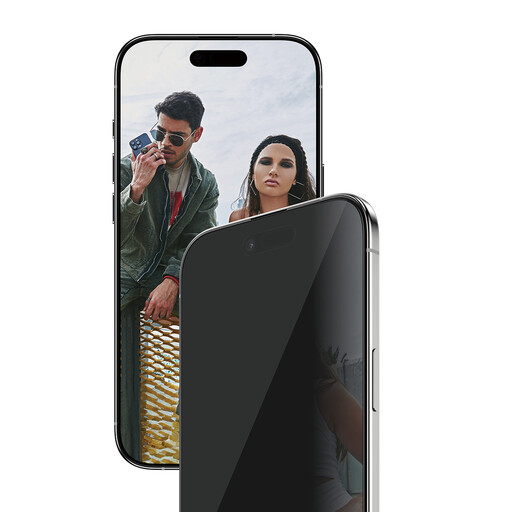
A privacy layer may make the screen appear darker or narrower from off-centre positions. If you frequently edit photos, watch videos or read small text, consider whether privacy is more important than the widest viewing angle.
A practical commuter privacy screen protector should make the display readable from the front without making taps feel noticeably less responsive. Look for descriptions mentioning high light transmission, touch sensitivity and anti-reflective treatment, but remember that actual comfort can depend on brightness settings and the condition of the glass.
A coating described as anti-fingerprint can reduce visible smears, although no surface prevents all marks. Wipe the protector with a clean, soft cloth rather than abrasive materials.
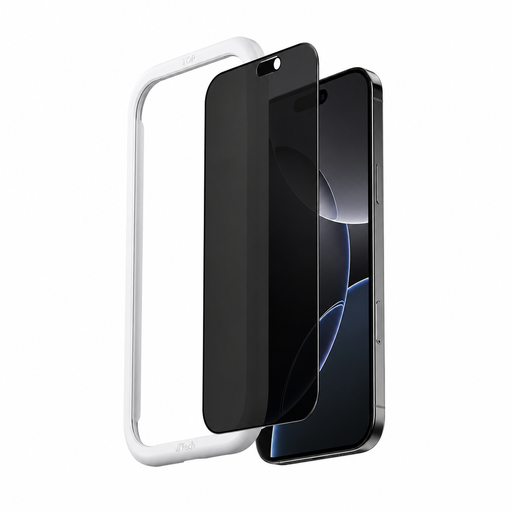
Why This Fits Their Persona: A straightforward option for iPhone 17 owners who want front-facing privacy for train journeys, shared offices and everyday handling.
The listing states a 9H tempered-glass construction and includes an applicator, helping address both scratch concerns and alignment difficulties.
Automatic adsorption, anti-fingerprint coating and a stated 360° privacy viewing specification.
Why This Fits Their Persona: Suitable for iPhone 17 Air users who prioritise broad front coverage, case compatibility and a guided home installation.
The EasyAligner frame helps reduce misalignment, while the ultra-wide fit is described as compatible with protective cases.
Includes an alignment tool, tempered glass construction, oleophobic coating and stated touch-response compatibility.
Why This Fits Their Persona: Designed for Pro Max users who handle work emails, passwords or confidential documents in public areas and want a quick-fit option.
The stated front-facing privacy filter addresses shoulder-surfing concerns, while automatic fitting can simplify replacement for frequent users.
Listed 9H hardness, anti-fingerprint treatment, high light transmission and automatic adsorption.
Why This Fits Their Persona: A practical match for professionals using an iPhone 17 Pro in offices, airports and shared meeting spaces.
The included alignment tray and centre-press application process are intended to make installation more controlled than free-hand placement.
Stated 360° privacy coverage, 9H tempered glass, anti-fingerprint treatment and a supplied applicator.
Do not bend or snap tempered glass. If it cracks, handle it carefully because broken edges may be sharp. A screen protector also does not make the phone waterproof or drop-proof.
We have compiled a complete, real-time list of products that fully satisfy these strict selection criteria and UK safety regulations.
It can feel slightly different from a bare display, particularly if the glass is thick, poorly aligned or installed over dust. Products that specify touch response and use full-surface optical adhesive are designed to maintain normal interaction, but settings, fingerprints and installation quality also matter.
There is no fixed lifespan. With careful use, it may remain serviceable until the coating becomes noticeably worn, the edges lift or the glass develops cracks. Replace it if visibility, touch response or edge adhesion deteriorates. Avoid repeatedly removing and reapplying the same protector.
Privacy glass can remain usable outdoors, but the filter may make the display appear darker from certain angles. Increase brightness only when necessary, reduce reflections where possible and confirm that the front-facing view is comfortable before relying on it for regular outdoor use.