
24/7 Customer Support

Free returns

Same-day & Next-day Delivery

Quality Guaranteed

Unlock Your Welcome Offers: FREE Delivery | Up to 80% OFF | Free 30-day JoyPlus trial
Download the APP
A new iPhone deserves more than a screen protector chosen by price alone. The wrong fit can lift around the edges, interfere with a case or leave bubbles across the display. A privacy filter may also make the screen harder to view in bright conditions, while unclear “9H” claims can give a misleading impression of impact protection.
For UK owners of the iPhone 16, iPhone 16 Plus, iPhone 16 Pro or iPhone 16 Pro Max, three shopping traps are particularly common:
Check the model name before ordering an iPhone screen protector. The iPhone 16 and iPhone 16 Pro have different displays and body dimensions, while the iPhone 16 Plus and iPhone 16 Pro Max are larger models with different proportions.
Do not rely on a listing that simply says “for iPhone 16”. Look for the precise designation:
A correct fit should align with the display edges, front sensors and speaker area without covering functional components.
A tempered glass screen protector usually offers a rigid, smooth surface that feels closer to the original display than soft film. Many listings describe 9H screen protector construction. As a practical buying point, this indicates a stated scratch-resistance grade rather than a promise of complete protection from drops.
Look for additional information about shock absorption, hardened layers and installation quality. A screen protector is only one part of phone protection; a suitable case can help reduce the effect of impacts to the edges and corners.
Flexible hybrid protectors are another option. For example, some designs combine a hardened surface with a flexible material, which may be useful if you prefer less rigid glass or need compatibility across several listed models.
An ultra-clear screen protector is designed to preserve the appearance of photos, videos and text. Oleophobic or hydrophobic coatings can make fingerprints, oil and sweat easier to wipe away, although no coating prevents all marks permanently.
A privacy screen protector restricts visibility from side angles. This can suit commuters, office workers and anyone handling messages or confidential documents on trains, buses or in cafés. The trade-off is that side viewing becomes less convenient, and the front-facing image can appear darker depending on the filter design and lighting.
For straightforward fitting, seek an easy-install screen protector with an alignment tray or applicator. A clean screen is still essential: dust trapped beneath the glass can cause bubbles, lifting and reduced touch response. “Bubble-free” should therefore be treated as an installation feature, not a reason to skip preparation.
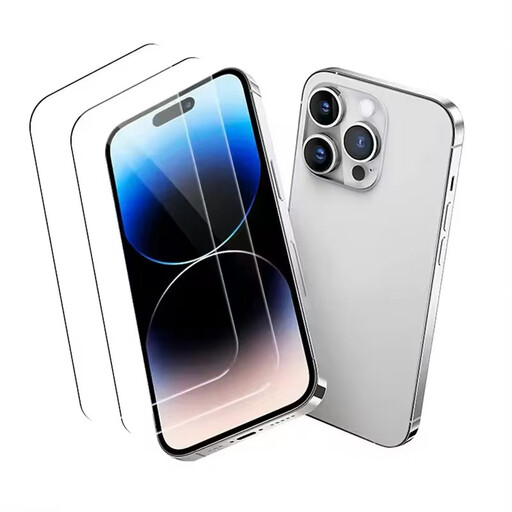
Why This Fits Their Persona: A practical option for iPhone 16 owners who want a clear protector with an installation applicator and case-compatible design without prioritising privacy filtering.
Its listing identifies the iPhone 16, 9H tempered glass, ultra-clear finish and case compatibility, helping shoppers check the essentials before ordering.
9H tempered glass; ultra-transparent finish; supplied screen protector applicator and instructions.
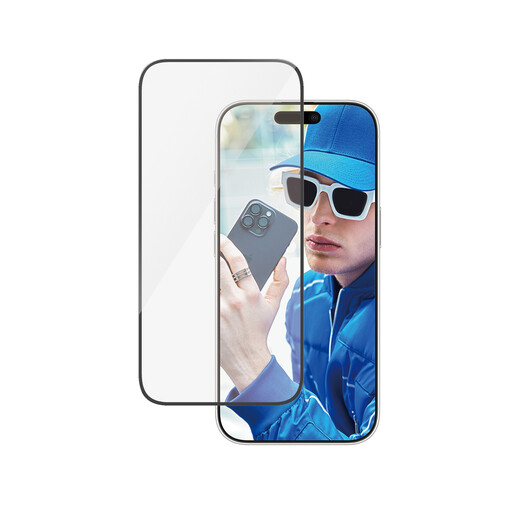
Why This Fits Their Persona: Suits iPhone 16 Pro owners who value a broad display fit, a low-smudge surface and a more considered packaging approach.
The Ultra-Wide Fit is described as leaving room around the edges for a case, rather than assuming every edge-to-edge protector will suit every case.
Made with 60% recycled glass according to the product description; EasyAligner made from 100% recycled plastic and recyclable FSC-certified packaging are specified.
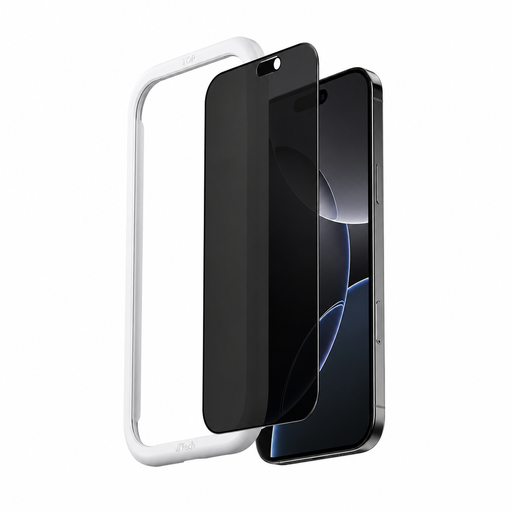
Why This Fits Their Persona: Designed for commuters and office users who regularly view passwords, messages or work content around other people.
The listing specifies a privacy viewing feature, automatic adsorption and a model-specific fit. Check the privacy trade-off before buying if maximum brightness is important to you.
9H tempered glass; anti-fingerprint and anti-blue-light features are listed; applicator and instructions included.
We have compiled a complete, real-time list of products that fully satisfy these strict selection criteria and UK safety regulations.
There is no fixed lifespan. A protector may remain usable while its surface is clear, firmly attached and free from cracks. Replace it when edges lift, scratches affect visibility, touch response changes or the glass is damaged. Heavy daily use, keys in a pocket and repeated impacts can shorten its useful life.
Not necessarily. “Case-friendly” normally means the protector leaves a small margin around the display, but case shapes and raised lips vary. Check the product’s compatibility details and fit the protector before placing the case on the phone. If the case pushes the glass upwards, choose a narrower or differently shaped design.
It can be useful on trains, buses and in shared offices because it limits side-angle visibility. However, privacy filters can reduce comfortable viewing from an angle and may alter perceived brightness. If you frequently share your screen with colleagues or watch content with someone beside you, an ultra-clear screen protector without a privacy layer may be more suitable.