
24/7 Customer Support

Free returns

Same-day & Next-day Delivery

Quality Guaranteed

Unlock Your Welcome Offers: FREE Delivery | Up to 80% OFF | Free 30-day JoyPlus trial
Download the APP
A good iPhone screen protector should protect the display without making everyday use frustrating. For UK commuters, office workers and frequent travellers, the right choice needs to balance scratch resistance, touch response, privacy, installation and compatibility with a protective case.
However, product listings can make similar protectors appear very different. Before buying, watch for these common pitfalls.
A 9H tempered glass screen protector generally refers to surface hardness, commonly measured against pencil hardness. It indicates resistance to everyday scratching from items such as keys and coins, but it does not guarantee that your iPhone will remain undamaged after a fall.
For impact protection, also look for reinforced edges, flexible construction, an installation frame and clear information about the material. A screen protector is only one part of drop protection; a suitable phone case is also important.
A privacy screen protector is designed to reduce visibility from side angles. This can help protect messages, passwords and work documents on trains, buses or in shared offices. The trade-off is that the display may appear darker or less clear when viewed from an angle.
Privacy filters can also affect how easily you share content with someone sitting beside you. If colour accuracy and wide viewing angles matter more than discretion, a clear protector may be more suitable.
An iPhone 16 screen protector is not automatically suitable for an iPhone 16 Pro or iPhone 16 Pro Max. Camera layouts, screen dimensions and edge profiles can differ. The same applies when comparing an iPhone 17 screen protector with an iPhone 17 Pro screen protector, iPhone 17 Pro Max screen protector or iPhone 17 Air screen protector.
Always select the exact model shown in the listing and compare the stated dimensions. Do not rely solely on a product photograph or a broad description such as “fits Pro models”.
Tempered glass normally offers a firm, smooth surface and familiar swiping feel. Flexible protectors can wrap more easily around curved edges and may be less prone to shattering. Hybrid products aim to combine elements of both.
For daily scratches, look for stated scratch-resistant properties and a hardened surface. For drops and knocks, consider edge coverage and whether the protector is designed to work alongside a case.
A protector should not interfere noticeably with typing, scrolling or Face ID-related use. High light transmission, accurate alignment and a smooth finish can help preserve the original viewing experience.
An anti-fingerprint screen protector usually uses an oleophobic or hydrophobic coating to reduce visible oil and sweat marks. These coatings can wear over time, particularly with frequent cleaning or repeated peeling and refitting. Avoid using abrasive materials when cleaning the screen.
A case-compatible screen protector leaves enough clearance around the edges to reduce lifting when a case is fitted. This matters particularly if you use a rugged case or a MagSafe-compatible phone case with raised edges.
Installation systems can also make a practical difference. An automatic installation screen protector or alignment applicator may reduce positioning errors and trapped dust. Nevertheless, “bubble-free” describes an intended installation result, not a guarantee if dust, fingerprints or moisture remain on the display.
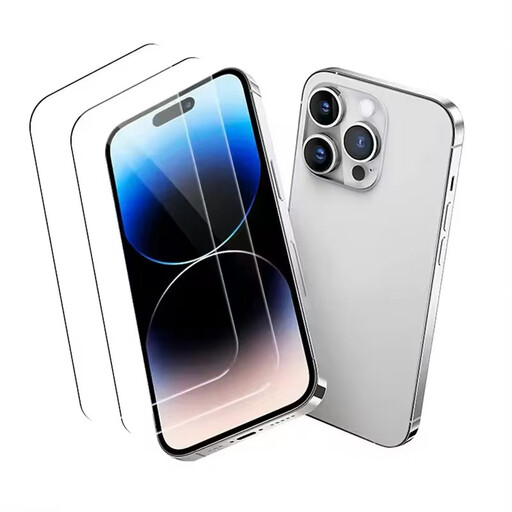
Why This Fits Their Persona: A straightforward option for iPhone 16 owners who want everyday scratch protection and an assisted installation process without choosing a privacy filter.
The listing identifies iPhone 16 compatibility, 9H tempered glass and an applicator, helping avoid vague model matching and difficult manual positioning.
9H tempered glass; stated anti-fingerprint process; supplied screen protector applicator.
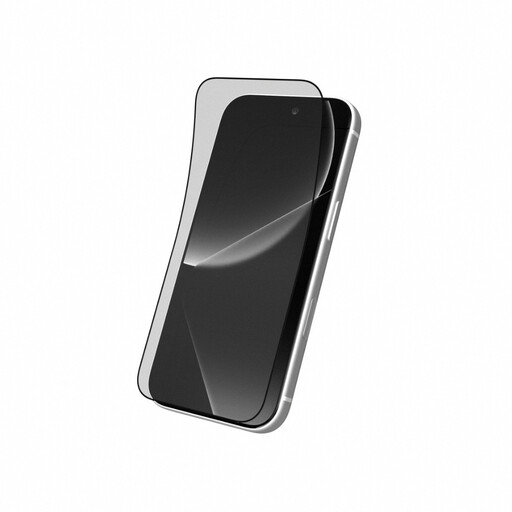
Why This Fits Their Persona: Suitable for users who want a transparent protector with a flexible construction and an installation tool for a larger Pro Max display.
Its stated flexible material avoids assuming that all impact protection must use rigid glass, while the supplied tool addresses alignment concerns.
Flexible impact-oriented construction; high transparency; stated dirt-repellent layer and anti-blue-light feature.
Why This Fits Their Persona: Designed for iPhone 17 Pro Max owners who want a clear, case-compatible protector with an assisted application process for regular commuting, travel and heavy daily use.
The product listing specifies the iPhone 17 Pro Max model, 9H hardness and case compatibility, reducing the risk of buying a protector for a similar but unsuitable device.
Ultra-transparent finish; 9H tempered glass; stated anti-fingerprint and case-compatible design.
We have compiled a complete, real-time list of products that fully satisfy these strict selection criteria and UK safety regulations.
Before fitting a protector, remove any existing film and check that the display is dry. After installation, fit your case slowly and confirm that its edges are not lifting the glass.
There is no fixed lifespan. It depends on usage, cleaning habits, scratches and impact. Replace it when it becomes cracked, heavily marked, loose at the edges or less responsive to touch. A worn protector should not be treated as a sign that the phone display itself is damaged.
It can be useful on trains, buses and in open-plan offices because it reduces side-angle visibility. Check whether the product describes the viewing restriction clearly, and remember that privacy protection may make the screen appear darker from certain angles.
Usually, yes, provided both products are designed with compatible dimensions. A magnetic iPhone case or MagSafe-compatible phone case may have raised edges or a strong magnetic ring, so select a case-compatible screen protector and check for clearance around the display.