
24/7 Customer Support

Free returns

Same-day & Next-day Delivery

Quality Guaranteed

Unlock Your Welcome Offers: FREE Delivery | Up to 80% OFF | Free 30-day JoyPlus trial
Download the APP
An at-home IPL hair removal device can reduce the need for regular shaving, waxing and salon appointments, but choosing the right model requires more than comparing flash counts or glossy advertising. IPL hair removal uses pulses of light to target pigment in the hair. With consistent use, it may provide long-term hair reduction, but it is not the same as guaranteed permanent hair removal.
For UK shoppers, the most important questions are whether the device suits your skin tone and hair colour, whether you can follow its treatment schedule, and whether its attachments and power supply match the areas you want to treat.
Phrases such as “permanent hair removal” can create unrealistic expectations. At-home IPL is generally intended to reduce regrowth over time. Results vary according to hair colour, skin tone, body area and treatment consistency. Maintenance sessions may still be needed.
Look for clear information about the recommended schedule, expected treatment times and the manufacturer’s conditions for any results claim.
IPL needs contrast between the hair pigment and skin pigment. Devices commonly work with naturally dark blonde, brown and black hair, but may not be suitable for white, grey, red or very light blonde hair. Some models are also unsuitable for very dark skin tones.
A skin tone sensor can help select or adjust the light setting, but it does not make an incompatible skin and hair combination suitable. Always check the product’s compatibility chart before buying.
App connectivity, numerous attachments and cordless operation can be useful, but they may add cost without improving your routine. A corded model can be practical if you usually treat large areas near a socket. Conversely, a cordless IPL hair remover may be easier to handle around the underarms or bikini line.
Consider your actual treatment areas rather than choosing by flash count alone. A device with a suitable body window, precision head and manageable treatment time may be more useful than one with extra accessories stored in a drawer.
Choose a device with a skin tone sensor, skin-contact detection and a UV filter or equivalent built-in safety feature. These controls can help prevent flashes when the device is not positioned correctly or when the detected skin tone is outside the recommended range.
Before a first full treatment, carry out a patch test according to the instructions, typically on a small area and with time allowed to check for a reaction. Do not use IPL on tattoos, permanent make-up, very dark moles, irritated skin, open wounds or recently sunburnt skin.
People with photosensitivity, certain skin conditions or medication that increases sensitivity to light should seek appropriate medical advice before use. Follow the supplied manual, including restrictions on facial and intimate areas.
For full-body hair removal, a larger body attachment can reduce the number of passes across the legs and arms. A curved attachment may sit more comfortably on areas such as the knees or underarms. A smaller precision head is useful for the upper lip, chin or bikini line where careful positioning matters.
Check the exact attachment count rather than assuming that all versions in a product range include the same heads. For example, Braun IPL Silk-expert Pro 5 models vary in the number and type of supplied attachments.
Manufacturers may quote full-body treatment times under specific conditions. Philips lists approximately 8.5 minutes for both lower legs on some Lumea models, while Braun lists approximately 10 minutes for a stated full-body routine on selected Silk·expert Pro 5 models. Actual time depends on technique, body size and pauses between flashes.
Corded devices provide continuous power, which can be convenient for longer sessions. Cordless and corded operation offers greater flexibility, but remember to charge the device when needed. The most suitable model is the one you are likely to use consistently.
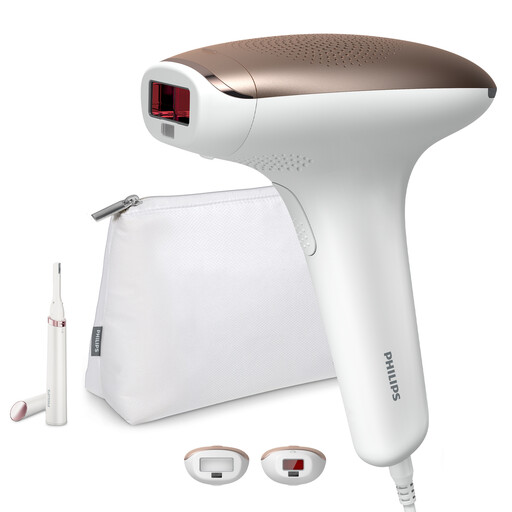
Why This Fits Their Persona: A straightforward corded option for shoppers beginning IPL hair removal on the legs, arms, underarms, bikini area or face.
It has a SmartSkin sensor, five light settings and dedicated body and precision attachments, so buyers are not paying only for headline flash claims.
Corded operation provides continuous power; the device has no replacement lamp requirement according to the supplied product information.
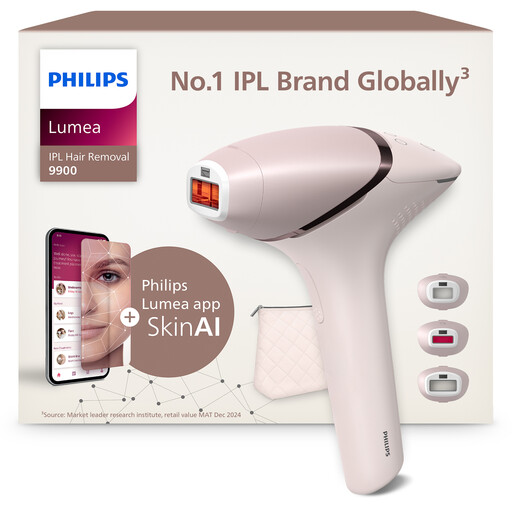
Why This Fits Their Persona: Suitable for users who want app guidance, treatment tracking and the convenience of using one device corded or cordless.
The three intelligent attachments and SkinAI app features address coverage and scheduling issues that can make regular treatment difficult.
Offers five light settings, skin-contact sensors and body, face and precision attachments, with corded and cordless use.
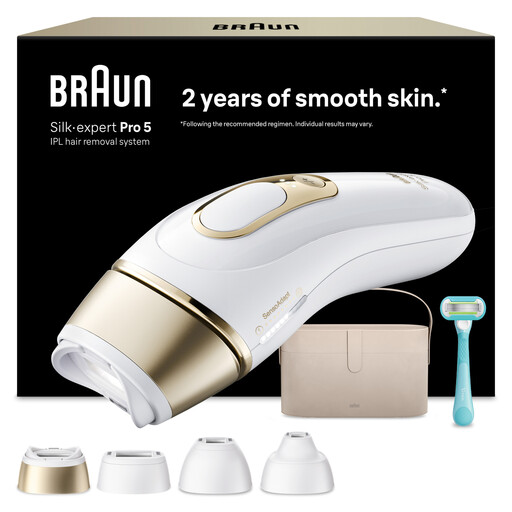
Why This Fits Their Persona: A corded full-body model for users prioritising dedicated heads for legs, underarms, bikini areas and the upper lip.
Automatic skin-tone adjustment and three comfort settings give more control than relying on a single fixed intensity.
Includes four heads, Smart SkinProtect Sensor technology and a quoted full-body treatment time of approximately 10 minutes.
We have compiled a complete, real-time list of products that fully satisfy these strict selection criteria and UK safety regulations.
Yes, IPL is often considered a home laser hair removal alternative, but the technologies are different. IPL emits a broad spectrum of light, while laser devices use a more concentrated wavelength. Neither should be treated as a guarantee of permanent hair removal, and suitability depends on your skin and hair combination.
Some product information refers to visible hair reduction after two or three treatments, but individual results vary. Most routines require repeated sessions during an initial phase, followed by occasional maintenance. Consistency is more important than using the highest setting.
The initial purchase price is higher than a razor or some epilation products, but an IPL device does not usually require regular replacement lamps. Over time, this may reduce repeat salon spending, although results, maintenance needs and the number of people sharing the device will affect the overall value.