Occasional student-house ironers
If you press one or two dresses before a class, placement or event, storage may matter as much as a long ironing session. The Russell Hobbs 26731, for example, has integrated cord and plug storage.


Start with each dress’s care label and your accommodation’s appliance rules, then choose an iron whose storage and steam features suit how often you press. Integrated cord storage is worth considering when cupboard space is tight; for regular pressing, compare tank capacity and scale-cleaning features. Check a handheld vertical model’s pressing method and UK electrical compatibility before relying on it for flat pressing.
If you press one or two dresses before a class, placement or event, storage may matter as much as a long ironing session. The Russell Hobbs 26731, for example, has integrated cord and plug storage.
If you regularly press dresses and other garments, compare continuous steam and tank capacity, and consider how the iron is cleaned of scale. Philips documents these features for its 3000 Series DST3041.
If you live in halls or a managed residence, establish where an iron may be used before choosing one. The University of St Andrews, for example, does not allow irons in study bedrooms; your accommodation provider’s rules may differ.
For cotton dresses in a student house, check the garment’s permitted ironing temperature and your permitted ironing location before comparing steam and storage features.
| Concern | What to check | Who this matters to |
|---|---|---|
| Crease removal | Read each dress’s care label, then compare continuous-steam output and steam-shot specifications for models you can use within that temperature limit. | When I regularly press creased dresses, I want enough steam for the task without exceeding the fabric’s care instructions. Around 42% of consumers put crease removal first. |
| Storage and setup | Check how the cord and plug are stored, and where the cooled iron will fit between uses. | With little cupboard space, I need to put the iron away without leaving a loose cord among shared belongings. Storage is the main concern for around 33% of consumers. |
| Accommodation and electrical use | Confirm the permitted ironing location and appliance rules; check the plug and cable, and avoid overloaded extension leads. | If I share sockets or live in managed accommodation, I need to know that I can use the iron in the intended place. Around 25% of consumers make those checks their primary concern. |
Blends, linings, finishes or trims can change the permitted treatment. GINETEX says the maximum ironing temperature should be selected from the garment’s care label, not its fibre content alone.
Read the individual dress’s ironing symbol before setting the temperature.
An iron you intend to use in your bedroom may be restricted there. The University of St Andrews prohibits irons in study bedrooms and has its own requirements for personal electrical equipment; this is an institution-specific policy.
Ask your accommodation provider where ironing is permitted and whether it requires an appliance inspection.
A restricted ironing location may mean carrying the iron to a shared area each time you use it.
Electrical Safety First warns that overloaded sockets and extension leads can overheat and cause fire.
Check the condition of the plug, cable and socket, avoid overloading extensions, and stop using a damaged or scorching setup.
Scale management becomes more relevant when you steam regularly, particularly in a hard-water area. Philips lists a calc-clean slider for the DST3041, while Tefal highlights hard water as a maintenance consideration in the UK.
Check the cleaning method and water instructions for the exact iron you choose.
The Easy Store Pro Plug & Wind 26731 is a relevant conventional steam-iron example when cord storage is a priority.
The 3000 Series DST3041 is a conventional steam-iron example for comparing pressing and maintenance features.
The Easygliss FV5781G0 is an example to examine if you press frequently and want to compare steam settings and scale care.
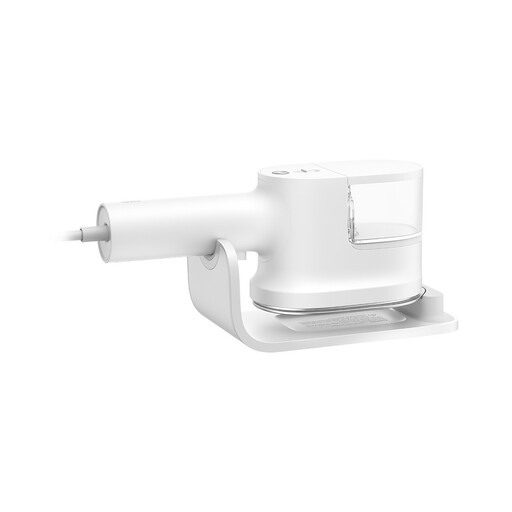
This handheld vertical steam iron is a compact option to consider if storage is tight. Before choosing it to press cotton dresses, confirm how it can be used for your preferred ironing method and whether its electrical requirements suit your accommodation.
 No image available
Its compact, handheld form may suit limited storage space. Confirm whether its vertical ironing design accommodates the way you press your dresses, and check its plug and voltage requirements before use.
No: use the individual dress’s care label to set the maximum ironing temperature. GINETEX says fibre content alone should not determine that setting, which is particularly important when a dress has a blend, lining or trim.
Check your accommodation’s rules before doing so. The University of St Andrews prohibits irons in study bedrooms, but its policy is not a rule for every student house or residence; ask your provider where you may iron and whether personal appliances need inspection.
Check the plug, cable and socket for damage, and avoid overloading an extension lead. Electrical Safety First warns that overloaded sockets and extensions can overheat; report damaged outlets or repeated circuit trips to your landlord or accommodation provider.
It matters more if you use steam regularly, especially where water is hard. Tefal identifies hard water as a UK maintenance consideration; follow the water and cleaning instructions for the exact model you buy rather than assuming one descaling method suits every iron.