Occasional bedding pressers
If you smooth a few cotton pillowcases now and then, a conventional steam iron is a sensible starting point. John Lewis & Partners suggests considering a steam generator for larger amounts of laundry.


For a few cotton pillowcases and occasional clothes, start with a conventional steam iron rather than a steam generator. Prioritise storage that works in your student house; compare higher continuous-steam output and scale-care features if you press larger loads regularly, and check where your accommodation permits ironing.
If you smooth a few cotton pillowcases now and then, a conventional steam iron is a sensible starting point. John Lewis & Partners suggests considering a steam generator for larger amounts of laundry.
If the iron must go back into a shared cupboard after each use, pay attention to its size and cord storage. The Russell Hobbs Easy Store Pro Plug & Wind 26731, for example, has an integrated cord-and-plug holder.
If you also press clothes and bedding regularly, compare continuous-steam output and the exact model’s scale-care instructions. A removable scale collector is one option to consider where limescale upkeep matters.
Decide how much laundry you actually press, then check whether the iron fits your storage space and permitted place of use. For steam specifications, compare continuous output rather than relying on a one-off steam-boost figure.
| Concern | What to check | Who this matters to |
|---|---|---|
| Pressing cotton creases | Compare continuous steam in g/min and the soleplate design, especially if you press several pillowcases at once. | I want to smooth cotton pillowcases in a short session without repeatedly working over the same creases; around 50% of consumers put pressing performance first. |
| Storage and set-up | Check where the cooled iron and its cord will fit; look for a confirmed cord-storage feature if space is tight. | With only a small shared cupboard, I need an iron that is straightforward to put away; roughly 30% of consumers make tidy storage their primary concern. |
| Safe use and upkeep | Check accommodation rules and the plug and cable before use; compare model-specific scale-care instructions if limescale is a concern. | I need to know where ironing is allowed and how to look after an appliance used in a shared home; about 20% of consumers prioritise safe use and maintenance. |
A separate tank and base take up space that may be hard to justify for a few pillowcases. John Lewis & Partners points to steam generators as an option for larger laundry loads.
Compare conventional steam irons first; consider a generator if your household irons larger loads regularly and has somewhere to store it.
An automatic shut-off feature does not address a damaged cable, an unsuitable socket or a hot iron left where someone could touch it.
Stay present while ironing, unplug afterwards and let the appliance cool before putting it away. Electrical Safety First advises students to watch for cable damage, loose parts and signs of overheating.
Accommodation rules can determine where an otherwise suitable iron may be used. The University of St Andrews, for instance, prohibits irons in study bedrooms.
Check your own residence handbook or tenancy terms and use a designated communal area if required.
Wattage does not tell you how much continuous steam an iron provides or whether it will fit your storage space.
Compare the exact model’s continuous steam in g/min, water-tank capacity, storage design and scale-care method alongside wattage.
These examples illustrate model-specific features to compare; a feature listed for one iron should not be assumed across its brand’s range.
The Philips 2000 Series DST2020/80 is a conventional steam-iron example for smaller ironing sessions.
The Tefal Ultraglide Anti-Scale Plus FV5872 illustrates a conventional iron with a removable Scale Collector.
Two Russell Hobbs models illustrate different priorities: the Easy Store Pro Plug & Wind 26731 for cord storage and the Powersteam Ultra 20630 for stated steam output.
These Oliso steam irons offer different starting points for the task: one lists a cotton fabric setting, while the mini model may appeal where storage is limited. For either iron, confirm UK plug and voltage suitability and check your accommodation’s appliance rules before ordering.
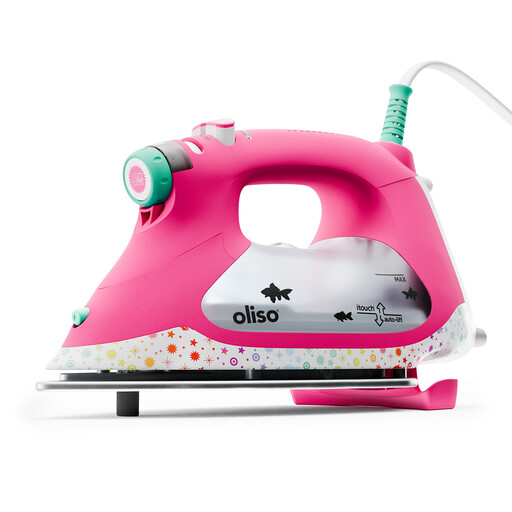 No image available
For cotton pillowcases, the listed fabric selector includes a cotton setting; the product description also identifies horizontal steam and a ceramic soleplate.
Check its continuous-steam output, tank capacity, storage fit and UK plug and voltage suitability against your needs.
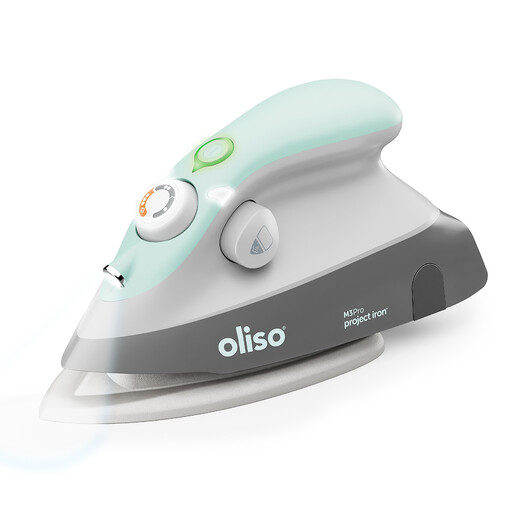 No image available
For limited storage, this mini steam iron is worth considering if you press only a few items at a time.
Confirm that its temperature settings suit cotton pillowcases, and check continuous-steam output, tank capacity and UK plug and voltage suitability before ordering.
Usually not if you press only a few pillowcases and occasional clothes. John Lewis & Partners suggests considering a steam generator for larger laundry loads; its separate tank and base also need storage space.
Check your accommodation rules and use an appliance with an undamaged plug and cable. Electrical Safety First advises students to look for cuts, loose parts and signs of overheating; avoid overloading sockets, and unplug the iron after use.
Not necessarily; scale-care features become more relevant if you iron regularly or limescale affects the appliance’s steam output. Follow the water and cleaning instructions for the exact model you buy.
No. Automatic shut-off is a backup feature, not a reason to leave a hot iron unattended. Stay nearby while ironing, then switch it off, unplug it and allow it to cool before storage.