A conventional steam iron with a precision tip is a practical choice for pressing one or a few cotton ties: it gives you a soleplate for narrow edges without the separate base of a steam generator. If several housemates will use it, consider anti-drip and auto-off features, but follow each tie’s care label and use sockets and leads safely. A steam generator makes more sense when the household also irons substantial laundry loads.
Who is this for?
People pressing ties for formal occasions
If you press a cotton tie before work, an interview or an event, narrow edges and seams make a precision tip worth considering. Tefal UK and Braun Household GB describe precision tips for reaching detailed areas on specific iron models.
Housemates concerned about shared use
If several people use the iron, auto-off is a feature to look for alongside a safe place to rest and store it. Electrical Safety First’s advice on extension leads remains relevant even when an iron has auto-off.
Occasional ironers with limited storage
If you usually press only a tie or a few garments, a conventional iron avoids finding room for a steam generator’s separate base. Consider your wider laundry needs before choosing a larger system.
What matters when choosing an iron?
Conventional steam iron
Choose it when: You press one or a few ties and want a soleplate for controlled work along their edges.
Bear in mind: A smaller tank may mean more refilling if the iron also serves a large laundry load.
Steam-generator iron
Choose it when: The household regularly irons substantial loads as well as ties.
Bear in mind: The separate base needs storage space, as John Lewis & Partners notes in its iron-buying guidance.
Handheld garment steamer
Choose it when: You mainly want to refresh a hanging garment without setting up an ironing board.
Bear in mind: For a defined flat press on a tie, it does not provide the pressure of an iron’s soleplate.
Check the individual tie’s care label before choosing heat or steam; GINETEX’s care-symbol guidance does not make cotton content alone a setting instruction.
| Concern |
What to check |
Who this matters to |
| Narrow edges and seams |
Look for a stated precision tip; check whether the tie’s label permits steam. |
If I need to press close to a tie’s seams, I want control over where the soleplate goes. Around 40% of consumers put this detail work first. |
| Shared-space safety and storage |
Check the exact model for auto-off and plan a suitable place to rest and put away the iron; use leads within their marked rating. |
When housemates share an iron, I want to manage unattended-use and storage concerns without relying on auto-off to make the electrical setup safe. This is the primary concern for around 40% of consumers. |
| Occasional use and upkeep |
Consider tank size for your usual laundry load and anti-drip for permitted lower-heat use. |
If I only touch up ties and a few garments, I would rather handle a manageable iron than store a separate generator base. Around 20% of consumers prioritise this occasional-use need. |
Mistakes to avoid
-
Choosing maximum heat because the tie says cotton
A tie’s lining, dyes or construction can affect its care requirements. Heat or steam chosen by fibre name alone can leave marks or damage the tie.
Read the tie’s own care label before selecting a setting, rather than treating a generic cotton setting as permission.
-
Looking only at power and steam output
A high-output iron is not necessarily easier to position along a narrow seam. Tefal UK and Braun Household GB list precision tips and anti-drip features on particular models relevant to detail work.
Check those features on the exact model you intend to buy, while keeping the tie’s steam restrictions in mind.
-
Relying on auto-off to make an extension lead safe
Auto-off does not address an overloaded lead or a wound cable reel.
Electrical Safety First advises against overloading extension devices. Avoid daisy-chaining, observe the lead’s marked rating and fully unwind a cable reel before use.
-
Choosing a steam generator for tie touch-ups alone
A separate base takes storage space that may be hard to spare in a shared house.
Consider a conventional iron for occasional ties; reassess a steam generator if the household also irons substantial loads regularly.
Relevant brands for reference
Tefal
The Virtuo 30 FV2C64G0 is a conventional steam iron to consider for narrow tie details and shared use.
- Tefal UK lists a precision tip, anti-drip, auto-off, 30 g/min continuous steam and a 240 ml tank for this model.
- The 240 ml tank may mean refilling during larger laundry sessions.
Braun
The TexStyle 3 SI 3041 is relevant if reaching narrow edges is a priority.
- Braun Household GB lists a triangular precision tip, anti-drip protection and a 270 ml tank for the SI 3041.
- If auto-off is essential, confirm it on the exact variant rather than assuming that every TexStyle 3 has it.
Philips
The refurbished EasySpeed GC1751/89R1 is a lower-output conventional iron to consider for occasional small jobs.
- Philips UK lists a ceramic soleplate, drip-stop, a 220 ml tank and Calc Clean provision for this model.
- Its listed continuous steam output is 15 g/min, a consideration if the iron will also serve frequent, heavily creased laundry.
Joybuy irons for this use
These conventional steam irons are options for pressing ties and other small garments. Compare each exact model’s detail-work and shared-use features with the way your household will use it.
 No image available
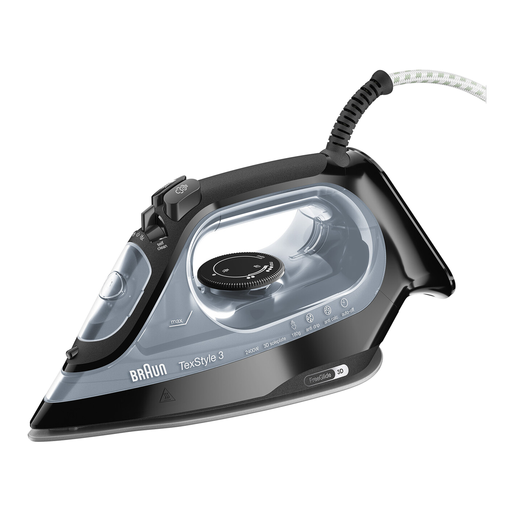
Braun TexStyle 7 Pro SI7160BL Steam Iron, Blue
For narrow tie edges, the named precision tip is a feature to consider; use heat and steam only as the tie’s care label permits.
2600 W; FreeGlide 3D; EloxalPlus soleplate.
Check the appliance instructions and your socket arrangement before shared use; auto-off does not replace safe use of leads.
View on Joybuy
 No image available
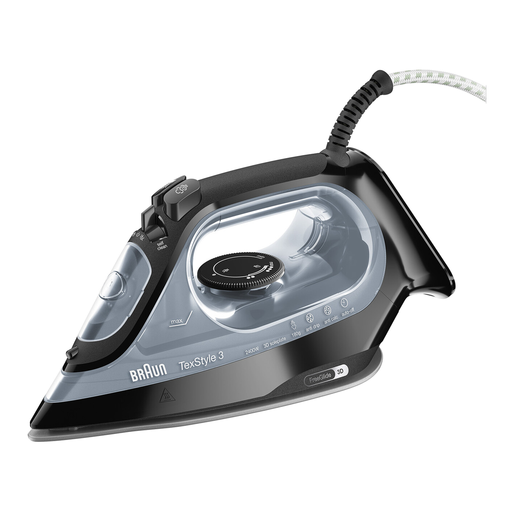
Braun TexStyle 3 SI3055BK Steam Iron, Black
For occasional tie pressing in a shared house, this model lists auto-off; check whether its soleplate shape suits the seams you need to press.
2400 W; FreeGlide 3D; SuperCeramic soleplate.
If it will also handle frequent laundry, check the exact model’s tank capacity and continuous steam output before choosing.
View on Joybuy
 No image available
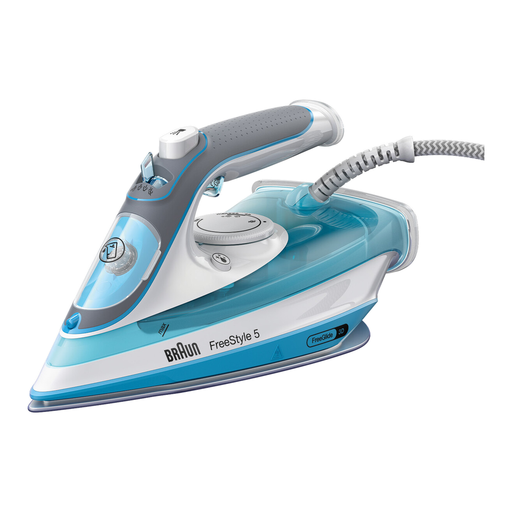
Braun TexStyle 5 SI5008BL Steam Iron, Blue
For tie pressing, its named anti-drip feature is worth considering where the tie’s care label permits lower-heat ironing.
2600 W; FreeGlide 3D; SuperCeramic soleplate.
Confirm auto-off on the SI5008BL variant if that feature matters for shared use, and check its continuous steam output if the iron will also serve larger loads.
View on Joybuy
Frequently asked questions
Can I use the cotton setting for every cotton tie?
No. Check that tie’s care label before setting the temperature or using steam. GINETEX’s care-symbol guidance makes the garment’s instructions relevant; cotton content alone does not account for a tie’s lining, dye or blended materials.
Is steam useful when pressing a cotton tie?
Steam can help with creases if the individual tie’s care label permits it. Use a controllable setting rather than assuming more steam is needed, and consider anti-drip protection if pressing at a lower permitted temperature.
What should housemates check before plugging in an iron?
Check the plug, cable and socket, and do not use damaged equipment. Electrical Safety First advises against overloading or daisy-chaining extension leads and says cable reels should be fully unwound before use; stop if you notice scorch marks, a burning smell or damaged insulation.
Do I need a steam generator for a few ties?
Usually not: a conventional iron is a more proportionate choice for occasional tie pressing. Consider a steam generator if the household also irons substantial loads regularly and has room to store its separate base.


