For one or a few pairs of cotton shorts, start with a standard steam iron that gives you control over heat and steam and is easy to move around pockets and seams. A higher-output iron is worth considering for regular batches or stubborn creases; a steam generator makes more sense when shorts are only part of a larger ironing load and you have space for its separate base. Whatever the iron, let the garment’s care label set the limit for heat and steam, particularly if the shorts have stretch fibres, prints or trims.
Who is this for?
Occasional cotton-shorts presser
If you smooth one or two pairs before wearing them, a conventional iron is easier to retrieve and store than a steam generator with a separate base. Look for a shape you can guide around pockets, hems and the waistband.
Regular household ironer
If shorts go into the same ironing session as shirts and trousers, continuous steam, tank capacity and scale maintenance become more relevant. Compare those features for the exact model rather than choosing by its steam boost alone.
Mixed-fabric wardrobe owner
If your shorts contain stretch fibres, prints or trims, adjustable settings and the garment care label matter more than automatically selecting a high cotton setting.
What matters when choosing an iron?
Decide how much laundry you normally press in one session, then check fabric controls and handling before comparing steam-output figures.
| Concern |
What to check |
Who this matters to |
| Stubborn creases |
Compare continuous steam and boost figures for the exact model, provided the care label permits steam. |
If set-in creases are my main problem, I want steady steam for the larger panels and a boost for isolated areas. Around 36% of consumers put crease removal first. |
| Fabric control |
Look for clear temperature and steam controls; consider anti-drip protection if you often use lower settings. |
When shorts have stretch fibres, prints or trims, I need to follow their care label without automatically using high heat. For around 29% of consumers, fabric control is the primary concern. |
| Handling around seams |
Check the soleplate tip, appliance weight and storage space for the way you press pockets and waistbands. |
For a quick touch-up, I would rather handle a compact iron around small details than set up a separate base. Ease of handling comes first for around 21% of consumers. |
| Maintenance and safety |
Check the scale-cleaning method, safety features and a standard UK 3-pin plug and fuse. |
If I use steam regularly, I want upkeep I can manage and an appliance suitable for my mains supply. Around 14% of consumers make maintenance and safety their first priority. |
Buying pitfalls to avoid
-
Assuming every cotton short can take maximum heat
A cotton description does not tell you what temperature a stretch panel, print, lining or trim can tolerate. Too much heat can damage those details.
Read the garment care label before pressing and choose heat and steam settings within its limits.
-
Choosing a steam generator for occasional touch-ups
A generator’s separate base and larger tank suit longer ironing sessions, but add bulk when you only need to press one pair of shorts.
Choose an appliance size that fits your usual laundry load; consider a generator when shorts are part of regular, larger batches.
-
Treating one output figure as a results guarantee
Wattage and steam-boost figures are specifications, not a measure of how neatly every pair of shorts will press. Fabric settings, the soleplate and access around seams also affect the task.
Compare continuous steam, controls, tip shape and tank size together, using the garment label to decide which settings you can use.
-
Overlooking the plug on an imported iron
Electrical Safety First advises checking for a standard UK 3-pin plug and fuse. It has documented an electric-shock risk involving an iron supplied with an unsuitable plug and travel adapter.
Check the plug and fuse before buying, inspect the cable and plug before use, and use the Office for Product Safety and Standards recall service to check a model you own.
Relevant brands for reference
Philips
A reference point for conventional steam irons suited to routine pressing and work around garment details.
- Philips specifies up to 40 g/min continuous steam for the DST3041/89R1, alongside a ceramic soleplate and precision tip.
- The cited DST3041/89R1 is a refurbished variant; check the exact model and condition of any iron you are considering.
Tefal
Relevant when comparing conventional irons with higher stated steam output and scale-management features.
- Tefal lists 60 g/min continuous steam, a 350 ml tank and a MicroScale filter for its Ultimate Pure FV9845.
- Tefal’s statements about glide and limescale-stain prevention are manufacturer claims, not independent comparisons with other irons.
Braun
Offers conventional steam irons to compare for work around pockets and seams, as well as generator models for larger loads.
- Braun lists FreeGlide 3D soleplates and precision tips on selected UK steam-iron models.
- Features differ by model. A generator’s separate base also needs more space than a conventional iron.
Joybuy irons for these routines
These choices include conventional steam irons for routine shorts pressing and one steam generator to consider when shorts are part of larger ironing batches. Check the garment care label and confirm a standard UK 3-pin plug and fuse for the model you choose.
 No image available
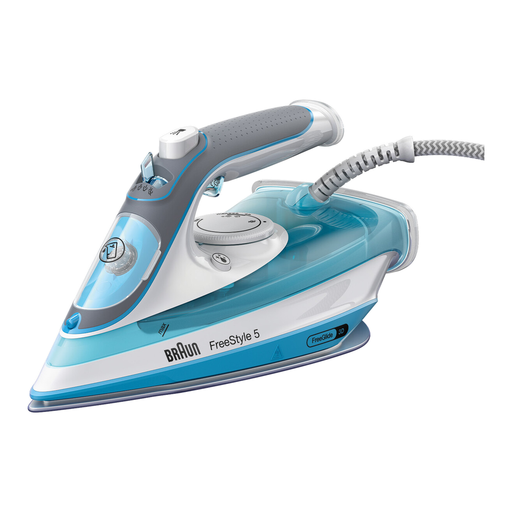
Braun TexStyle 7 Pro SI7160BL Steam Iron, Blue
Consider this conventional iron if access around pockets and seams matters to your shorts-pressing routine.
The product name specifies a FreeGlide 3D EloxalPlus soleplate and precision tip. Confirm the exact power rating if it affects your comparison.
Joybuy
 No image available
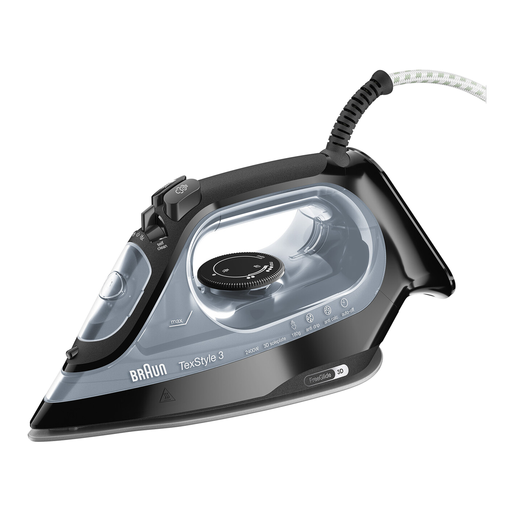
Braun TexStyle 5 SI5008BL Steam Iron, Blue
This conventional format is relevant to pressing a few pairs and working around pockets and waistbands.
The product name specifies 2600 W, a FreeGlide 3D SuperCeramic soleplate and anti-drip. Check the model-specific continuous-steam rate if output will determine your choice.
Joybuy
 No image available
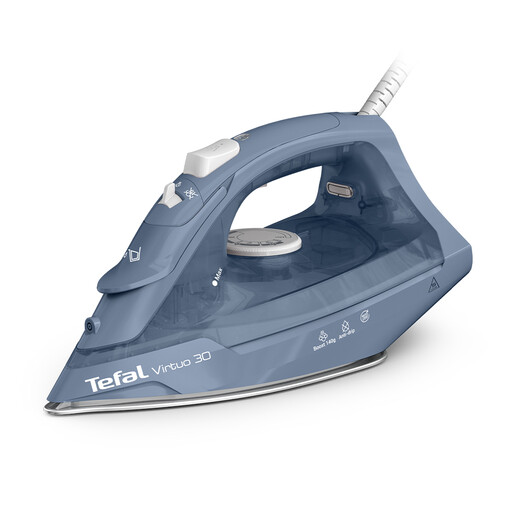
Tefal Virtuo 30 FV2C64G0 Steam Iron, Blue
This conventional iron is an option for routine pressing where you want to compare stated continuous steam and tank capacity.
The product name specifies 2200 W, 30 g/min continuous steam and a 240 ml tank. Confirm its steam-boost figure and temperature controls if those features matter for your garments.
Joybuy
 No image available
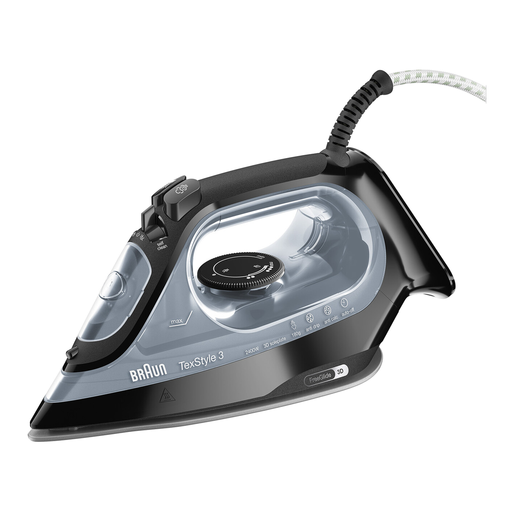
Braun TexStyle 3 SI3055BK Steam Iron, Black
Consider this conventional iron if you mainly press shorts in small loads and want a model with the soleplate and safety features named below.
The product name specifies 2400 W, a FreeGlide 3D SuperCeramic soleplate and auto-off. Check its continuous-steam rate and tank capacity if you need to compare longer sessions.
Joybuy
 No image available
Tefal Express Vision SV8154G0 Steam Generator, Black and Purple
Consider a generator when cotton shorts are part of regular, larger ironing batches rather than occasional one-pair touch-ups.
The product name specifies 2800 W and a 1.8 L tank. Allow room for the separate base as well as the iron.
Joybuy
Frequently asked questions
Should I use the highest heat setting for cotton shorts?
No: check the garment care label before choosing a setting. Stretch fibres, prints, linings and trims may call for less heat or steam than the main cotton fabric.
Do I need a steam generator to press cotton shorts?
Usually not for one or a few pairs at a time; a conventional steam iron is the more compact choice for that routine. A generator is more relevant if you regularly iron larger batches and can accommodate its separate base.
What helps an iron reach pockets and waistband seams?
Look for a pointed or precision tip and a soleplate you can guide around small areas. Philips describes a precision tip on the DST3041/89R1, while Braun lists precision-tip models in its UK steam-iron range; check the feature on the exact iron you are considering.
What safety checks matter when buying an iron for UK use?
Check for a standard UK 3-pin plug and fuse, as Electrical Safety First advises. Inspect the cable and plug before use, and compare controls and auto-off features where they matter to your routine; unplug the iron when it is not in use.
How can I check whether an iron has been recalled?
Search the Office for Product Safety and Standards product-recalls and alerts service for the model. If the manufacturer offers product registration, registering your iron can also help it contact you about a recall.


