For a few pairs of cotton shorts at a time, a compact conventional steam iron with adjustable temperature is a practical choice when a flat, pressed finish matters. A handheld steamer is better suited to quick touch-ups than sharp pressing, while a larger-tank iron is worth considering if several housemates regularly iron together; check the garment label, your accommodation rules and where you can iron safely before choosing.
Who is this for?
Occasional cotton-short pressers
If you press one or two pairs before going out, a compact iron is easier to fit into a short session than a steam-generator system with a separate tank. Consider where you will store it as well as where you will use it.
Shared-house laundry organisers
If several people use the same iron for multiple garments, tank capacity, continuous-steam settings and the manufacturer’s scale-care instructions become more relevant than they are for a single pair of shorts.
No-board touch-up users
If you have little room for an ironing board, a handheld steamer may suit a quick refresh. Philips distinguishes steamers from irons, however, and says they do not give the same result on thick cotton or linen.
What matters when choosing?
Decide how pressed the shorts need to look, then check whether the iron fits your storage space and whether you have a suitable place to use it.
| Concern |
What to check |
Who this matters to |
| Pressed cotton finish |
Look for adjustable temperature and steam settings on a conventional iron. Follow the shorts’ care label, particularly for blends, prints or elasticated sections. |
If I want the pockets, hems and seams to lie flatter, a quick refresh may not give me the finish I need. Around 44% of consumers put that pressed finish first. |
| Storage and short sessions |
Compare the exact model’s dimensions, weight and cord length with your available storage and ironing space. |
When I only press an occasional pair, I want an appliance I can put away without making room for a separate boiler. Compact handling comes first for around 33% of consumers. |
| Shared-house use |
Check the accommodation’s appliance rules, use a stable heat-resistant surface and follow the manual’s unplugging and maintenance instructions. |
If other housemates may use the iron, I need a straightforward way to keep it in good condition and use it safely. Around 23% of consumers place shared-house safety and maintenance first. |
Mistakes to avoid
-
Expecting a handheld steamer to make sharp creases
A steamer can refresh clothing without an ironing board, but Philips says it does not give the same result as an iron on thick cotton or linen.
If a flat finish on cotton shorts is the main aim, compare conventional irons rather than treating a steamer as a direct substitute.
-
Using the hottest setting without checking the shorts
Blends, prints and elasticated parts may need different treatment from plain cotton. Russell Hobbs advises following the garment label whenever it differs from an iron’s general temperature guide.
Read the label before setting the temperature, and start with lower-temperature items if you are ironing mixed laundry.
-
Relying on auto-off instead of unplugging
Auto-off is a supplementary feature, not permission to leave a hot iron unattended while it is plugged in.
Use a stable, level, heat-resistant surface, unplug the iron after use, and do not use it if it is damaged or leaking.
-
Choosing a steam generator for a few occasional garments
Which? distinguishes compact standard irons from steam generators with separate water tanks. The latter take more space, which matters if the iron must be stored after each short session.
Consider a steam generator only if the household regularly irons larger loads; otherwise, compare standard irons by the features you will use.
Brands to consider for this task
Tefal
Tefal’s Virtuo FV1713G0 is an example of a standard steam iron with a 200 ml tank and 24 g/min stated continuous steam.
- Tefal specifies auto-off, anti-drip and scale-care features for this model.
- For frequent batches of several garments, compare its tank capacity with the amount you normally iron.
Philips
Philips offers conventional irons such as the DST2020/80, which it lists with four steam settings and a 250 ml tank, as well as handheld steamers.
- The DST2020/80’s settings give buyers a choice to consider when ironing different labelled garments.
- Philips says its handheld steamers do not give the same result as irons on thick cotton or linen.
Morphy Richards
The Morphy Richards Light Glide 2200W is a conventional iron specified at 0.9 kg, with a 230 ml tank and a 2 m cord.
- Its stated weight is useful to check if you move the iron between rooms or put it away after each use.
- Weight alone cannot establish how well it will remove creases from your shorts.
Russell Hobbs
The Russell Hobbs Supreme Steam Traditional Iron 23060 has a stated 300 ml tank and 40 g/min continuous steam, relevant when comparing irons for larger shared-house loads.
- The model includes a self-clean function; follow its manual for scale care.
- Its stated steam output does not, by itself, establish how it compares with another iron on cotton creases.
Joybuy products
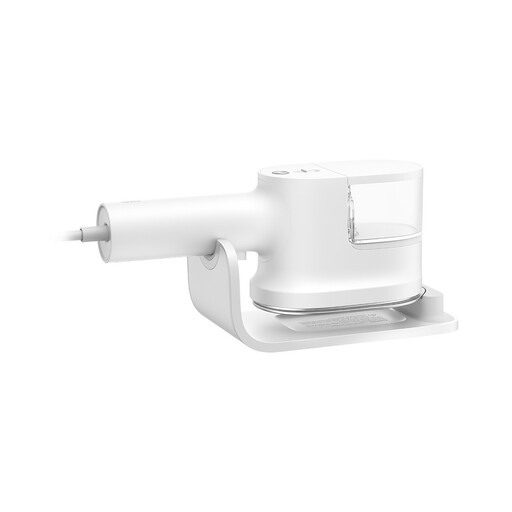
This handheld option is relevant if compact storage and touch-ups matter more to you than an assured sharply pressed cotton finish. Check its ironing controls and your accommodation’s appliance rules before deciding whether it meets the task.
 No image available
Xiaomi Handheld Steam Iron BS502CN
Consider this handheld model for compact storage and quick touch-ups, rather than assuming it will produce the same flat finish as a conventional iron on cotton shorts.
The listing describes dry and wet ironing modes and vertical use. Before buying for pressing, check the temperature controls, soleplate and water-tank capacity against the way you plan to use it.
View on Joybuy
Common questions
Can a handheld steamer replace an iron for cotton shorts?
Not if a distinctly pressed finish is your priority. Philips says a garment steamer does not give the same result as an iron, particularly on thick cotton or linen; it can still be useful for a quick refresh when you cannot use an ironing board.
What heat setting should I use for cotton shorts?
Use the setting allowed by the shorts’ care label. Russell Hobbs places cotton and linen in a hot-temperature group in its general guide but says the garment label takes precedence, which is especially important for blends, prints, trims and elasticated sections.
Is auto-off enough for safe use in a shared house?
No. Treat auto-off as an additional safeguard: use the iron on a stable, level, heat-resistant surface, do not leave it unattended while plugged in, and unplug it after use and before filling or cleaning, as directed in the manual.
Can I use my own iron in student accommodation?
Check the rules for your particular house or hall before bringing or using one. Your tenancy terms or accommodation provider’s appliance policy determine what you need to check; do not assume another student property has the same rules.


