Occasional clothing repairers
If you mend or personalise ironable household garments without wanting a separate craft appliance, start with adjustable heat and the option to press without steam. Check the garment label before choosing a setting.


For occasional fabric patches, choose a household iron with adjustable temperature and the ability to switch steam off when the patch instructions call for dry pressing. A precision tip can help around seams and small patches, while automatic shut-off adds a safeguard in a busy home; neither feature replaces checking the garment care label, following the patch instructions or supervising the iron.
If you mend or personalise ironable household garments without wanting a separate craft appliance, start with adjustable heat and the option to press without steam. Check the garment label before choosing a setting.
For small patches near pockets, seams or collars, a pointed tip can make it easier to reach the intended area. Controlled contact matters more to this task than a high steam-output figure.
Automatic shut-off is worth considering where interruptions are likely. Electrical Safety First advises supervising an iron, unplugging it after use and keeping it away from children and pets, regardless of its safety features.
Check the garment label and patch instructions before comparing iron features: the fabric must tolerate the required pressing method, and a steam function is useful only if you can control it for this task.
| Concern | What to check | Who this matters to |
|---|---|---|
| Fabric-safe heat and dry pressing | Look for adjustable temperature and a steam-off setting. Check both the care label and the patch maker’s method before use. | If I am patching garments made from different fabrics, I need to stay within each garment’s permitted heat setting. Around 36% of consumers put fabric-safe heat and dry pressing first. |
| Placement and contact | Consider a pointed tip for narrow areas; use a firm pressing surface and a pressing cloth if the patch instructions call for one. | When a patch sits beside a seam or pocket, I want to reach its edges without shifting it. Accurate placement is the primary concern for around 29% of consumers. |
| Family-home safety | Check whether the model has automatic shut-off, and plan where its hot soleplate and cable can be kept away from children and pets. | In a home where I might be interrupted, I want an added safeguard but will still unplug and supervise the iron. Around 21% of consumers put household safety first. |
| Wider ironing use | If you also iron regular laundry with steam, compare tank capacity, descaling instructions and support for the exact model. | If the iron will handle family laundry as well as patches, refilling and maintenance matter to me over repeated sessions. Around 14% of consumers prioritise that broader use. |
Patch adhesive needs the pressing conditions specified by its maker, but the garment limits the heat it can safely take. More steam does not establish a stronger bond and may conflict with dry-press instructions.
Check for adjustable temperature and steam-off operation, then read the garment label and patch instructions together.
Badges Plus cautions against iron-on application to materials including leather and nylon. Heat-sensitive finishes and synthetic fabrics also need particular care.
If the care label prohibits ironing or you cannot establish a suitable pressing method, consider sewing the patch on instead of applying heat.
Automatic shut-off is an added feature, not permission to leave a hot iron where someone could touch it. Electrical Safety First advises keeping irons away from children and pets.
Stay with the iron while it is in use, unplug it afterwards and leave it to cool in a safe place.
A generator’s sustained steam is aimed at wider ironing work, whereas patch pressing still depends on the fabric, adhesive instructions and controlled contact.
Start with the controls needed for patches; consider a generator if it also fits your regular laundry routine.
A generator system also takes more storage space than a conventional iron.
Tefal offers conventional steam irons with different combinations of controls and convenience features.
Philips has conventional steam irons with model-specific drip-control and scale-care features.
John Lewis & Partners lists Russell Hobbs household irons, including corded models and a cordless option.
These choices cover a household steam iron with a precision tip and a mini iron intended for craft work. For either one, establish that its heat and steam controls suit your garment and patch instructions before using it to press a patch.
 No image available
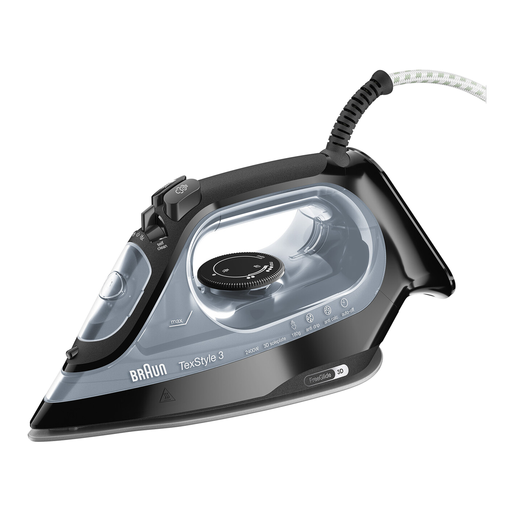
Consider this household iron if you need a precision tip for patches close to seams. Its product name specifies 2600 W, a FreeGlide 3D EloxalPlus soleplate and a precision tip.
Before using it for patches, confirm that its temperature controls suit the garment and that steam can be switched off if the patch instructions require dry pressing.
 No image available
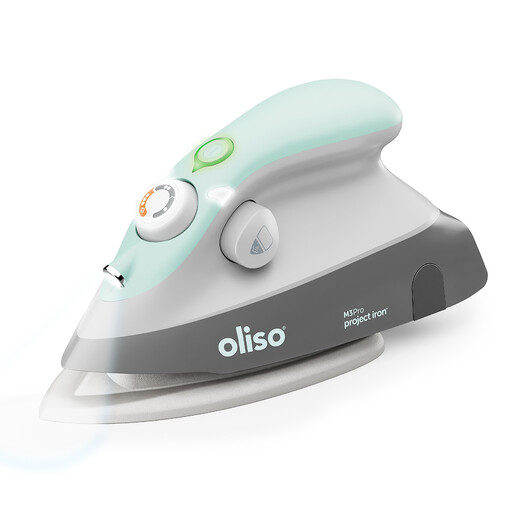
This mini steam iron is presented for sewing, quilting and crafting, making it a model to consider for small patch projects.
Check its instructions for adjustable temperature and steam-off operation before choosing it for a particular garment and patch.
No. The garment’s care label and finish still determine whether it can be pressed at the temperature required by the patch. If ironing is prohibited, consider a sew-on patch rather than increasing the heat.
Use steam only if the instructions for that specific patch call for it. Some patch-application guidance calls for dry pressing, so check that the iron can operate with steam switched off rather than assuming a steam boost will help.
No. Automatic shut-off is an additional safeguard, but Electrical Safety First advises supervising the iron, unplugging it after use and keeping it away from children and pets while it is hot or cooling.