For regular work around uniform sleeve seams, cuffs and buttons, start with a conventional steam iron whose tip can reach those details. A steam generator is worth considering when the uniforms are part of larger, frequent laundry loads and there is room for its base; a handheld steamer suits quick refreshes, but its compact format is not evidence that it will make a sharply pressed crease. Check the garment-care label, cable reach and electrical setup before choosing a model.
Who is this for?
Detail-focused uniform pressers
If cuffs, sleeve seams, buttons and pleats are your main challenge, a tip that reaches narrow areas matters more to your choice than maximum tank capacity. Braun, Philips and Tefal describe precision-tip features on specific models.
Households with frequent ironing loads
If you press several uniforms alongside other laundry, tank capacity and room for an iron or generator base become more important. John Lewis & Partners suggests considering a steam generator for larger loads because it has a separate water tank.
Occasional touch-up users
If you mainly refresh hanging garments and need compact storage, a handheld steamer may fit the task. For a defined sleeve crease, consider whether you instead need an iron and a suitable pressing surface.
What matters when choosing?
Conventional steam iron
Choose when: Sleeve seams, cuffs and buttons are the main job; check the exact model for a pointed or precision tip.
Trade-off: Its tank can mean more refills during larger ironing sessions than a separate-tank generator.
Steam-generator iron
Choose when: Sleeve pressing is part of a larger, frequent laundry load; John Lewis & Partners notes the greater water capacity available from a separate tank.
Trade-off: The base unit needs space in the utility room.
Handheld steamer
Choose when: Quick hanging-garment refreshes and compact storage matter more than a defined sleeve crease.
Trade-off: A refresh tool should not be assumed to replace soleplate pressing for crisp creases.
| Concern | What to check | Who this matters to |
|---|
| Access to sleeve details |
Check the exact model’s tip design for seams, cuffs and buttons, and follow the uniform’s care label when setting the temperature. |
If I need to work around buttons and narrow seams, I want a tip I can position accurately. Around 50% of consumers put sleeve-detail access first. |
| Capacity for repeated loads |
Compare tank capacity and stated continuous steam output, then allow for the space a separate generator tank needs. |
When several uniforms join the household ironing, I want to limit interruptions to refill. Around 30% of consumers prioritise capacity for repeated loads. |
| Storage and electrical setup |
Measure the available space and check cable reach, the appliance rating and any extension device’s marked current limit. |
For occasional use in a tight utility room, I need a tool I can store and connect safely. Around 20% of consumers put compactness and practical setup first. |
What should you avoid?
-
Choosing by wattage alone
A power rating does not tell you whether the nose reaches sleeve seams or between buttons. Braun, Philips and Tefal describe precision tips on particular models, not as a feature of every iron they make.
Check the tip on the exact model, then compare steam, tank capacity and fabric-care settings for your uniforms.
-
Assuming any extension lead will do
Electrical Safety First warns against exceeding an extension device’s marked current rating or connecting extension leads in a chain. A cable reel must be fully unwound to achieve its rating.
Use a suitable wall socket where possible. If an extension device is necessary, check the iron’s rating plate, the device’s marked limit and the total connected load.
-
Buying a generator for an occasional sleeve
John Lewis & Partners associates the separate tank of a steam generator with larger laundry loads; that base also occupies space a conventional iron does not need.
Judge capacity against your usual ironing session and measure the space available for the base.
The separate base needs space both while ironing and in storage.
-
Expecting a handheld steamer to press a sharp crease
Philips presents its compact handheld model as a quick touch-up tool. That use does not establish the same crease definition as pressing fabric with an iron’s soleplate.
Choose a handheld steamer for refreshes; if a defined sleeve crease is essential, assess a conventional iron and pressing surface instead.
Brands to consider for these features
Tefal
The Ultimate Pure line is relevant if you want a conventional steam iron with a stated precision tip and scale-management features.
- Tefal lists a precision tip, anti-drip protection and up to 60 g/min continuous steam for the Ultimate Pure FV9853G0.
- Its stated 3100 W rating makes the electrical setup worth checking; these model specifications do not establish that extra output is needed for a small load.
Braun
The TexStyle range includes full-size irons with model-specific features for narrow garment details.
- Braun describes a Precision Tip for seams and collars and iCare temperature control on the TexStyle 9 SI9682DB.
- The SI9682DB’s stated 3200 W rating alone does not show whether it suits an occasional sleeve-pressing load.
Philips
The cited 3000 Series examples let you consider a conventional precision-tip iron alongside a compact handheld steamer.
- Philips describes a triple-precision tip for buttons and pleats on the DST3041/89R1 and foldable storage for the STH3000/26R1 handheld.
- The cited DST3041/89R1 listing is for a refurbished product; confirm the condition and exact variant when selecting one.
Joybuy products for this task
These conventional irons offer options for sleeve-detail pressing, while the steam generators are more relevant if uniforms form part of larger ironing loads. Check the exact model’s tip and the space available before choosing.
 No image available
Braun TexStyle 7 Pro SI7160BL Steam Iron, Blue
A conventional iron to consider for pressing uniform sleeves. The product name specifies a precision tip and FreeGlide 3D EloxalPlus soleplate; check the rating plate for the exact power requirement before choosing a socket.
 No image available
Tefal Express Vision SV8154G0 Steam-Generator Iron, Black & Purple
Consider this format when sleeve pressing is part of a larger ironing load and there is space for its base. Its product name specifies a 1.8 L water tank and 2800 W rating; check the base dimensions and socket arrangement for your utility room.
 No image available
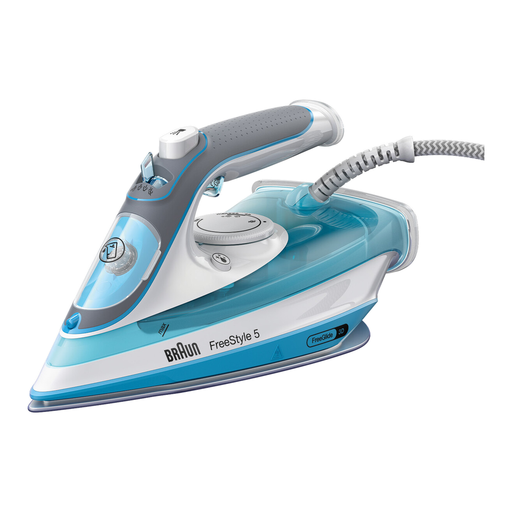
Braun TexStyle 5 SI5008BL Steam Iron, Blue
A conventional option for pressing uniform sleeves. Its product name specifies a FreeGlide 3D SuperCeramic soleplate, anti-drip feature and 2600 W rating; inspect the tip design if access around buttons is decisive.
 No image available
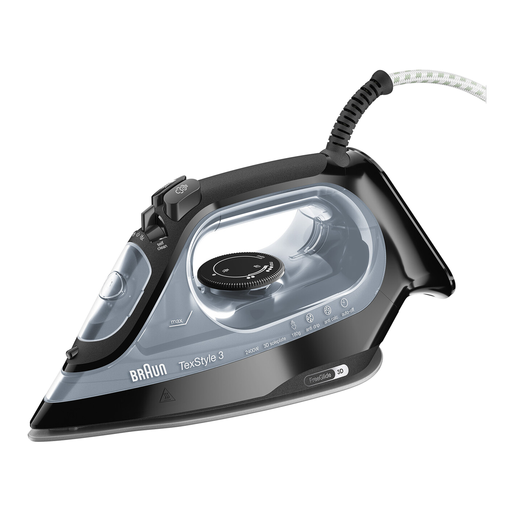
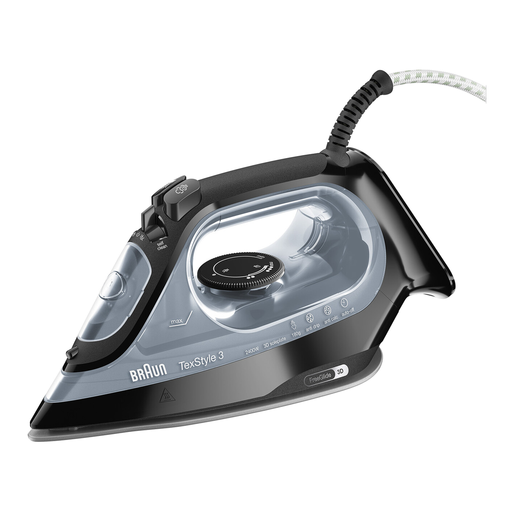
Braun TexStyle 3 SI3055BK Steam Iron, Black
A conventional iron to consider for sleeve pressing and occasional touch-ups. Its product name specifies a SuperCeramic soleplate, auto-off and 2400 W rating; check tank capacity and cord reach against your usual load and ironing position.
 No image available
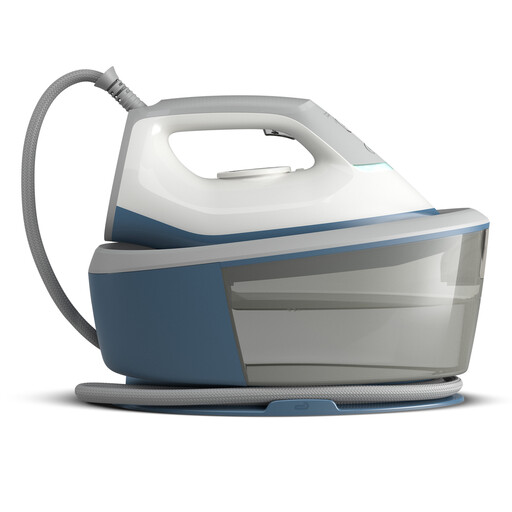
Philips 2000 Series PSG2000/20 Steam Generator
Consider a generator for repeated ironing loads if its base fits the utility room. The product name specifies a 2400 W rating; check the tip design separately if narrow seams and cuffs are the main task.
Common questions
What should I look for when pressing uniform sleeves?
Start with a tip that can reach the seams, cuffs and buttons on your uniforms. Braun, Philips and Tefal describe precision-tip features on specific conventional irons; compare those exact models rather than assuming the feature applies across a brand.
Do a few uniforms justify a steam generator?
A few garments alone are unlikely to make the extra tank capacity the deciding factor. John Lewis & Partners suggests steam generators for larger laundry loads, so weigh your wider ironing workload against the space required for the base.
Can a handheld steamer make a sharp sleeve crease?
Do not assume it can replace pressing with an iron’s soleplate. Philips describes its cited handheld model as a compact quick-touch-up tool; if crease definition is essential, assess a conventional iron and a suitable pressing surface.
What if the utility room is part of a workplace?
Check that the electrical equipment and supply are suitable for the work and how the iron will be used. The Health and Safety Executive advises checking equipment condition, plugs and cables as part of safe use in a workplace.


