Occasional pressers with little storage
If you press only a few placemats, compare the iron’s stored size and temperature controls rather than assuming every travel iron will suit linen.


For a few linen placemats, choose a conventional steam iron whose temperature controls suit the placemats’ care labels, and use it on a stable ironing board or purpose-made heat-safe pressing surface. A compact iron makes sense when storage is tight and pressing is occasional; a standard steam iron is more useful if the household also irons clothes or larger linen items. A handheld steamer is less suitable when a crisp, flat finish matters.
If you press only a few placemats, compare the iron’s stored size and temperature controls rather than assuming every travel iron will suit linen.
If housemates will also iron clothes or larger laundry, a standard steam iron offers a conventional way to handle linen alongside those everyday tasks. Electrical Safety First identifies steam irons as suitable for heavier fabrics, including linen.
If you use an iron in shared accommodation, check its plug and cable, the socket, and where the hot iron can rest and cool. Electrical Safety First advises students to pay attention to the condition of household electrical fittings.
Choose the iron type around how often you press linen and how much space you have; then check fabric controls, your pressing surface and electrical safety on the exact model.
Consider it when: You press a few placemats occasionally and cupboard space is limited.
Trade-off: Its smaller format helps with storage but does not establish how quickly it will press stubborn linen creases.
Consider it when: The household also irons clothing or larger linen items.
Trade-off: Allow more cupboard space than you would for a travel iron, and use steam only at a suitable temperature.
Consider it when: Quick touch-ups matter more to you than a crisp, flat placemat.
Trade-off: Philips says its garment steamers do not give the same result as an iron, particularly on linen.
Consider it when: The household regularly irons substantial laundry loads and has room for a separate base.
Trade-off: That extra equipment takes storage space that may be hard to justify for a few placemats.
| Concern | What to check | Who this matters to |
|---|---|---|
| Linen finish | Check the placemat care label and the iron’s cotton/linen temperature control; look at steam and anti-drip features if water marks concern you. | I want the placemats to lie flat without water spots or heat damage; around 44% of consumers put the linen finish first. |
| Storage space | Compare stored dimensions and whether the iron has a safe resting position; do not rely on the word “travel” alone. | With only a small cupboard and occasional pressing to do, I need an iron I can put away after it cools. Roughly 33% of consumers make storage their primary concern. |
| Shared-house safety | Check for a UK 3-pin plug and fuse, an undamaged cable and a stable pressing surface; auto-off does not replace unplugging. | I need to use and cool a hot appliance without putting housemates or shared surfaces at risk. Safety comes first for about 23% of consumers. |
A compact steamer may remove some creases, but Philips distinguishes its finish from an iron’s, particularly on linen.
Choose a conventional iron if a crisp, flat placemat is the aim; use a steamer for touch-ups only if a less structured finish is acceptable.
Steam at an unsuitable temperature can lead to drips and water marks. Tefal identifies the three-dot setting for cotton and linen on applicable conventional irons.
Follow the placemat’s care label, select the appropriate setting and wait until the iron indicates it is ready before using steam.
Auto-off does not remove the risks posed by a damaged cable, an unsafe socket or a hot iron left on an unsuitable surface.
Inspect the appliance before use, keep it attended, unplug it afterwards and let it cool in a stable position away from flammable items.
Offers conventional steam irons as well as handheld garment steamers, so the choice depends on the finish you want.
Offers conventional steam irons and separate steam-generator systems for different ironing workloads.
The Easy Store Pro 26730 is a conventional steam-iron example with a Wrap and Clip cord-storage design.
These conventional steam irons and one steam-generator model relate to pressing linen placemats. Compare their fabric controls and storage fit before choosing for a student house.
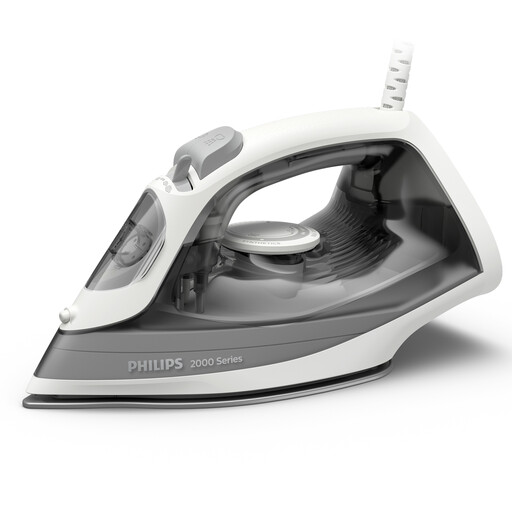 No image available
A conventional steam iron to consider if you also press other laundry. Philips lists up to 25 g/min continuous steam, a ceramic soleplate and a 250 ml tank for this model.
Check that its temperature controls suit the placemat care label, that it fits your storage space and that the supplied plug and fuse suit UK sockets.
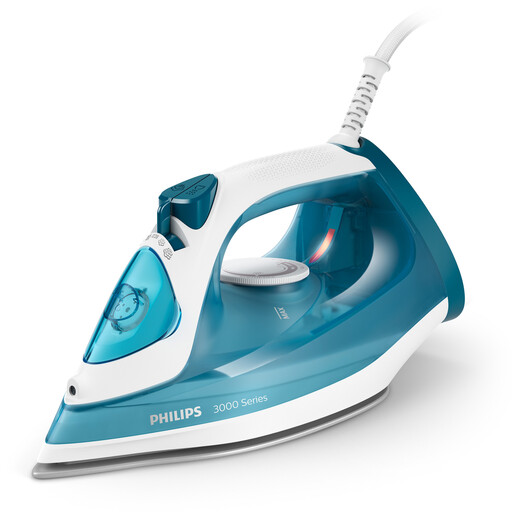 No image available
A conventional steam-iron option if the household will press placemats alongside clothing. Check its temperature controls against the placemat care label before using steam.
Confirm the stored dimensions and the supplied UK plug and fuse before choosing it for a shared house.
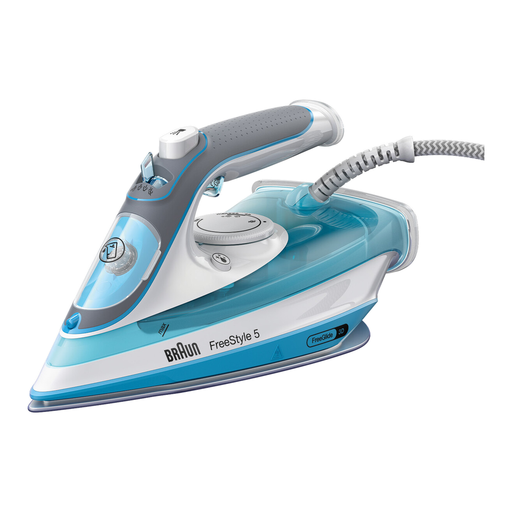 No image available
A conventional steam iron to consider when water marks are a particular concern: its product name specifies Anti-Drip and a SuperCeramic soleplate.
Check the temperature controls against the linen care label, the manufacturer’s water instructions and whether the supplied plug and fuse suit UK sockets.
 No image available
Consider this separate-generator format if the household regularly irons larger loads, rather than just a few placemats. Its product name specifies a 1.8 L water tank.
Allow storage space for the base, follow the placemat care label and confirm that the supplied plug and fuse suit UK sockets.
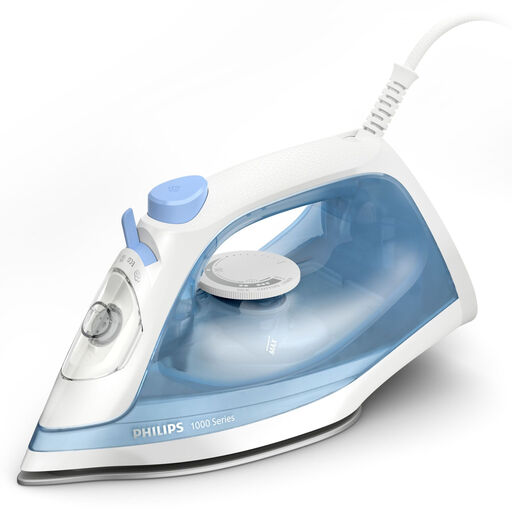 No image available
A conventional steam iron to consider for occasional pressing where storage matters. Check its dimensions rather than assuming that a standard iron will fit your cupboard.
Before pressing linen, confirm how its temperature and steam controls work with the placemat care label, and check the supplied UK plug and fuse.
Follow the placemat’s care label first. For conventional irons with a manual thermostat, Tefal identifies the three-dot setting for cotton and linen; wait until the iron is ready before applying steam to reduce the chance of drips.
Do not expect it to give the same flat, pressed finish as an iron. Philips specifically distinguishes garment-steamer results from ironing results on linen, so choose an iron when that finish matters.
It can suit a few occasional placemats when storage is the main constraint. Check the exact model’s fabric controls, resting position and stored size; if the household irons larger items regularly, consider a standard steam iron instead.
Check for a suitable UK plug and fuse, an undamaged cable and a safe socket, and unplug the iron after use. Electrical Safety First advises against leaving irons unattended. If a supplied electrical fitting appears unsafe, report it rather than attempting a repair; GOV.UK states that landlords in England must ensure the electrical system is safe in private rented homes.
A standard steam iron is generally the more proportionate format for a few placemats because it does not need a separate generator base. Consider the larger format if the household also irons substantial loads regularly and has somewhere suitable to store it.