What matters when choosing?
Decide whether you need contact pressing on a board or a quick handheld refresh, then check the scarf’s care instructions before comparing steam and convenience features.
| Concern |
What to check |
Who this matters to |
| Fabric protection |
Check the scarf label, heat settings and steam control. Test a discreet area before pressing a delicate finish. |
I want to smooth a dyed or blended scarf without marking its finish, so control matters more to me than pressing quickly. Around 36% of consumers put fabric protection first. |
| Persistent creases |
Compare continuous steam in g/min and tank capacity in ml; a steam boost describes a short burst, not continuous output. |
When I press several suitable linen pieces together, I want to work through creases without frequent refills. For around 29% of consumers, crease removal is the primary concern. |
| Storage and touch-ups |
Decide whether you need a flat, board-pressed result or a portable refresh; check the appliance’s storage format. |
If I only need to freshen a scarf before wearing it, a compact setup may matter more than a crisp edge. Convenience comes first for around 21% of consumers. |
| Electrical safety and support |
Check the seller, manufacturer details, instructions, appropriate marking and UK plug and fuse. |
I want to know who supplied the iron and how to identify it if I need support or recall information. Around 14% of consumers make safety and traceability their main concern. |
Joybuy irons for board-based pressing
These two irons cover different board-based routines: a steam-generator format with a larger stated tank and a conventional steam iron for contact pressing. Check how each model controls heat and steam against your scarf’s care label before choosing.
 No image available
Tefal Express Vision SV8154G0 Steam Generator Iron, 1.8 L, Black & Purple
Consider this steam-generator format if you press several linen items in a session rather than only an occasional scarf.
The product title specifies a 1.8 L water tank and 2800 W rated power.
Check whether its One Temp setting is suitable for your scarf, especially if it has blended fibres, dye or a delicate finish. Confirm the plug, fuse and instructions for your intended use before buying.
Joybuy
 No image available
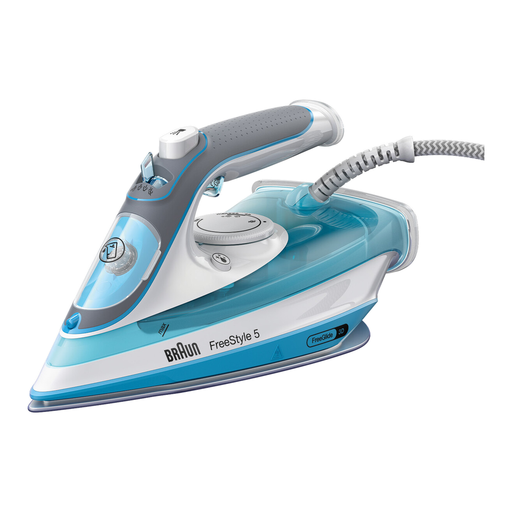
Braun Texstyle 5 SI5008BL Steam Iron, Blue
Consider this conventional iron if you want to press a scarf flat on an ironing board.
Its product title specifies 2600 W rated power, a SuperCeramic soleplate, FreeGlide 3D and an anti-drip feature.
If fine adjustment matters for your scarf, check the available temperature settings and steam controls. Confirm the plug, fuse and instructions before buying.
Joybuy
Frequently asked questions
Do I need an iron or a handheld steamer for a linen scarf?
Choose a conventional iron and board if you want the scarf pressed flat; choose a handheld steamer if a quick refresh is enough. A steamer does not provide the same contact control for edges and hems, so check the scarf’s care label before using either appliance.
Should I press a linen scarf while it is damp?
For suitable linen, pressing while slightly damp can help with creases: both the Irish Linen Guild and Seasalt Cornwall recommend it. Check the scarf’s label first, begin on the reverse side and test a discreet area if its blend, colour or finish calls for caution.
Does a bigger steam-boost figure mean an iron is better for scarves?
No: a steam boost describes a short burst and does not tell you whether the iron’s heat and steam controls suit the scarf. If you press several suitable items at once, compare continuous steam and tank capacity separately from the boost figure.
Which maintenance features matter if I iron linen often?
Compare tank capacity and the specific scale-cleaning system if you use steam regularly. Tefal lists a removable Scale Collector on FV6848, while Philips lists a Calc-Clean feature on DST3041; follow the manual for the model you choose.
What electrical details should I check before buying an iron for UK use?
Check the appliance’s marking, manufacturer details, instructions and plug arrangement before buying. GOV.UK advises checking appropriate marking and a named manufacturer, while Electrical Safety First advises confirming that an iron has a UK three-pin plug and fuse. Check the listing for your delivery destination rather than assuming that requirements are identical throughout the UK.


