What matters when choosing?
Start with the result you need from the school trousers: a pressed crease calls for a different appliance from a quick touch-up. Then consider the space available for using and storing it.
Conventional steam iron
Choose it when: You press school trousers regularly and need to form a crease.
Allow for: A stable pressing surface and a safe place to rest the hot iron; cord storage varies by model.
Handheld garment steamer
Choose it when: Compact storage and smoothing hanging garments matter more than a defined crease.
Allow for: A crisp school-trouser crease cannot be assumed from a steamer’s de-wrinkling claims.
Steam-generator iron
Consider it when: You regularly press larger loads as well as school trousers.
Allow for: A separate base and water tank that also need somewhere to be used and stored.
| Concern |
What to check |
Who this matters to |
| Storage and cable |
Measure the intended storage space and check how the cooled appliance, cable and plug fit there. |
I need to clear the pressing area after each use, so a cable that packs away neatly matters to me. Around 33% of consumers put storage first. |
| Creases and seams |
Look for a pointed tip; compare continuous steam separately from a short steam-boost rating. |
If I press trouser seams and a defined crease regularly, I want access to narrow areas without choosing on a steam-boost figure alone. For around 27% of consumers, crease work is the primary concern. |
| Fabric-care control |
Read the trousers’ label and check for temperature settings that let you follow it. |
I do not want heat or steam to mark the school trousers, especially if their fabric or trim needs particular care. Fabric protection comes first for around 27% of consumers. |
| Safety and upkeep |
Check for a UK 3-pin plug and fuse, inspect the cable and follow the model’s cleaning instructions. |
When I use and store an iron in a small flat, I want its electrical condition and cleaning routine to be manageable. Around 13% of consumers prioritise safety and upkeep. |
Joybuy products for compact storage
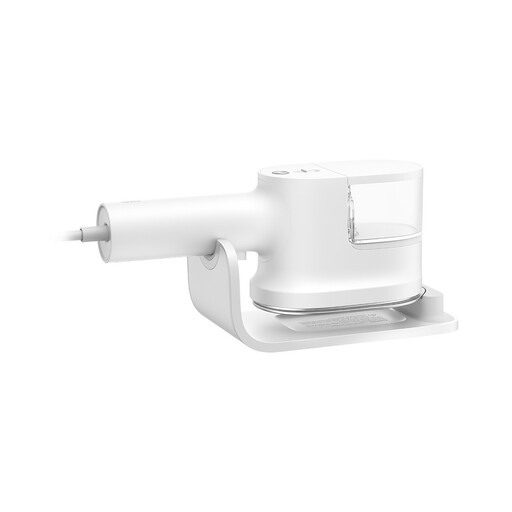
This handheld option is relevant if limited storage space is a priority. If you need a sharply pressed school-trouser crease, check how it performs that task before choosing it instead of a conventional iron.
 No image available
Xiaomi Handheld Steam Iron BS502CN
A compact, portable handheld option for consumers with little storage space. If a crisp school-trouser crease matters, check how this model presses one; also confirm that its temperature controls suit the garment’s care label and that it has a UK 3-pin plug and fuse.
View on Joybuy
Questions about pressing school trousers
Which iron format makes sense in a small flat?
Choose a compact conventional steam iron if you regularly need to press a defined school-trouser crease. A handheld steamer suits quick smoothing on a hanger and may take less storage space, but its de-wrinkling purpose does not establish an equivalent pressed result.
Can I use one heat setting for every pair of school trousers?
No: follow the sewn-in care label for each pair. Express Uniform gives medium heat, pressing on the reverse and a damp cloth as guidance for typical polyester/viscose school trousers, but says the individual garment label takes precedence.
Will a higher steam figure give me a neater crease?
A higher stated steam figure alone cannot establish crease quality. Check whether the figure describes continuous steam or a short boost, and consider the tip shape, temperature control and pressing surface alongside the trousers’ care instructions.
What should I check for UK electrical use?
Check that the appliance has a UK 3-pin plug and fuse. Electrical Safety First also advises inspecting the plug and cable, unplugging the iron when it is not in use and never leaving it unattended.
How do I manage scale in a steam iron?
Follow the water and cleaning instructions for your exact model. Self-cleaning and anti-scale arrangements differ between irons, so check the specified routine before buying if regular maintenance would be inconvenient.


