Occasional pressers sharing storage
If you mainly press a few cotton cushion covers, an iron that is straightforward to retrieve, use and put away may matter more than equipment intended for large ironing loads.


For occasional or moderate pressing of cotton cushion covers, a standard steam iron is usually the more practical choice in a shared house: Which? describes standard irons as compact and easy to store. Consider a steam-generator iron if housemates regularly press larger loads and have room for its separate tank and base. Whichever type you choose, check the exact model’s steam output, maintenance method and auto-off feature, then follow the cover’s care label and agree how the iron will be put away safely.
If you mainly press a few cotton cushion covers, an iron that is straightforward to retrieve, use and put away may matter more than equipment intended for large ironing loads.
If the covers are heavily creased or pressed alongside regular laundry, compare continuous steam and steam-boost figures for the exact models you are considering. The iron still needs to suit the cover’s care label.
Where several people use the same iron, a manageable scale-cleaning routine and an agreed approach to unplugging, cooling and storage can help everyone use it consistently.
For cotton cushion covers in shared accommodation, decide whether ironing is usually a small task or part of larger, regular loads before comparing features on individual models.
Consider it when: You press covers occasionally or in moderate batches and need to return the iron to shared storage.
Trade-off: Check the exact model’s steam output if deep folds are a regular problem; output varies between standard irons.
Consider it when: Several housemates regularly iron sizeable loads and have a stable place to keep the separate base.
Trade-off: Which? notes that the separate water tank produces more steam, but the base takes up more storage space than a standard iron.
| Concern | What to check | Who this matters to |
|---|---|---|
| Stubborn cotton creases | Compare continuous steam in g/min and the separate steam-boost figure for each exact model. Check the cover’s care label before pressing. | If deep folds are the main frustration, I want to compare steam features rather than choose by brand alone. Around 33% of consumers put crease removal first. |
| Shared storage | Allow room for the iron after it has cooled; a steam generator also needs space for its separate base. | When cupboard space is shared, I need something the household can put away without reserving a permanent area. For around 25% of consumers, storage and handling come first. |
| Scale maintenance | Check the exact model’s scale-cleaning method and whether housemates can follow its instructions. | If several of us use the iron, I want an upkeep routine someone will actually carry out. Maintenance is the primary concern for around 25% of consumers. |
| Safe shutdown | Confirm whether the exact model has auto-off, and plan for unplugging and cooling before storage regardless. | If use is interrupted in a busy house, I want a clear routine for leaving the appliance safe. Around 17% of consumers put shutdown safeguards first. |
Its separate water-tank base can be awkward to accommodate when cupboard space is shared, even though steam generators produce more steam, as Which? explains.
Choose a standard steam iron for smaller sessions unless larger loads are routine and there is a stable place to keep the generator.
Steam figures, tank capacity, scale-cleaning methods and auto-off differ between models, including the Philips and Tefal examples described by their manufacturers.
Compare exact model numbers and check each model’s specifications for the features that matter to your household.
A hot iron or its steam can cause burns or scalds. Auto-off does not make it appropriate to leave a connected iron unattended; Tefal’s safety instructions explicitly warn against doing so.
Use a stable, heat-resistant surface, unplug the iron after use and wait for it to cool before storing it. Follow the model’s instructions when emptying or cleaning it.
A scale collector or calc-clean feature still needs someone to carry out the model’s maintenance procedure.
Check the instructions before buying, then agree who will clean and store the shared iron.
These brands offer relevant iron ranges; the features below belong to the named models, not to every iron carrying the brand name.
Worth comparing if scale management and the steam specifications of a standard iron matter to your household.
Its cited standard irons span different feature sets, making the model number particularly important.
A brand to examine if you are still deciding between a standard iron and a steam-generator format.
These options include standard steam irons for pressing cotton cushion covers and a steam-generator iron to consider if the household also tackles larger loads. Match the iron’s format to your storage space, then check model-specific features against your shared-use routine.
 No image available
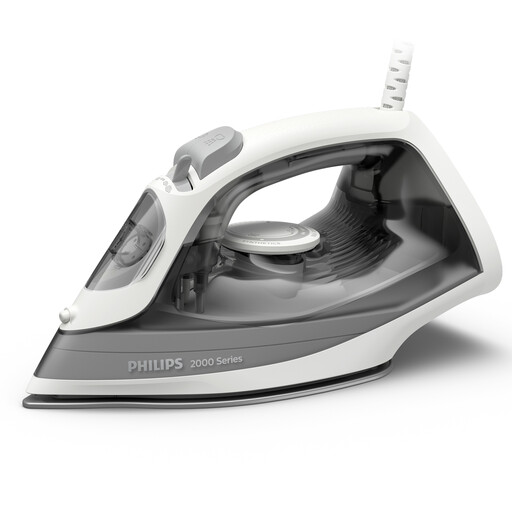
Consider this standard iron for occasional or moderate cover pressing where a separate steam-generator base would be inconvenient to store.
If auto-off matters to your household, confirm whether the DST2020/80 has it before buying. Follow the cover’s care label and unplug the iron after use.
 No image available
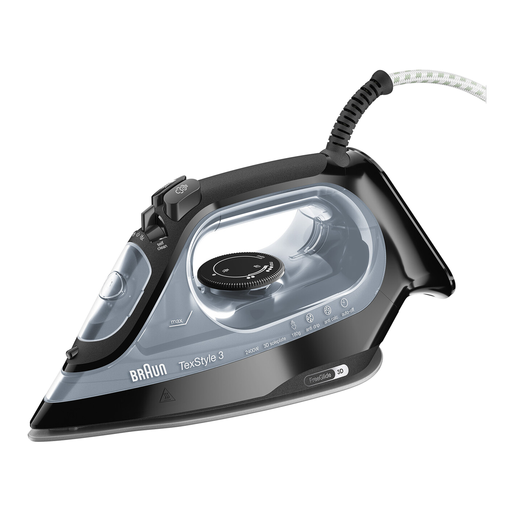
Consider this standard iron if you regularly press cotton covers and want to compare soleplate and steam features for an exact model.
The name identifies FreeGlide 3D, an EloxalPlus soleplate and a Precision Tip. Check the iron’s dimensions against your storage space, and unplug it after use even if you select a model with auto shut-off.
 No image available
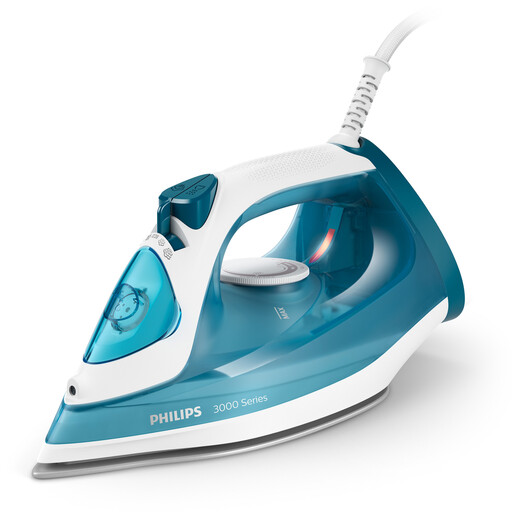
This standard-iron format is worth considering for regular cover pressing without setting aside space for a steam-generator base.
Compare the DST3011/20’s steam output and scale-cleaning instructions with other exact models. Confirm auto-off separately if that feature is important in your shared house.
 No image available
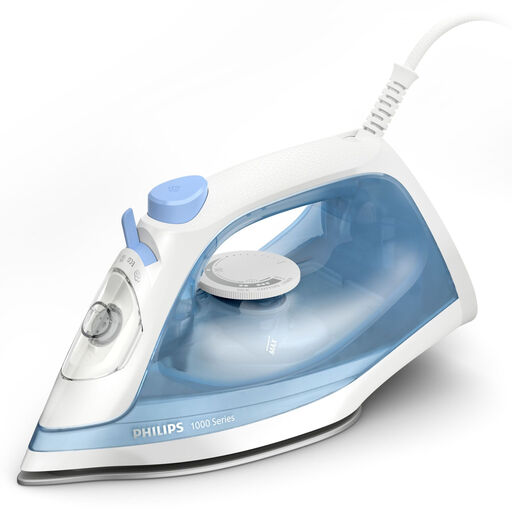
Consider this standard iron if pressing covers is infrequent and you can accept that stubborn folds may take more work.
Joybuy lists up to 20 g/min continuous steam and a boost of up to 90 g for the DST1030/20; its stated tank capacity is 250 ml. Check whether this exact model has auto-off if your household wants that additional safeguard.
 No image available
Consider a separate-base steam generator only if housemates regularly press larger loads as well as cushion covers and have stable, dedicated storage space.
This SV8154G0 variant is identified with a 1.8L water tank. Allow room for its base, follow its maintenance instructions, and unplug it and let it cool before storage.
A standard steam iron is generally the more practical format for occasional or moderate cover pressing in a shared house because it is easier to store. Which? describes steam generators as using a separate tank to produce more steam; consider one when larger loads are routine and you have space for its base.
Yes, auto-off can be a useful additional safeguard, but check that it is included on the exact model. It does not replace unplugging after use or staying with a connected iron; Tefal’s safety instructions warn against leaving one unattended while connected to the mains.
Use one only if the cover’s sewn care label permits ironing and the iron’s instructions cover its fabric. Philips describes its OptimalTEMP DST6130/40 as intended for ironable fabrics, but do not assume decorative trims, coatings, prints or foam-backed parts can be pressed.
Cool the burn or scald under cool running water for 20 minutes, as the NHS advises. Seek appropriate medical help for a serious burn rather than relying on the household’s usual appliance routine.