Occasional trouser-hem presser
If you press one outfit before a placement, interview or formal event, look for a tip that reaches narrow edges. John Lewis & Partners also identifies a steam burst as useful for making sharp trouser creases.


For occasional trouser hems in a student house, start with a conventional steam iron with a precision tip and controllable steam, and look for auto-off as a backup to safe handling. A separate-base steam generator is more relevant if you regularly iron larger loads and have room to store it; if you also iron mixed fabrics, check whether manual controls or a smart-temperature model better suits the garments’ care labels.
If you press one outfit before a placement, interview or formal event, look for a tip that reaches narrow edges. John Lewis & Partners also identifies a steam burst as useful for making sharp trouser creases.
Shared sockets and limited work surfaces make the plug, cable and cooling space part of the choice. Electrical Safety First advises using a UK 3-pin plug and fuse, avoiding overloaded sockets and unplugging an iron when it is not in use.
If trousers are only part of what you iron, choose controls you can match to each care label. A smart-temperature claim still applies only to the fabrics the manufacturer says are ironable.
For a trouser hem in a shared student house, decide which need comes first: accurate pressing, easy storage, safe shared use or simpler handling of mixed fabrics.
| Concern | What to check | Who this matters to |
|---|---|---|
| A crisp hem or crease | Check for a precision tip and an on-demand steam burst; follow the trousers’ care label. | If I need a defined edge, I want to reach the seam without pressing a wider area than intended. Roughly 36% of consumers would put precise trouser finishing first. |
| Occasional use and storage | Check the iron’s dimensions, weight and tank size against your storage and ironing space. | When I press just one or two garments, I want an iron I can use and put away without storing a separate generator base. Around 29% of consumers would prioritise compact, occasional use. |
| Shared-house safety | Check for a UK 3-pin plug and fuse, an intact cable and, if useful, auto-off; avoid overloading a socket or extension. | In a shared room, I need somewhere safe to rest and cool a hot iron, even if someone interrupts me. About 21% of consumers would make heat and electrical safety their primary concern. |
| Mixed-fabric settings | Read each care label, then check the exact model’s temperature controls or its stated smart-temperature conditions. | If I move from trousers to other ironable clothes, I want to avoid choosing the wrong heat setting. Roughly 14% of consumers would put simpler mixed-fabric handling first. |
A steamer’s small size does not establish that it can press a sharp trouser crease. John Lewis & Partners specifically describes an iron’s steam burst as useful for this job.
For a defined hem or crease, look for a soleplate with a precision tip and controllable steam rather than judging the appliance by portability alone.
Auto-off is a backup, not permission to leave a hot iron unattended. Electrical Safety First advises unplugging irons when they are not in use.
Switch off and unplug after pressing, then leave the iron on a suitable heat-resistant surface to cool.
Electrical Safety First warns that overloading sockets or extension leads can create a fire risk.
Use a sound wall socket where possible. If you need an extension, check its rating and avoid running other high-load appliances from it at the same time.
England’s electrical-installation inspection rules have tenancy-specific coverage; government guidance lists student halls of residence among the exclusions.
If a socket or fixed wiring appears damaged, stop using it and contact your accommodation provider or landlord rather than waiting for a scheduled inspection.
Tefal’s Virtuo 30 FV2C64G0 illustrates a conventional precision-tip iron, while its Smart Protect Plus FV6872G0 illustrates a one-temperature approach for ironable fabrics.
The Philips 3000 Series DST3041/89R1 is a conventional steam iron; the PSG3000/20R1 illustrates the separate-base generator format for buyers considering larger loads.
The Turbo Glide 2800W is a conventional iron to consider if you expect to press more than one garment in a session.
These conventional and mini steam irons are choices to assess for occasional trouser pressing. Check the exact model’s controls, UK plug and safe resting space before deciding which fits your student-house setup.
 No image available
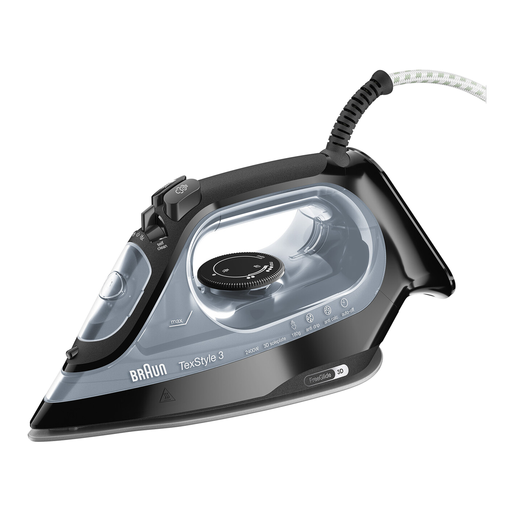
Consider this conventional iron if reaching narrow trouser hems with a precision tip is a priority. The named variant has a FreeGlide 3D EloxalPlus soleplate; check the exact unit’s rated power if listings give differing figures.
 No image available
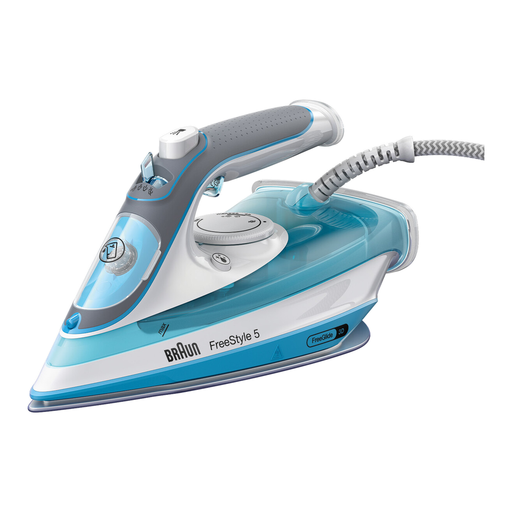
This conventional iron is worth considering for short trouser-pressing sessions if its temperature controls suit your garments. Its named configuration includes a 2600 W rating, FreeGlide 3D SuperCeramic soleplate and anti-drip feature; check the exact continuous-steam specification if output is important to you.
 No image available
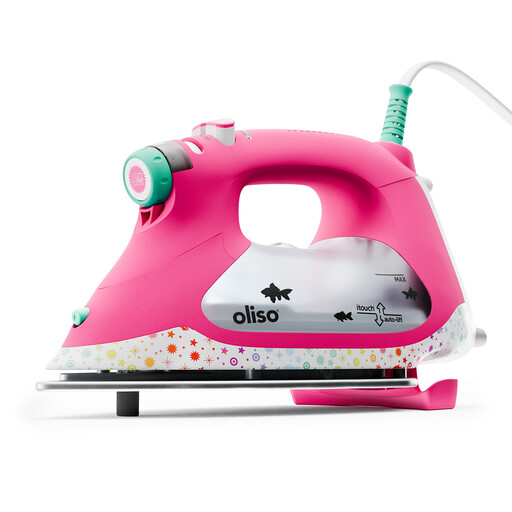
If you also press sewing projects, compare this model’s controls with the heat settings your trousers require. Check its dimensions and tank capacity against your storage space before choosing it for occasional garment use.
 No image available
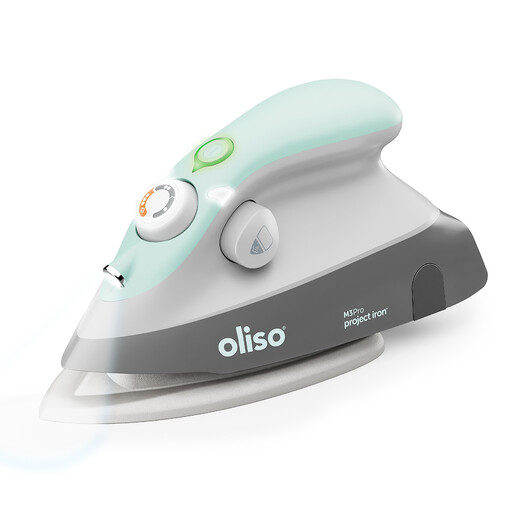
Consider this mini project iron if you need a small appliance for detailed pressing as well as craft work. Check its resting arrangement, tank capacity and garment settings before treating its mini format as suitable for your whole ironing routine.
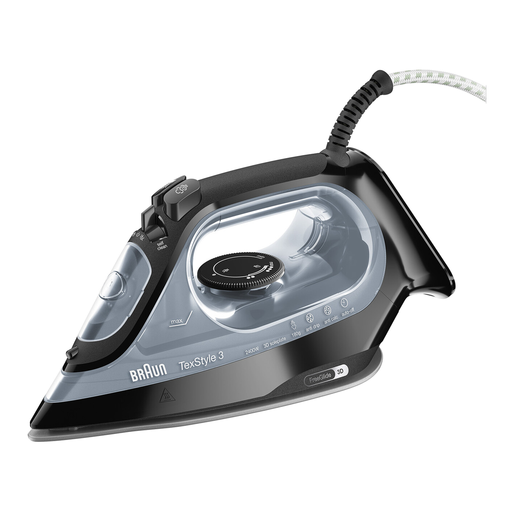 No image available
This conventional iron is an option for occasional seam and hem work if its controls match your trousers’ care label. Its named configuration includes a 2400 W rating, FreeGlide 3D SuperCeramic soleplate and auto-off; check for a steam-burst feature if a sharp crease is your priority.
Do not assume a handheld steamer will make the same defined crease. John Lewis & Partners identifies an iron’s steam burst as useful for sharp trouser creases; for a precise hem, also look for a suitable soleplate and tip.
Check for a UK 3-pin plug and fuse, an intact plug and cable, and a safe place to rest the iron. Electrical Safety First advises against overloaded sockets and extension leads and says to unplug irons when they are not in use; auto-off does not replace supervision.
Use the water specified in the exact model’s manual. Water guidance can differ between irons, so check the instructions before adding distilled, softened or scented water.
In England, government guidance says landlords covered by the relevant private and social rented-sector regulations must arrange inspection and testing of electrical installations by a qualified person at least every five years. The guidance lists student halls of residence among excluded tenancies, so ask your accommodation provider which arrangements apply to your home; do not assume this England-specific rule covers every student property across the UK.