What matters when choosing an iron?
Decide whether detailed pressing, fabric control, longer sessions or easy handling is your main priority; then check the exact model rather than relying on its range name.
| Concern |
What to check |
Who this matters to |
| Cuffs and buttons |
Look for a pointed tip and check the exact soleplate design. |
If I spend most of my ironing time navigating cuffs and buttons, control in narrow areas comes first; around 36% of consumers put detailed pressing first. |
| Fabric and water marks |
Check the garment label, available temperature settings and whether the model has anti-drip protection. |
When my uniforms contain different fabrics, I need to choose heat carefully rather than use one setting by habit. Roughly 29% of consumers prioritise fabric-appropriate control. |
| Repeated ironing |
Compare continuous steam in g/min, tank capacity and the stated cleaning method; a steam boost is a separate figure. |
If several uniforms need pressing in one session, refilling and cleaning the iron matter to me. Around 21% of consumers make session length and upkeep their primary concern. |
| Handling |
Consider stated weight together with cord length and tank capacity. |
For quick touch-ups, I want an iron I can guide comfortably along a sleeve; approximately 14% of consumers put handling first. |
Joybuy irons for uniform pressing
These choices include conventional steam irons for detailed sleeve pressing and a steam-generator model to consider for longer ironing sessions. Check each uniform’s care label and the appliance details before choosing.
 No image available
Braun TexStyle 7 Pro SI7160BL Steam Iron
Consider this conventional iron if reaching cuffs and seams is a priority. Its name specifies a precision tip, FreeGlide 3D and EloxalPlus soleplate, and 2600 W power. If you iron for extended periods, check that its listed handling weight suits you; also confirm the supplied plug and suitability for your location.
View on Joybuy
 No image available
Tefal Express Vision SV8154G0 Steam-Generator Iron
Consider the steam-generator format if you regularly press several uniforms, rather than mainly touching up one sleeve. Its name specifies a 1.8 L water tank and 2800 W power. Check the space and handling the format requires, the manufacturer’s fabric instructions, and the supplied plug and suitability for your location.
View on Joybuy
 No image available
Braun TexStyle 5 SI5008BL Steam Iron
The precision tip makes this conventional iron worth considering for cuffs and button areas. Its name specifies a FreeGlide 3D SuperCeramic soleplate, anti-drip protection and 2600 W power. If continuous steam or particular temperature settings matter to you, confirm the exact model’s figures and controls; check the supplied plug and suitability for your location too.
View on Joybuy
 No image available
Braun TexStyle 3 SI3055BK Steam Iron
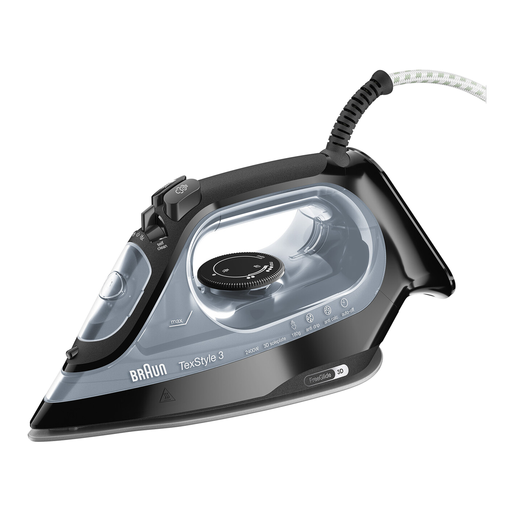
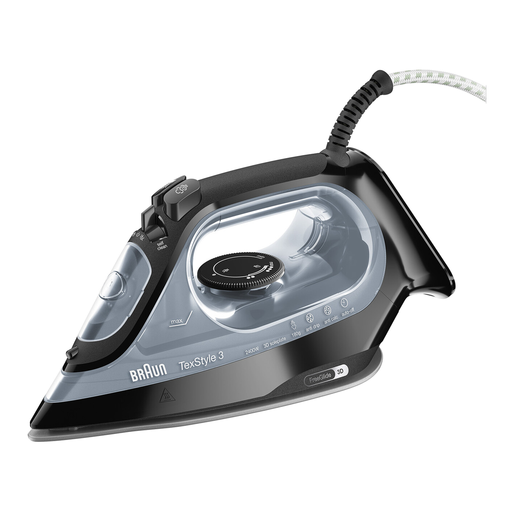
This conventional iron is a sleeve-pressing option if you want to check handling alongside tip shape. Its name specifies a FreeGlide 3D SuperCeramic soleplate, auto-off and 2400 W power. For several uniforms at a time, check tank capacity and continuous steam before choosing; also confirm the supplied plug and suitability for your location.
View on Joybuy
Common questions
Which iron feature helps most around uniform cuffs and buttons?
A pointed tip is a useful starting point for navigating cuffs, buttons and narrow sleeve sections. Check the soleplate design on the exact iron as well; Tefal specifically describes a precision tip for working around buttons on its Smart Protect+ FV6872G0.
Can I use one temperature for every uniform?
Use each garment’s care label to choose the setting, rather than assuming one temperature suits every uniform. Follow the iron’s instructions too, particularly for mixed fabrics and trims.
Will vertical steam give cuffs a crisp finish?
For a cuff or stubborn sleeve crease that needs controlled pressing, lay the garment flat. Philips recommends a flat surface for cuffs, collars and persistent creases; use vertical steam only where the appliance instructions permit it.
What should I check about an iron intended for use in Great Britain?
Check that the listing clearly identifies the model, seller, supplied plug and suitability for your location. Guidance from the Office for Product Safety and Standards and Business Companion addresses supplier obligations under the Electrical Equipment (Safety) Regulations 2016 for Great Britain; Northern Ireland has separate provisions.
Should I check recalls when buying a used steam-generator iron?
Yes: check the exact model against GOV.UK product safety alerts, especially for used or older stock. The Office for Product Safety and Standards has recorded a recall concerning certain Philips pressurised steam-generator irons; that notice does not establish a fault with conventional irons as a category.


