What matters when choosing?
Start with the number of skirts pressed in a normal changeover, then consider the space available for pressing and storage. A compact conventional iron suits small sessions; a larger-tank conventional iron or a generator becomes worth considering as repeated loads grow, but the garments’ care labels and the exact model’s instructions still govern use.
Compact conventional iron
Consider it when: You press a few skirts at a time and want a self-contained appliance that stores easily.
Allow for: A smaller tank may need refilling during longer sessions; a stated steam figure does not establish crease-removal performance.
Higher-output conventional iron
Consider it when: Changeovers regularly involve several skirts, but you still want one self-contained iron.
Allow for: Check the actual tank, cleaning system and storage fit; higher stated output alone does not prove faster pressing.
Steam generator
Consider it when: Larger pressing loads recur and you have room for a fixed ironing station with a separate water base.
Allow for: The base needs more setup and storage space than a conventional iron. Which? and John Lewis & Partners frame generators around larger ironing volumes.
| Concern | What to check | Who this matters to |
|---|
| Creases during changeovers |
Check the exact model’s continuous steam, steam boost and tip shape, alongside independent ironing tests where available. |
I need to press creased skirts before the next stay, including seams or pleats, without spending the changeover making repeated passes. Around 31% of consumers put pressing speed first. |
| Batch capacity |
Compare tank capacity with the usual number of garments; check cord reach and space for any separate base. |
If several skirts need attention together, I want to limit refill interruptions without giving over space to an appliance the workload does not warrant. Roughly 25% of consumers prioritise batch capacity. |
| Finish and maintenance |
Check the exact model’s scale-management and anti-drip features, plus its permitted water and cleaning instructions. |
With regular steam use, I want a cleaning routine I can keep up and a finish that is not disrupted by residue or water marks. About 25% of consumers place finish and maintenance first. |
| Use and storage safety |
Check the plug and cable condition, where the iron can cool and be stored, and whether the model has auto shut-off. |
In accommodation with paying guests, I need a workable way to inspect, cool and store a hot electrical appliance. Approximately 19% of consumers give that management need priority. |
Brands to consider
These brands provide model-specific points of comparison, not a reason to assume that every iron in a range has the same controls or performance.
Philips
Its DST3041/89R1 provides a reference point for a conventional iron intended for smaller pressing sessions.
- Philips specifies a 300 ml tank, ceramic soleplate, precision tip and 40 g/min continuous steam for the DST3041/89R1.
- Those specifications belong to the DST3041/89R1; check the details separately for the DST3011/20 shown below.
Tefal
Named Ultimate Pure variants offer a conventional-iron comparison for operators considering tank capacity and scale management.
- Tefal lists 350 ml tanks, 3 m cords and 55–60 g/min continuous steam across the cited variants.
- Features differ by variant, and the stated steam figures do not independently establish crease-removal performance.
Russell Hobbs
The Powersteam Ultra 20630 is a conventional-iron reference for comparing a larger tank with a compact pressing routine.
- Russell Hobbs specifies a 350 ml tank and 70 g continuous steam for cotton clothing on the 20630.
- Its faster-heating and smoother-ironing statements are brand claims, not independent comparisons with other irons.
Morphy Richards
The Power Steam Elite 302012 is a conventional-iron reference where tank size and a stated cleaning system matter.
- Morphy Richards specifies a 450 ml tank, 3 m cable, anti-scale collection and self-clean for the 302012.
- Water and descaling instructions vary by model, according to Morphy Richards; follow the relevant manual rather than assuming the cleaning features remove that task.
Joybuy irons for smaller batches
These two self-contained steam irons are options to examine for smaller cotton-skirt pressing sessions. Check each skirt’s care label and the exact iron’s controls before choosing; neither product listing establishes how quickly it will press a particular batch.
 No image available
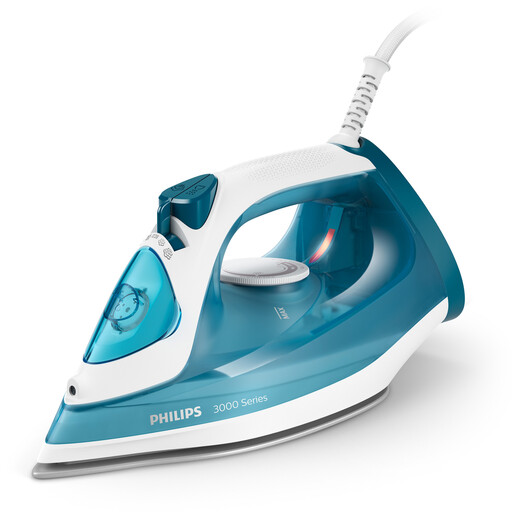
Philips 3000 Series DST3011/20 Steam Iron, Blue
Consider this conventional iron if you press a few skirts at a time and want a self-contained appliance. Before buying, check the DST3011/20 manual for temperature controls that suit the garments’ care labels and for auto shut-off if your operating routine calls for it; specifications for other Philips 3000 Series models should not be assumed to apply.
Joybuy
 No image available
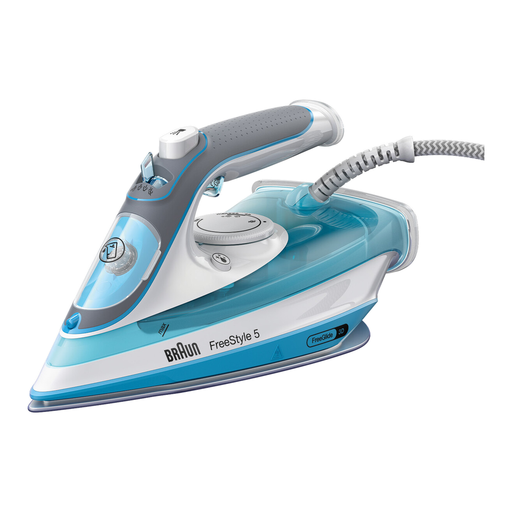
Braun Texstyle 5 SI5008BL Steam Iron, 2600 W, FreeGlide 3D, SuperCeramic, Anti-Drip, Blue
Consider this self-contained iron for a modest pressing session, checking how its soleplate works around the seams and pleats you handle. The product name specifies 2600 W, FreeGlide 3D, an anti-drip feature and a SuperCeramic soleplate; those details alone do not establish cotton-skirt pressing performance. Check the SI5008BL manual for temperature controls, water and cleaning instructions, and auto shut-off if required.
Joybuy
Frequently asked questions
Do I need a steam generator for cotton skirts in a holiday let?
Usually not for occasional or small-batch pressing: a conventional steam iron is self-contained and takes less storage space than a generator with a separate base. Consider the generator route if larger loads recur and there is room to set up and maintain it.
Which iron features matter for skirts with pleats or seams?
Check the skirt’s care label first, then look for appropriate temperature controls and a soleplate tip that can reach the details you press. Continuous steam, a steam boost and tank size are useful comparison points, but Which? notes that real ironing ability and durability can vary between models.
Is annual PAT testing automatically required for a holiday-let iron?
The Health and Safety Executive does not prescribe annual portable-appliance testing as a universal interval under the Electricity at Work Regulations 1989. Equipment capable of causing injury must be maintained in a safe condition; visual checks and any inspection or testing schedule should reflect the equipment and its environment.
How should I descale a steam iron used regularly?
Follow the instructions for the exact model, including its permitted water type and cleaning method. Morphy Richards advises against adding vinegar or descaling chemicals unless the model manual instructs it, because procedures differ between irons.
Do England’s private-rented-sector electrical rules automatically apply to a holiday let?
Do not assume they do. Guidance from the Ministry of Housing, Communities and Local Government describes those rules in relation to occupation as an only or main residence; the duties relevant to a holiday let depend on its UK nation, property type and operating arrangement. Confirm the applicable electrical and fire-safety requirements for the particular property.


