Occasional patch appliers
You need an iron for a few repairs or decorative patches, with dry heat at a temperature the garment can tolerate, without giving up space to a larger ironing setup.


For occasional iron-on patches, choose a conventional iron only if its instructions confirm controllable temperature and dry or fully steam-off use; a precision tip may help near seams and pockets. Follow both the patch instructions and garment care label rather than choosing by steam output. Patches R Us advises switching steam off for heat-activated adhesive, while Prym recommends a few reinforcing stitches for repairs on knees and elbows.
You need an iron for a few repairs or decorative patches, with dry heat at a temperature the garment can tolerate, without giving up space to a larger ironing setup.
You are patching knees, elbows or other areas that flex and rub. Prym advises adding a few stitches to patches in these high-wear areas, so an iron may be only part of the repair.
You need somewhere stable to use and cool a hot iron around housemates. Electrical Safety First advises checking the UK plug and fuse, and unplugging the iron when it is not in use.
Start with the patch and garment instructions, then check the exact iron model for controllable heat and steam-off use. Convenience features matter only after those requirements are met.
| Concern | What to check | Who this matters to |
|---|---|---|
| Patch and fabric heat compatibility | Check the garment care label and patch instructions against the iron’s temperature controls. Confirm dry or fully steam-off use in the exact model’s instructions. | If I am attaching a heat-activated patch, I want to avoid damaging the fabric or working against the adhesive. Around 42% of consumers put heat compatibility first. |
| Everyday practicality | Compare the iron’s size, soleplate and access around seams with the clothes you also expect to press; check model-specific features rather than assuming every iron in a range is alike. | When I have room for one iron, I need it to handle occasional patches as well as ordinary clothes. Roughly 33% of consumers make that everyday practicality their primary concern. |
| Shared-house safety and storage | Confirm a UK 3-pin plug and fuse, allow for a stable place to cool the iron, and check any auto shut-off claim against the exact model. | In a shared house, I need to put the iron away safely after use without leaving it unattended while hot. About 25% of consumers place safety and storage first. |
A high steam specification may be useful for clothing, but it does not establish better patch adhesion. Patches R Us advises switching steam off because moisture works against heat-activated adhesive.
Check the iron’s dry-use instructions, then follow the patch maker’s heat and pressing directions.
Direct heat can flatten embroidery or damage embellishments such as sequins, pearls and glitter.
Use a protective pressing cloth where the patch instructions permit it. For sensitive decoration, check whether the maker directs you to apply heat from the garment’s reverse.
Repeated flexing and rubbing put these repairs under more strain. Prym advises securing patches in such areas with a few stitches as well.
Choose a patch you can sew and reinforce it after heat application where appropriate.
Reinforcing the repair also calls for a needle and thread.
Auto shut-off is an additional safeguard, not permission to leave a hot iron unattended. Electrical Safety First advises unplugging irons when they are not in use.
Unplug the iron after pressing, let it cool in a stable position away from flammable materials, and check the plug and cable before its next use.
Tefal’s Virtuo 30 range is relevant if access around patch edges and occasional clothing use matter to you.
The Philips 2000 Series DST2020/80 is a conventional option to examine if the same iron will also be used for clothes.
The Supreme Steam Ultra 23260 is relevant when regular clothes ironing is a substantial part of the job.
These conventional steam irons offer features to consider when pressing near patch edges and ironing ordinary clothes. Before choosing any of them for a heat-activated patch, confirm dry or fully steam-off operation in the exact model’s instructions and check the garment and patch heat requirements.
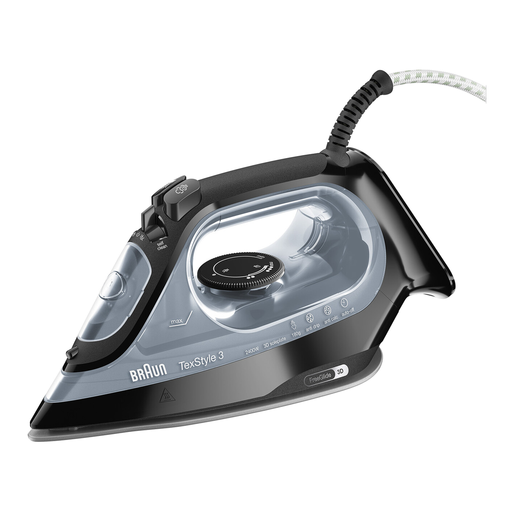 No image available
For occasional patch work alongside clothes ironing, check that this model permits dry use at the temperature your garment requires.
The product name specifies 2400 W, a SuperCeramic soleplate, FreeGlide 3D and auto-off. Confirm a UK 3-pin plug and fuse before buying for use in a student house.
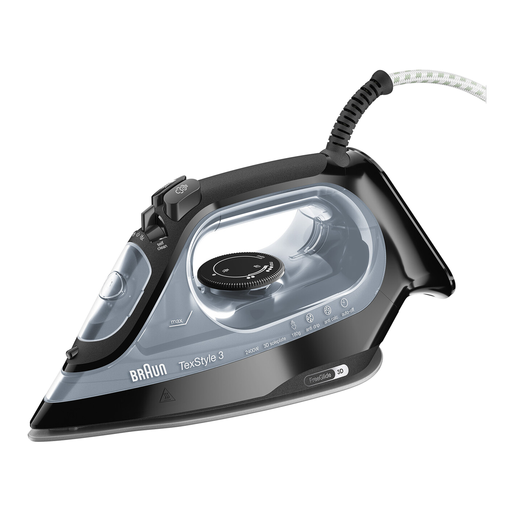 No image available
Consider its precision tip if a patch sits near a seam or narrow edge, provided the garment and patch instructions allow heat there.
The product name specifies an EloxalPlus soleplate and FreeGlide 3D. Check the exact manual for dry or fully steam-off operation, and confirm a UK 3-pin plug and fuse for home use.
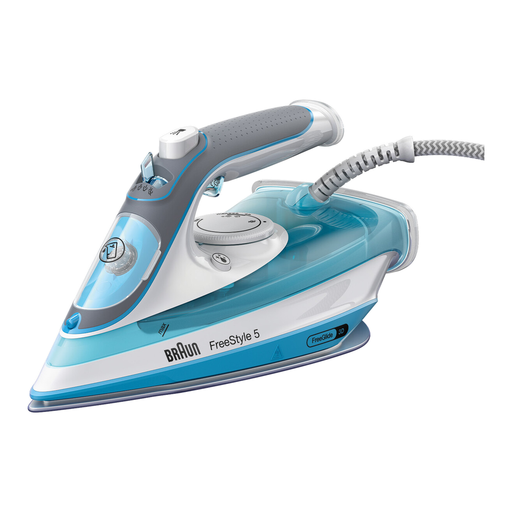 No image available
If this iron would also handle routine clothing, check its temperature controls against the fabrics you own before using it for patches.
The product name specifies 2600 W, a SuperCeramic soleplate, FreeGlide 3D and anti-drip. Confirm dry or steam-off use in the exact instructions and a UK 3-pin plug and fuse before buying.
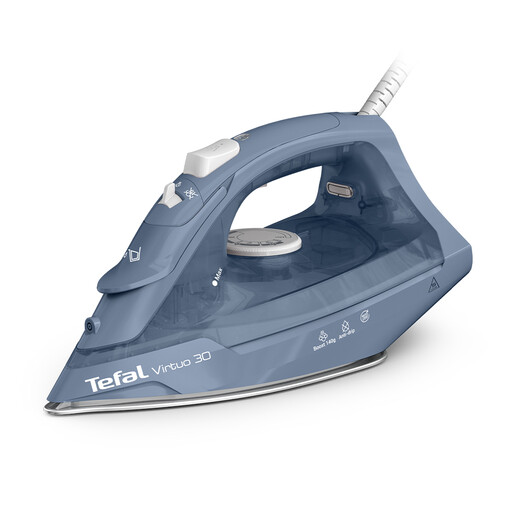 No image available
Its precision tip may be useful around narrow patch edges, but check that its temperature and dry-use controls meet the patch and garment instructions first.
The product name specifies 2200 W and a 240 ml water tank. Confirm a UK 3-pin plug and fuse for use in a student house. This FV2C64G0 is a different model from the FV2C41G0 discussed in the brand section.
Switch steam off for a standard heat-activated patch unless its maker instructs otherwise. Patches R Us advises against moisture during application; check the garment care label as well before applying heat.
Do not assume direct contact is safe. Patches R Us advises a protective layer for suitable embroidered patches and reverse-side heat for sensitive embellishments, subject to the particular patch instructions.
Prym advises adding a few stitches when patching high-wear areas such as knees and elbows. The stitching reinforces a repair that will flex or rub repeatedly.
Check for a UK 3-pin plug and fuse, and inspect the plug, cable and socket before use. Electrical Safety First also advises never leaving an iron unattended and unplugging it when it is not in use; an auto shut-off feature does not replace those habits.