Frequent-changeover hosts
If several cotton aprons need pressing in one session, sustained steam and fewer refill pauses may matter more than the space taken by a separate generator base.


For frequent batches of cotton aprons, consider a steam-generator iron if fewer refill pauses matter more than compact storage. A standard steam iron is a simpler fit for moderate batches, while a cordless iron suits workspaces where freedom of movement outweighs the need to return it regularly to a powered base.
If several cotton aprons need pressing in one session, sustained steam and fewer refill pauses may matter more than the space taken by a separate generator base.
For moderate apron loads, a conventional steam iron keeps the appliance in one unit. Compare its tank capacity and scale-care routine before choosing a model.
Cord-free movement may help when manoeuvring around the board, provided regular returns to a powered reheating base fit the pressing routine.
For holiday-let apron pressing, start with the number of aprons handled in one session, then weigh refill pauses, maintenance and the space available for safe use and storage.
| Concern | What to check | Who this matters to |
|---|---|---|
| Batch speed and refills | Compare continuous steam in g/min and tank capacity on the exact model. For a generator, check where its base will sit. | On changeover days, I need to press several aprons without repeatedly stopping to refill; around 42% of consumers put batch continuity first. |
| Scale care and finish | Check the specified filter or cleaning system and read the model's water and descaling instructions. | If scale affects steam or leaves residue on aprons, I want a maintenance routine I can keep up with; roughly 33% of consumers prioritise finish and scale care. |
| Space and manoeuvrability | Check storage space, board suitability and a safe cooling position. For cordless models, check how often the iron must return to its base. | In a cramped utility area, I need room to move around the board and put the hot iron away safely; about 25% of consumers put space and flexibility first. |
Morphy Richards says its easyCHARGE cordless irons heat from a powered base rather than operating as battery appliances. Returning the iron to the base regularly can interrupt a large apron batch.
Choose this format when movement around the board matters enough to accommodate those pauses; otherwise, compare corded and generator models.
A boost figure describes a different output from continuous steam. Tank capacity, refills and scale care also affect how a repeated pressing session is organised.
Compare continuous steam in g/min, tank size and the maintenance instructions for each exact model, alongside its board and storage requirements.
A filter or cleaning function does not replace the model's water and maintenance instructions. Morphy Richards advises regular maintenance for its cited cordless models.
Read the manual's cleaning routine before buying and allow time to follow it during regular use.
Automatic shut-off does not replace unplugging the iron or checking its cable, plug and socket.
Electrical Safety First advises unplugging irons when they are not in use. Let the iron cool in a safe place and stop using it if the plug, cable or casing is damaged.
Compare the specified model, not the brand name alone: these examples represent different approaches to repeated apron pressing.
The PerfectCare 7000 PSG7300/20 illustrates the separate-tank steam-generator approach for frequent batches.
The Ultimate Pure FV9845G0 illustrates a conventional steam iron for moderate recurring loads.
The easyCHARGE 303250 illustrates cordless movement for occasional pressing around a constrained board.
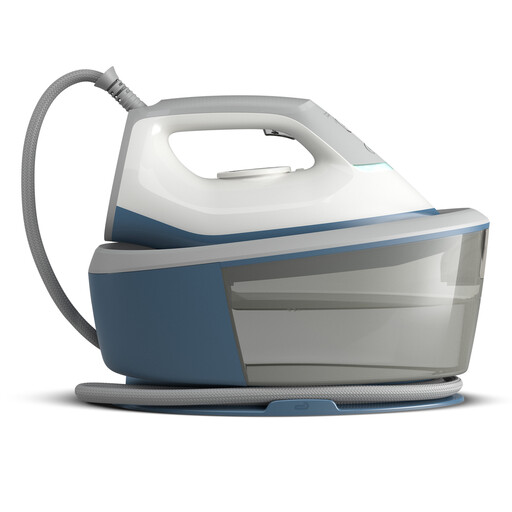
This steam-generator option is relevant when you press several cotton aprons in a session and have space for a separate base. Check its exact tank, steam and safety specifications against your routine.
 No image available
Consider this steam generator for repeated apron batches if its separate base fits your board and storage space.
The product title specifies 2400 W. Before buying, confirm its tank capacity, continuous steam output, UK plug and fuse, and automatic shut-off details for the PSG2000/20.
Yes, if you regularly press several aprons together and fewer refill pauses matter more than compact storage. Which? describes steam generators as separate-tank appliances that produce more steam for faster ironing; check the tank and continuous-steam specifications of the exact model, as well as space for its base.
It can suit the job if pauses to reheat fit your routine. Morphy Richards says its easyCHARGE cordless models must return regularly to a powered base to maintain temperature, so consider a corded iron or generator when uninterrupted batch work matters more than cord-free movement.
Check for a UK 3-pin plug and fuse, and treat automatic shut-off as a backup rather than a reason to leave an iron unattended. Electrical Safety First advises unplugging irons when not in use and checking the plug, socket and cable for damage.
For self-catering holiday homes in England, GOV.UK says operators must follow HSE guidance on electrical safety. That England-specific guidance should not be treated as a complete statement of obligations elsewhere in the UK; check the requirements applicable to the property.