
24/7 全天候客户支持

免费退货

当日/次日达

品质保障

开启新人专享福利: 全场免邮 | 低至 2 折 | 免费试用 30 天 JoyPlus 会员
下载 Joybuy
Choosing ironing and garment care products can seem straightforward until you compare steam output, tank sizes, board dimensions and storage features. A compact garment steamer may suit a rented flat, while a steam generator iron could be more appropriate for a household ironing large loads every week.
The right purchase depends less on headline wattage and more on how, where and how often you care for clothes.
Wattage indicates the appliance’s power consumption and can support faster heating, but it does not tell you everything about steam performance. A garment steamer with a stated output of up to 36g/min may be convenient for everyday clothing, while a steam generator iron with continuous steam and a separate high-capacity tank is designed for a different type of ironing.
Compare steam output, heat-up time and operating format rather than relying on wattage alone.
A full-size ironing board can provide a comfortable working area, but it may be difficult to store in a small bedroom, student accommodation or flat. Conversely, a table-top ironing board may be easy to put away but less suitable for ironing large sheets or several garments at once.
Check the unfolded and folded dimensions, as well as whether you have a suitable cupboard, door or worktop for storage.
Steam appliances require regular emptying and cleaning. Limescale can be a particular concern in areas with hard water. Look for practical maintenance features, such as an easy-rinse system or descaling reminder, and always follow the manufacturer’s instructions.
Hot steam and heated soleplates can cause burns. Use an iron on a stable board, keep appliances away from children and never steam clothes while they are being worn.
A clothes steamer is generally used with garments hanging vertically. This makes it useful for dresses, jackets, curtains and quick touch-ups, without setting up a conventional ironing board. A steam iron works horizontally against a firm surface and is usually more suitable for sharp creases, collars, cuffs and larger flat textiles.
Handheld models are convenient for travel or office use, but their smaller tanks may require more frequent refilling. Standing models offer a larger water capacity and can be more practical for several garments in one session.
Tank capacity affects how long you can work between refills. For example, the Philips STE1040/20 has a 1.8L detachable water tank, while the Cuisync handheld model has a 150ml tank. The first is designed for longer household steaming sessions; the latter prioritises portability.
Heat-up times also matter when you are preparing clothes before work. The Philips 1000 Series garment steamer reaches operating temperature in approximately 45 seconds, whereas the Philips 2000 Series steam generator takes approximately 2 minutes.
For regular ironing, assess the surface dimensions, height adjustment and frame stability. The Tower Ceraglide Plus has a 122cm x 39cm ironing surface and seven height settings from 73cm to 95cm. This provides more room for trousers, shirts and household textiles.
For smaller homes, a compact ironing board measuring around 100cm x 35cm may be easier to store. An over-door ironing board can save floor and cupboard space, but the door must be suitable, stable and fully closed during use.
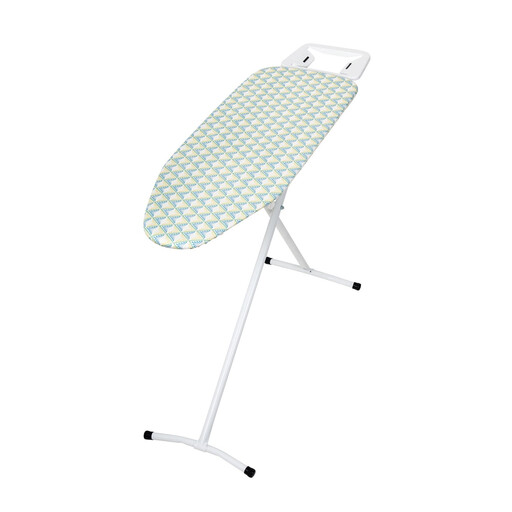
Why This Fits Their Persona: A sensible starting point for renters, students and smaller UK homes that need a conventional ironing surface without storing a full-size board.
Its stated 100cm x 35cm surface and folding design make the storage commitment clear before purchase, helping avoid an oversized board that is difficult to put away.
Steel frame, padded cover and approximately 8cm folded thickness offer a practical balance of support and storage.
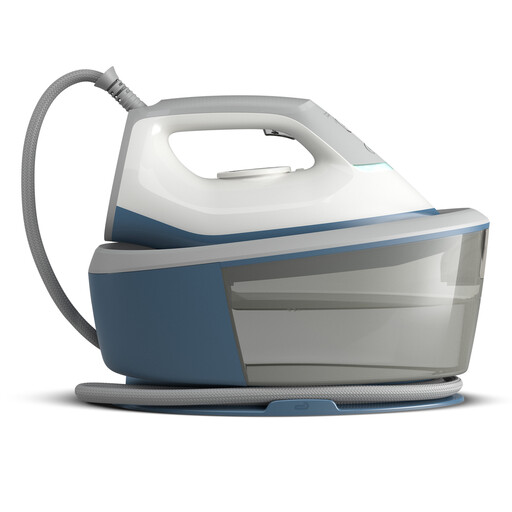
Why This Fits Their Persona: Suitable for households that iron frequently and want a separate steam station with a larger tank and high-pressure operation.
The specifications identify both continuous steam at 110g/min and a 1.4L tank, giving a clearer indication of ironing capacity than wattage alone.
Ceramic soleplate, 300g steam boost, 6-bar pump pressure and Smart Calc-Clean reminder.
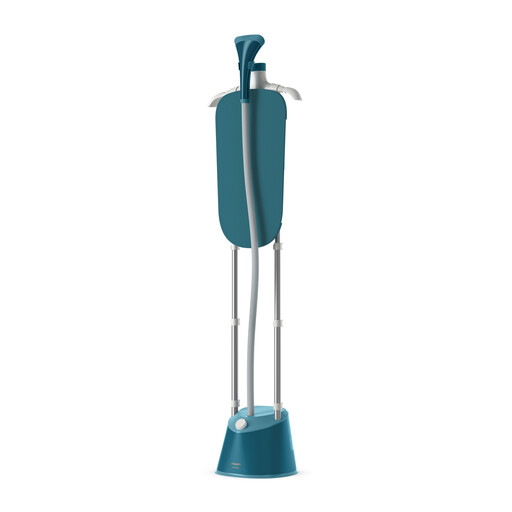
Why This Fits Their Persona: A standing garment steamer for busy professionals or families refreshing several hanging garments in one session.
The 1.8L detachable tank and adjustable double poles address the common limitations of small tanks and awkward garment positioning.
Up to 36g/min steam output, three steam settings, integrated StyleBoard and approximately 45-second heat-up time.
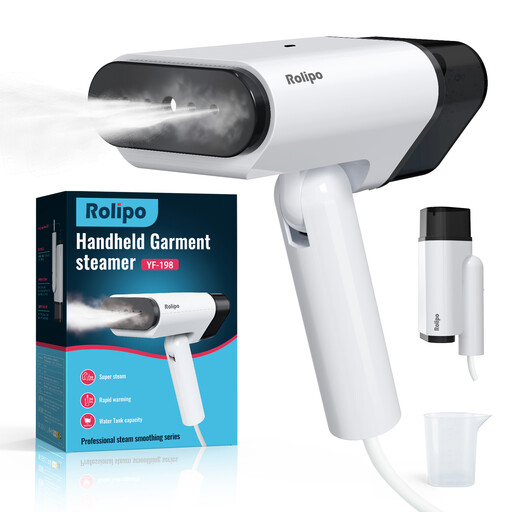
Why This Fits Their Persona: Its foldable handheld format is suited to suitcases, office drawers and quick garment refreshes away from a full ironing setup.
The foldable design makes portability an explicit feature, while the handheld format avoids carrying a separate ironing board for light touch-ups.
One-button operation, foldable construction and an integrated anti-leak water tank.
If cupboard space is limited, consider an over-door ironing board such as the Addis 107cm x 37cm model. It folds away while hanging over a suitable interior door, but check the door’s hinges, panels and load capacity first.
For occasional touch-ups, the Minky Ergo Table Top Ironing Board measures H4 x W34 x L70cm, folds flat and has non-slip feet for use on a stable worktop. It is more appropriate for shirts, trousers and school uniforms than large bedding loads.
A full-size adjustable board remains practical for frequent ironing. The Tower model’s cotton cover, felt and foam underlay, angled iron rest and cord holder are useful features to compare when stability and working space matter.
We have compiled a complete, real-time list of products that fully satisfy these strict selection criteria and UK safety regulations.
Running cost depends on wattage, usage time and electricity pricing. A lower-powered handheld steamer may use less electricity per minute, but it can take longer or require multiple sessions. Compare the appliance’s rated power with the time needed for your usual clothing load.
Always check the garment care label first. Steamers may be suitable for many ironable fabrics, but delicate materials, trims and embellished garments require particular care. Keep the steam head moving and avoid directing hot steam towards skin.
Lifespan depends on frequency of use, storage conditions and the condition of the frame, locking mechanism and cover. Inspect the board regularly, keep the cover dry and replace it when padding becomes thin or damaged. A board should not be used if it becomes unstable.