Hotel buffet buyers
Match the quantity and opening unit to expected uptake. The listed formats include a 30-cake triple pack, twin packs sold by weight and six wrapped portions of three cakes.


For a hotel breakfast buffet with predictable uptake, a larger pack can supply a loose display if staff open only what they expect to use and follow its storage directions. Separately wrapped three-cake portions offer a different opening unit, but do not suit a plan to offer one cake at a time. Compare the exact pack’s cake count, after-opening instructions and allergen information before ordering.
Match the quantity and opening unit to expected uptake. The listed formats include a 30-cake triple pack, twin packs sold by weight and six wrapped portions of three cakes.
Plan how cakes will be presented, how opened packs will be stored and how guests can obtain allergen information for the product served. The Food Standards Agency’s guidance covers allergen information for prepacked and non-prepacked food; Food Standards Scotland sets out information requirements for non-prepacked food in Scotland.
Start with the serving unit, then decide how much to open at each replenishment. Check storage and allergen details for the exact product rather than treating similar-looking cakes as interchangeable.
| Priority | What to check | Your needs |
|---|---|---|
| Quantity | Check cake count as well as pack weight. Waitrose lists 30 cakes in the McVitie’s triple pack; Sainsbury’s lists 24 cakes in two 141 g packs. | I want to open enough for the expected breakfast service without treating a full family pack as the minimum display quantity. |
| Serving format | Check whether guests take loose cakes, mini cakes or a wrapped portion. Tesco lists six McVitie’s snack packs containing three cakes each. | A wrapped pack would suit my serving plan only if offering three cakes together makes sense; a single-cake display calls for a different opening routine. |
| Storage | Read the instructions for the chosen pack. The McVitie’s triple-pack listing calls for airtight storage after opening; Tesco’s 2 × 150 g own-label pack also says to consume it within two days of opening. | If uptake changes from one breakfast to the next, I need a replenishment routine that follows the pack’s after-opening directions. |
| Allergen information | Check the delivered variant and how it will be served. The Food Standards Agency distinguishes prepacked and non-prepacked food; Food Standards Scotland says information on the presence of the 14 allergens in non-prepacked food must be available to potential consumers before purchase. | Guests need accurate information about the cakes on this buffet, including when staff remove them from their original packaging. |
| Recipe | Do not transfer one pack’s allergen statement to another. Sainsbury’s 24-cake listing warns against use by customers with a milk allergy; Ocado’s M&S listing warns about nut and peanut allergy. | When I change product or presentation, I need to recheck the information staff use for that particular cake. |
Warnings differ between the checked Sainsbury’s and M&S products, so a previous pack’s information may not describe a substitute.
Check each delivered variant and keep the information given to guests aligned with the cakes actually served.
A cake count, an inner-pack weight and a wrapped three-cake portion describe different serving units.
Use the hotel’s expected servings to decide how many cakes or wrapped portions to open, and check the unit shown on each pack.
Opening more than the service uses leaves cakes to handle under that product’s after-opening instructions.
The checked Sainsbury’s 24-cake listing and a Tesco 30-cake listing showed out-of-stock notices; a product page alone is not an order confirmation.
Confirm the exact format with the supplier before planning it into the buffet, and reassess the serving unit and allergen details if substituting another product.
The checked original-orange listings include a 30-cake triple pack and six snack packs of three cakes.
Tesco lists an own-label orange Jaffa-cake twin pack containing 2 × 150 g.
The checked own-label listing describes 24 orange Jaffa cakes in two 141 g packs.
Ocado lists a distinct 125 g dark-chocolate orange Jaffa-cake product, half coated in chocolate.
Waitrose lists own-label mini Jaffa cakes in a 125 g pack, alongside separately listed McVitie’s products.
These McVitie’s options cover a triple pack, a larger 80-cake pack and wrapped three-cake snack portions. Choose between them using your expected buffet servings and the way you intend to present the cakes.
 No image available
A triple-pack option for replenishing a loose display when expected uptake justifies opening it. The corresponding McVitie’s triple-pack listing describes 30 cakes and instructs airtight storage after opening; check the delivered pack’s directions and allergen information before service.
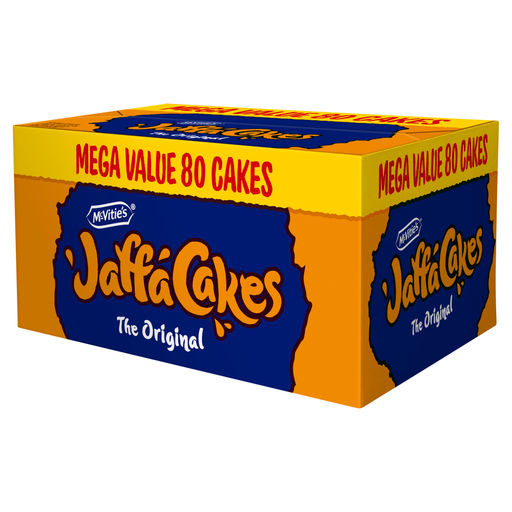 No image available
The stated 80-cake quantity is worth comparing with the hotel’s expected servings before opening a larger supply. Check the delivered pack for its inner-pack arrangement, storage directions and allergen information rather than assuming it opens like the triple pack.
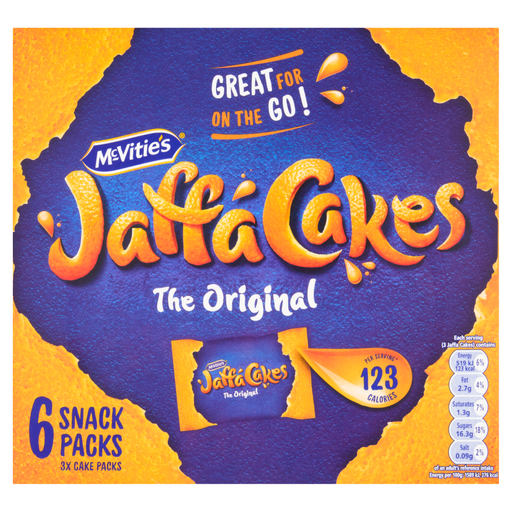 No image available
Six three-cake snack packs offer a separately presented portion instead of a loose single cake. This format does not fit a one-cake serving plan; check the exact pack’s ingredients and allergen information rather than assuming it matches the triple pack.
Start with the hotel’s expected servings and the actual serving unit. The checked McVitie’s triple pack contains 30 cakes, while its snack-pack format has six portions of three; neither count tells you how many guests will take a portion.
The checked listings describe packaged cakes and give storage directions, not cooking instructions. Follow the delivered product’s directions and the hotel’s food-handling procedures when presenting them.
Follow that product’s after-opening instructions. The checked McVitie’s triple-pack listing calls for airtight storage, while Tesco’s own-label twin-pack listing also says to consume the cakes within two days of opening.
Use the delivered product’s label to identify the cakes actually served, and keep the information given to guests accurate if the product changes. The Food Standards Agency’s guidance requires food businesses to provide allergen information for prepacked and non-prepacked food; Food Standards Scotland sets out requirements for non-prepacked food in Scotland.
It can change how the food is classified. Food Standards Agency guidance distinguishes loose food from food packaged by a business at the place it is offered or sold; if hotel staff pack cakes before guests select them, check which rules apply to that presentation and location rather than assuming the loose-food information approach still applies.