Sugar-conscious tea-break shoppers
If you want to keep Jaffa cakes alongside your tea, compare the sugar figure on the pack with the number of cakes you expect to serve. A lower figure per cake and a lower figure per 100g answer different questions.


To choose Jaffa cakes with less sugar in your tea-break portion, compare products by sugars per 100g, then check the figure for the number of cakes you intend to eat. M&S lists 47.2g sugars per 100g, compared with 49.6–51.1g for the other four products in the retailer listings examined here; that difference does not establish a reduced-sugars claim. If you prefer a familiar product, serving fewer cakes is another way to change the amount in your portion.
If you want to keep Jaffa cakes alongside your tea, compare the sugar figure on the pack with the number of cakes you expect to serve. A lower figure per cake and a lower figure per 100g answer different questions.
When several people share a pack, check whether its nutrition figures refer to one cake or a stated serving. Read the current ingredients and allergen information for everyone who will eat them.
If you use total carbohydrate figures when comparing food, sugars alone will not tell you the total carbohydrate in your portion. University Hospitals Sussex NHS Foundation Trust advises using packaged-food labels to check carbohydrate information.
Start with a like-for-like per-100g comparison, then use the pack’s serving information to work out what your tea-break portion represents.
| Priority | What to check | Your needs |
|---|---|---|
| Sugar concentration | Compare total sugars per 100g on the exact packs. M&S lists 47.2g, Sainsbury’s 49.6g, Asda and the McVitie’s 10-cake listing 50g, and Waitrose minis 51.1g per 100g, according to their respective retailer listings. | I’m willing to consider another recipe if its per-100g figure differs, but I won’t treat the lowest figure in this group as a reduced-sugars product claim. |
| Tea-break portion | Check whether the stated figure is per cake or per serving, then count the cakes you plan to eat. Sainsbury’s lists 6.2g sugars per cake; Waitrose lists 12.8g per 25g serving of minis, not per mini cake. | If I’d rather keep a familiar Jaffa cake, the number I put on the plate matters more to my portion than choosing a different pack size. |
| Energy alongside sugar | Read energy and sugars on the same per-100g basis. M&S lists 407kcal per 100g for its Dark Chocolate Jaffa Cakes, while the checked Sainsbury’s Orange and McVitie’s 10-cake listings give 387kcal and 376kcal per 100g respectively. | A lower listed sugar concentration would not, on its own, tell me which of these products has less energy per 100g. |
| Ingredients and allergens | Read the ingredients and allergen statement on the pack you receive. Retailer product information can change, and the checked products have different ingredient and allergen information. | When I’m sharing Jaffa cakes, I need to check the current pack for anyone with a relevant food allergy before serving it. |
| Total carbohydrate | If total carbohydrate is relevant to your food-label comparison, check its figure for the portion as well as the sugars figure. University Hospitals Sussex NHS Foundation Trust explains how to use packaged-food labels for carbohydrate information. | I want the figures for the amount being eaten, rather than relying on sugars alone to represent total carbohydrate. |
M&S lists 47.2g sugars per 100g for its Dark Chocolate Jaffa Cakes, below the other four retailer figures compared here. That limited comparison does not establish a reduced-sugars claim; GOV.UK says nutrition claims must follow applicable rules.
Use the pack-specific per-100g figures to compare products, and check energy separately rather than assuming the two measures move together.
Waitrose’s 12.8g sugars figure applies to a 25g serving of Mini Jaffa Cakes. The per-cake figures on the regular-cake listings use a different portion basis.
Compare recipes per 100g, then use each pack’s serving information for the amount you intend to eat.
The checked products have different ingredient and allergen information, which matters independently of their sugar figures.
Check the delivered pack’s current label before serving it to someone with a food allergy.
These retailer listings offer pack-specific figures for comparison; a brand’s inclusion here does not describe every product it makes.
Original Jaffa Cakes are a reference point if you prefer the familiar orange, sponge and chocolate combination.
Its own-label Orange Jaffa Cakes provide a regular-size comparison.
Its own-label 150g Jaffa Cakes offer another regular-cake comparison.
Dark Chocolate Jaffa Cakes offer a different recipe to compare by the listed sugar concentration.
Mini Jaffa Cakes offer a different serving format to consider.
These McVitie’s packs are options for keeping a familiar Jaffa cake while deciding how many to serve with tea. Their pack formats differ; neither is presented as a reduced-sugars recipe.
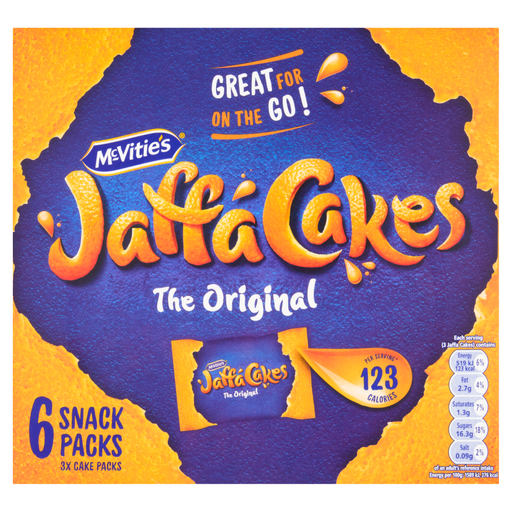 Image unavailable
The 3-cake pack format gives you a defined group of cakes to count when setting out a tea-break portion. This is a 198g pack containing six 3-packs; check its own nutrition label for the sugars in the amount you serve.
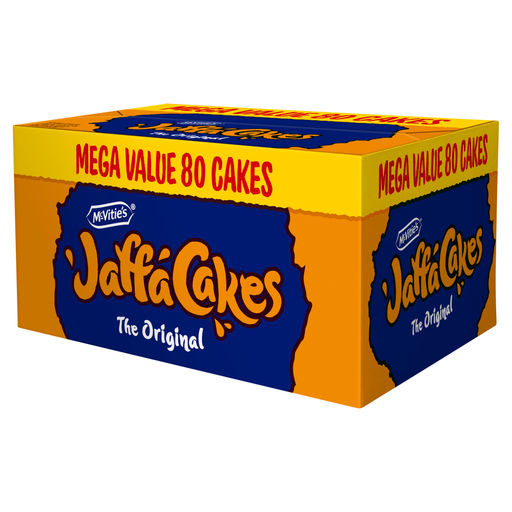 Image unavailable
This 80-cake, 1.07kg format suits a household choosing portions from a larger pack. Count the cakes served and use this pack’s own label for its nutrition figures rather than applying a per-cake figure from a different pack.
No. Cake sizes can differ, so compare sugars per 100g before checking the amount in your portion. A lower figure in this small product comparison does not establish a reduced-sugars claim; GOV.UK says nutrition claims must follow applicable rules.
No. The NHS explains that total sugars on a nutrition label can include sugars from sources other than free sugars. Use the label’s total-sugars figure for like-for-like product comparisons, not as a measured free-sugars amount.
No. Check total carbohydrate for the portion as well as sugars. University Hospitals Sussex NHS Foundation Trust explains how packaged-food labels can be used to assess carbohydrate when that information is relevant to your food choices.
Use the delivered pack’s current nutrition, ingredients and allergen information before serving it, particularly if someone has an allergy. The checked retailers warn that product information can change; ask the retailer or manufacturer about a discrepancy.
Follow the storage instructions on the pack you receive. The checked Sainsbury’s, M&S, Asda and Waitrose listings advise keeping their products in an airtight container after opening.