Families planning holiday snacks
A wrapped pack can be convenient to take out, but check how many cakes it contains before deciding what to serve. McVitie’s snack-pack serving is three cakes, not one.


For a familiar Jaffa cake on a summer outing, compare sugars per 100g when choosing a recipe, then sugars per cake or stated serving when deciding how many to take. A smaller portion does not make the recipe reduced sugar. If the sugar content matters more than the cake’s format, compare a different snack on its own label rather than treating a Jaffa-cake-flavoured bar as a Jaffa cake.
A wrapped pack can be convenient to take out, but check how many cakes it contains before deciding what to serve. McVitie’s snack-pack serving is three cakes, not one.
Use the per-100g figure to compare recipes of different cake sizes. Then look at the per-cake or serving figure for the quantity you expect to eat; neither a small cake nor a gluten-free label establishes a reduced-sugar recipe.
Check the ingredients and precautionary warnings on the exact pack for each guest. The declared allergens differ between the conventional and gluten-free products described below.
Start with the kind of snack you want: a Jaffa cake with a planned portion, a comparison between Jaffa-cake recipes, or a different food altogether. Then use the relevant figures and pack information to make that choice.
Choose this when: The sponge, orange filling and chocolate matter more than finding a different recipe.
Bear in mind: Serving fewer cakes changes the amount eaten, not the cake’s sugar concentration; a McVitie’s wrapped snack pack contains three cakes.
Choose this when: You want to compare labelled sugar figures on the same per-100g basis.
Bear in mind: A lower figure among the products compared here does not establish that a pack is sold as reduced sugar; ingredients and allergens also differ.
Choose this when: The sugar figure matters more to you than having a Jaffa cake.
Bear in mind: A Jaffa-cake-flavoured bar is a different food. Check its ingredients and serving information rather than assuming it will be used like a cake.
| Priority | What to check | Your needs |
|---|---|---|
| Sugar in the recipe and portion | Compare sugars per 100g for recipes of different cake sizes. Read sugars per cake or stated serving for the amount you plan to offer. | I want to distinguish a change in recipe from a change in how many cakes are served. |
| Pack format | Check the number of cakes in each wrapper and the pack’s storage instructions, particularly after opening. | For a day out, I want a pack that is practical to carry without mistaking one wrapper for one cake. |
| Ingredients and allergens | Read the exact pack’s ingredient declaration and any separate precautionary warnings. Check these again if buying for someone with an allergy. | A gluten-free cake still needs to meet each guest’s other ingredient requirements. |
Cake sizes differ. Sainsbury’s lists 50g sugars per 100g and 5.4g per cake for McVitie’s Original x10, against 49.6g per 100g and 6.2g per cake for its own-label orange cakes. The per-cake figures alone give a different impression from the equal-weight comparison.
Compare per 100g for the recipe, then use the per-cake figure to plan a portion. Neither comparison by itself establishes a reduced-sugar claim.
McVitie’s describes a serving in its six-pack snack format as three Jaffa cakes. Eating the whole wrapper is therefore different from having one cake.
Check the wrapper’s cake count and nutrition panel before deciding how many packs to take or serve.
Product listings for a similarly named original McVitie’s 10-pack have shown differing sugar information. That matters when the precise recipe is the reason for your choice.
Use the nutrition information on the exact physical pack, rather than an unexplained sugar-reduction statement in a listing, to make the comparison.
These labelled products provide points of comparison, not a list of reduced-sugar Jaffa cakes. Figures and ingredient warnings apply to the named products and pack formats.
Original Jaffa cakes and a snack-pack format containing six wrapped servings of three cakes.
Gluten-free Jaffa cakes for shoppers seeking that specific product attribute.
Dark Chocolate Orange Jaffa Cakes in the 125g product listed by Ocado.
Own-label orange Jaffa cakes in a 150g pack of approximately 12 cakes.
Own-label Jaffa cakes in a 150g pack.
Own-label orange Jaffa cakes in a 2 × 150g twin pack.
These McVitie’s options cover wrapped servings and larger packs of familiar Jaffa cakes. Choose by the quantity and format you expect to use, and check the exact pack’s nutrition information if sugar content drives the decision.
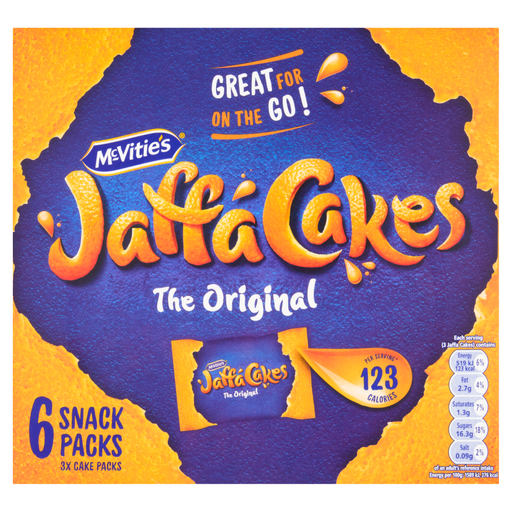 Image unavailable
The wrapped three-cake portions offer a way to take Jaffa cakes on an outing. Each wrapper contains three cakes, so check the exact pack’s sugars per serving and allergen statement before serving.
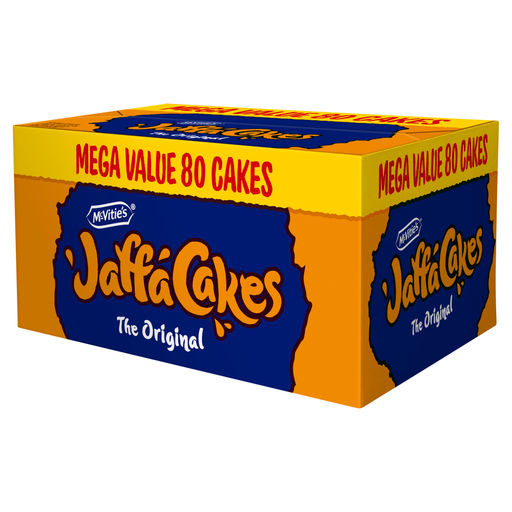 Image unavailable
The 80-cake pack gives you a larger quantity from which to serve a chosen number of cakes. Check its own nutrition panel for the sugar figure relevant to that portion, and read the allergen statement before sharing.
 Image unavailable
The 330g triple-pack format is another option when planning several occasions. Check the exact pack’s sugars per 100g and per serving rather than assuming that a larger pack changes the recipe; read its allergen information as well.
Not necessarily. Compare labelled sugars per 100g to assess recipes on the same weight basis, then use sugars per cake or serving to decide how much to offer. A smaller cake can contain less sugar per piece without having less per 100g.
Follow the instructions on that pack. Tesco’s checked twin-pack instructions say to keep it in a cool, dry place and, once opened, use an airtight container and consume it within two days; do not assume every brand gives the same instructions.
No. Schär describes its Jaffa cakes as gluten-free, but its product information lists egg and soya and warns of possible hazelnut and milk traces. Check the pack against each guest’s ingredient requirements.
No. The sugars figure on a food label is total sugars. NHS guidance distinguishes this from free sugars, so the label figure alone cannot establish an exact share of a child’s free-sugars allowance.