
24/7 Customer Support

Free returns

Same-day & Next-day Delivery

Quality Guaranteed

Unlock Your Welcome Offers: FREE Delivery | Up to 80% OFF | Free 30-day JoyPlus trial
Download the APP
Japanese Ramune drinks are known for their bright fruit flavours, lively fizz and distinctive marble-sealed bottles. They are popular with fans of Japanese food and culture, anime and gaming and anyone looking for an unusual soft drink for parties or picnics.
However, not every Japanese soda offers the same experience. Before buying, UK shoppers should check the bottle format, flavour, country of origin, pack size and ingredient information rather than relying on colourful packaging alone.
The name “Ramune” describes a style of Japanese soft drink, not necessarily the manufacturing location of every flavour. Some products are made in Japan, while others are produced elsewhere to a Japanese-style recipe.
For example, several flavours in the Japanese Drink Bundle are listed as made in Japan, while the melon flavour is listed as produced in China. If country of origin matters to you, check the individual product description and the packaging before ordering.
The classic Ramune carbonated drink uses a Codd-neck glass bottle with a marble stopper. This creates the familiar opening ritual, but it also means the bottle must be handled carefully. Canned Sangaria Ramune offers a similar fruity soda profile without the marble-opening experience.
A can may be more convenient for lunchboxes, outdoor events or recycling, whereas a glass marble bottle is more suitable when the presentation is part of the occasion.
Japanese soft drinks are generally sweetened carbonated beverages, and several listed products contain around 39–46 kcal and approximately 9.7–11.4g of sugars per 100ml. A 200ml bottle can therefore contain roughly 19–26g of sugar, depending on the flavour.
Recipes also vary. Strawberry and melon options may contain added colours, while some products list preservatives or high-fructose glucose syrup. Allergen information can differ between flavours and production facilities, so always read the current UK packaging, particularly if buying for children or anyone with food allergies.
Choose between:
A marble bottle is not resealable once opened in the usual way. For that reason, it is sensible to chill only the quantity you expect to drink and consume the opened drink promptly.
Fruit-flavoured Ramune covers a wide range of tastes:
If you are buying for a group, an assorted Japanese drinks bundle avoids committing to one flavour. For personal use, a six-pack of one flavour may offer better consistency.
Check the following before purchase:
Serve Ramune well chilled, and avoid vigorous shaking before opening. For marble bottles, remove the seal, place the supplied plunger over the marble and press firmly. The marble should remain in the bottle neck chamber; do not attempt to remove it.
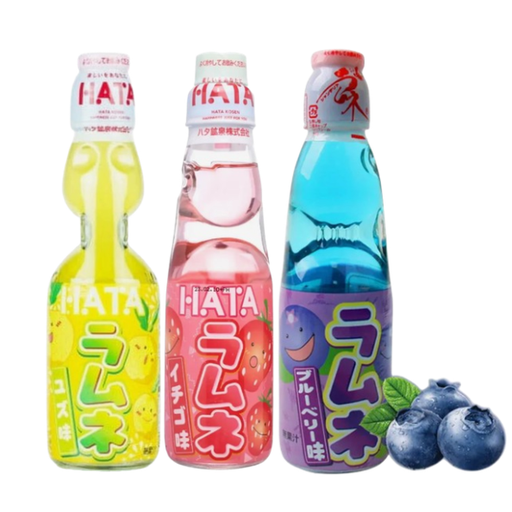
Why This Fits Their Persona: Three 200ml flavours provide a practical introduction to Japanese Ramune drinks without requiring a larger assorted bundle.
The product information identifies individual flavours and nutrition details, helping you compare rather than assume that all Ramune recipes are identical.
Three 200ml bottles; includes fruit flavours such as yuzu, blueberry and strawberry.
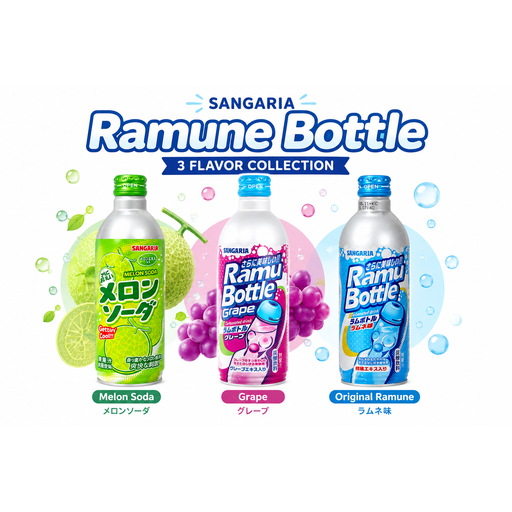
Why This Fits Their Persona: A three-bottle collection offers larger 500ml formats for shoppers who prioritise extended serving sizes and flavour variety.
The listing sets out the flavour-specific ingredients and allergen notes, including the wheat allergen listed for the grape flavour.
500ml bottles; melon, mixed fruit and grape flavours; made for chilled serving.
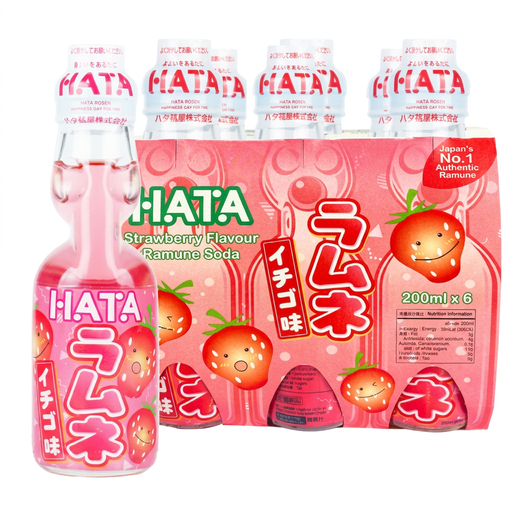
Why This Fits Their Persona: A six-pack is convenient for parties, family occasions or regular chilled servings when one bottle is unlikely to be enough.
The six-bottle quantity is clear, while the listing also flags possible traces of soya or milk and advises checking the package.
Six 200ml glass bottles; strawberry flavour; suitable for sharing and event serving.
For the traditional festival-style experience, choose a glass bottle with a marble stopper. It creates a memorable opening activity and works well for themed parties, anime gatherings and Japanese food nights.
For easier transport and simpler opening, consider Sangaria Ramune Fruit Flavoured Soda 250g x 3pcs in aluminium cans. The product is listed as made in Japan and provides a 250g serving format without the glass or marble. Cans should still be chilled before serving and must not be frozen.
Those looking for a single distinctive bottle may prefer Hatakosen Ramune Yuzu Carbonated Drink 200ml, Hata Blueberry Ramune Carbonated Drink 200ml or Hata Strawberry Ramune Carbonated Drink 200ml. Compare the flavour-specific ingredients before adding them to your basket.
We have compiled a complete, real-time list of products that fully satisfy these strict selection criteria and UK safety regulations.
Chill the bottle first and do not shake it. Remove the outer seal, detach the plastic plunger and position it over the marble. Press down firmly with your palm until the marble drops into the neck chamber. Drink carefully and do not try to remove the marble.
Ramune is intended to be consumed soon after opening because carbonation and flavour gradually decline. Product guidance varies, but several listings recommend finishing it the same day or within 24–48 hours. Refrigerate any remaining drink and follow the instructions on the actual packaging.
Children should be supervised when opening and drinking marble-bottle soda. The glass bottle and marble present safety and choking hazards. Always check the ingredients, colourings, sugar content and allergen statement before serving.