Casual afternoon snack sharers
A jelly-sweet tray, tub or set of bags can work when family, friends or colleagues will share the pack. Check its stated serving information rather than treating the whole container as one portion.


Choose jelly sweets when fruity, chewy flavours or a pack to share suit the afternoon; choose boxed chocolates when the recipient specifically wants chocolate, particularly if the snack is also a gift. Either format needs a pack-level check: size and serving information matter for portioning, while ingredients, allergens and dietary claims vary between products.
For an afternoon snack, start with who will eat it and whether the pack is meant to be opened together or handed over as a gift.
A jelly-sweet tray, tub or set of bags can work when family, friends or colleagues will share the pack. Check its stated serving information rather than treating the whole container as one portion.
Both jelly sweets and chocolates come in gift-style packs. Let the recipient’s preference for fruity, chewy sweets or chocolate decide, then check the ingredients of the particular assortment.
Dietary suitability differs even within one brand’s jelly range. Haribo describes its Jelly Beans as suitable for vegans, while mixed sharing products can contain gelatine; check the claim and ingredients on the exact pack.
Decide between fruity sweets and chocolate first, then choose a format that fits the people eating it. For either route, use the exact pack for ingredient and portion decisions.
Choose when: The people sharing prefer fruity or chewy sweets, or a casual sweet selection suits the occasion.
Bear in mind: A mixed box is not automatically vegetarian or vegan, even if another product from the same brand is.
Choose when: Chocolate is the recipient’s known preference and the afternoon snack is also a gift.
Bear in mind: Gift presentation does not tell you whether the ingredients or pack size suit the people who will eat it.
| Priority | What to check | Your needs |
|---|---|---|
| Pack format | Check whether it is a single bag, a tray, a tub or a gift assortment. Look at the pack size and whether it contains separate packs. | For a group, I want something I can put out or divide up. For a present, I want a format that suits the recipient as well as the occasion. |
| Ingredients and dietary claims | Read the exact product’s ingredient list and any vegetarian or vegan statement. Haribo labels its Jelly Beans suitable for vegans, but that claim does not apply to every Haribo assortment. | If I am avoiding gelatine or buying for someone with a dietary preference, I need the claim to apply to this particular pack. |
| Serving information | Compare the stated serving basis with the total pack. Sainsbury’s lists a 25 g portion for its 480 g Haribo Sharing Medley Gift Box; Asda describes its 600 g Haribo Sharing Tub as containing approximately 24 packs. | A large box might serve several people or several occasions. I want to decide how much to put out rather than use the whole pack as one snack. |
| Allergens and current label | Check the current pack’s ingredients and allergen information, particularly if an allergy or intolerance affects the purchase. Retailer listings may not reflect a later recipe or label change. | When I am buying for someone with an allergy, I need to confirm that the pack I actually receive is suitable for them. |
A claim on one sweet does not cover a mixed assortment. Haribo describes its Jelly Beans as suitable for vegans, while gelatine can appear in its mixed sharing products.
Check the ingredient list and dietary statement for the exact product, size and variant you plan to buy.
Pack weight and serving basis answer different questions: Sainsbury’s 480 g Haribo Sharing Medley lists a 25 g portion, and Asda’s 600 g Haribo tub contains approximately 24 packs.
Decide how many people the pack is for, then use its stated serving information when putting sweets out.
Ingredients and dietary information can change, which matters particularly when the sweets are for someone with an allergy or intolerance.
Read the current physical label at purchase or delivery. If it is unclear, ask the retailer or manufacturer before serving the product.
The Department for Education’s school-food guidance addresses food and drink provided in state-funded schools in England; it is not a single rule for every UK school.
For food supplied by a school, identify the relevant nation and use the school’s catering and compliance process rather than a consumer snack listing.
These ranges illustrate different sweet and gift formats; a brand or retailer name alone cannot establish an individual pack’s ingredients or dietary suitability.
Haribo has fruit-flavoured jelly sweets alongside gift and sharing formats.
Rowntree’s is relevant to shoppers considering fruit-flavoured sweets in a sharing-bag format.
Tesco lists jelly and chewy sweets as well as boxed chocolates and gifts, making the two formats straightforward to compare.
Sainsbury’s lists a mixed Haribo Sharing Medley Gift Box with pack and serving information.
Asda’s Haribo Sharing Tub listing is a reference for shoppers considering a large tub rather than a smaller box.
M&S lists jelly sweets with vegetarian and vegan filters for shoppers browsing by dietary preference.
These options cover fruity sweets in sharing bags or tubs and a separately packed konjac jelly snack. They are choices within the jelly-sweet side of the decision, not a comparison of chocolate products.
 No image available
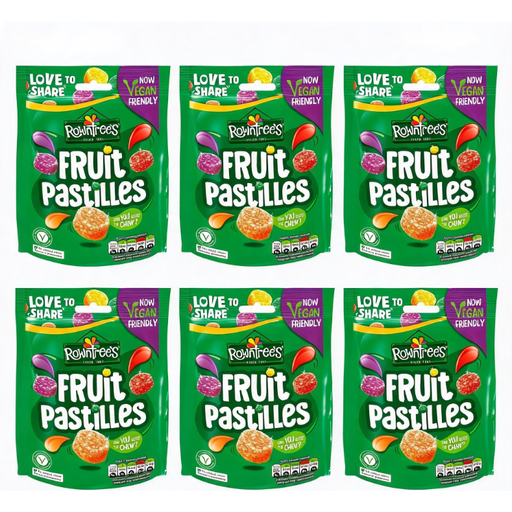
Six 143 g bags offer separate packs for sharing or keeping for another occasion. The product is described as suitable for vegans; check the current label if that claim or the ingredients matter to you. Keep the listed choking caution in mind when buying for children under 4.
 No image available
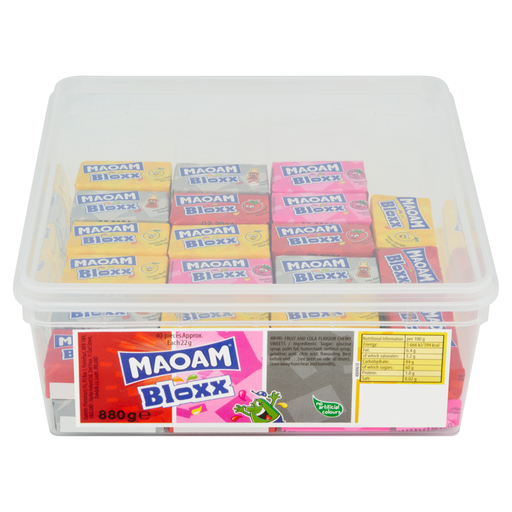
The 880 g tub contains about 40 individually wrapped fruit- and cola-flavoured pieces for sharing over time. Its listed ingredients include gelatine, so choose a different product if the people eating it avoid gelatine.
 No image available
Six pouches provide separately packed jelly portions rather than a shared tub of chewy sweets. The listed instructions say to chew thoroughly and not swallow a whole pouch at once; the product is not suitable for children under 4, and adult supervision is advised for older children. It contains sweeteners, and the listing warns of possible allergen traces, so check the current pack when buying for someone with an allergy.
 No image available
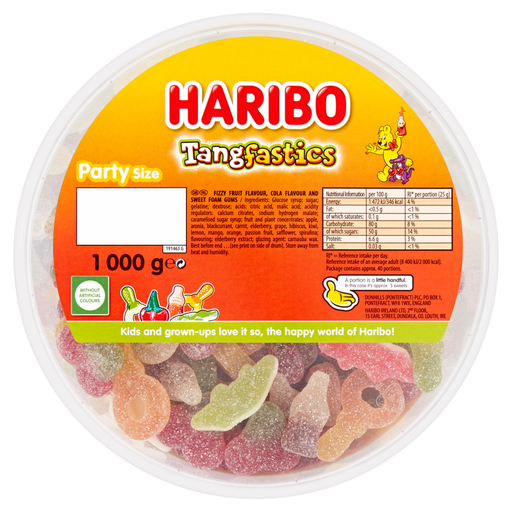
This fruit- and cola-flavoured tub is a format for putting sweets out to share. Its listing describes approximately 40 portions on a 25 g basis and lists gelatine. Use the current pack label for nutrition comparisons and keep the tub away from heat and humidity as directed.
No image available
The 175 g share-size bag contains assorted fruit flavours for informal sharing. Its ingredients list includes gelatine; check the current label for serving and ingredient information. The product description also warns of a choking risk for children under 4.
Choose according to the recipient’s preference: a jelly-sweet box suits someone who wants fruity, chewy sweets, while boxed chocolates suit someone who specifically wants chocolate. Both come in gift-style formats, so check the particular pack’s ingredients and size as well as its presentation.
Not necessarily. Haribo describes its Jelly Beans as suitable for vegans, but mixed Haribo sharing products can contain gelatine; check the ingredients and dietary statement on the exact box rather than applying another product’s claim to it.
Compare the stated serving information with the number of people eating. Sainsbury’s lists a 25 g portion for its 480 g Haribo Sharing Medley Gift Box, while Asda describes its 600 g Haribo Sharing Tub as containing approximately 24 packs; neither total pack size is a single serving.
Use the listing to narrow your choices, then check the current physical pack before the sweets are served. Sainsbury’s advises customers to read the label because product information can change; ask the retailer or manufacturer if the label leaves an ingredient or allergen unclear.
Use the school’s catering and compliance process instead of treating a retail product listing as a school-food decision. The Department for Education says its school-food guidance explains requirements for food and drink provided in state-funded schools in England; it does not establish a rule for every UK nation.