Parents packing an occasional treat
If sweets are going into a lunchbox, check whether the pack contains separate portions rather than a sharing pouch. Read the serving information, total sugars, ingredients and age warning on the exact product.


For an occasional sweet treat, choose a multipack only if its individual portions and label information suit the child and the setting; a sharing pouch is not the same as separate lunchbox portions. Check the stated serving and total sugars, ingredients and age warnings. For a routine school-day snack, consider a non-confectionery option instead; the NHS advises keeping the frequency and amount of sugary foods low.
If sweets are going into a lunchbox, check whether the pack contains separate portions rather than a sharing pouch. Read the serving information, total sugars, ingredients and age warning on the exact product.
Check the named product rather than relying on the brand. Nestlé Confectionery UK identifies several Rowntree's lines as vegan, but says other lines in the range are not suitable for vegans or vegetarians.
Distinguish food provided by a school from a parent-packed snack. The Department for Education's school-food guidance concerns provision in state-funded schools in England; check the applicable nation's requirements and the individual school's packed-lunch policy.
Start with the pack format and stated portion, then check the label against the intended eater and where the snack will be used.
| Priority | What to check | Your needs |
|---|---|---|
| Portions and sugars | Check the number and weight of the individual packs, whether they are separately sealed, and the serving used for the total-sugars figure. Do not treat a per-sweet serving as a per-pouch figure. | I want to plan an occasional portion without dividing up a sharing bag or mistaking the whole pouch for the labelled serving. |
| Ingredients and dietary fit | Read the exact product's ingredients, allergen information and vegan or vegetarian statement. Formulations can differ within a brand. | A brand name alone will not tell me whether this particular sweet meets a gelatine, vegetarian or allergen requirement. |
| Age information | Look for age-related choking warnings on the current pack and follow any instructions for the product. | For a younger child, I need to check the warning on the sweets I am buying, not just the multipack format. |
| School setting | Establish whether the food is parent-packed or school-provided, then check the relevant nation's requirements and the school's policy. Retail promotion rules address a different activity. | If this is for a school day, I want to know which rules or policies apply to that particular snack. |
A larger pouch does not provide separately sealed portions. Tesco lists Rowntree's Pick & Mix as a 150 g sharing bag, with 11.6 g total sugars per nine sweets.
If separate lunchbox portions matter, confirm the size and sealing of each pack and compare nutrition using the serving actually stated on its label.
Those descriptions do not replace a sugar check. Tesco lists 53.5 g total sugars per 100 g for Rowntree's Pick & Mix; Marks & Spencer lists 65.9 g for Fruit Jellies, and HARIBO lists 66 g for Jelly Beans.
Use flavour and dietary statements to check preference or ingredient fit, and the portion information to decide whether the sweets fit an occasional treat.
Department of Health and Social Care guidance addresses specified retail promotions of in-scope foods in England. The Department for Education's guidance addresses food provided in state-funded schools in England; neither scope establishes every school's packed-lunch policy.
Check the product and activity in question, the applicable nation and the individual school's policy before drawing a conclusion.
Ingredients and warnings can change. Marks & Spencer advises shoppers to read the product label rather than rely solely on online information.
Recheck the current pack when allergens, dietary suitability or a child's age affects the choice.
These examples help identify differences within ranges; they do not establish that a particular sharing bag is a multipack of individually sealed portions.
The range includes Fruit Pastilles, Fruit Gums, Jelly Tots, Randoms and Pick & Mix.
Its jelly-sweet range includes Jelly Beans.
Its chewy-sweets range includes Fruit Jellies and products listed under vegan and vegetarian filters.
These fruit-sweet multipacks are options to examine for an occasional mid-morning treat. Check each product's current packaging before deciding whether its portions suit a lunchbox.
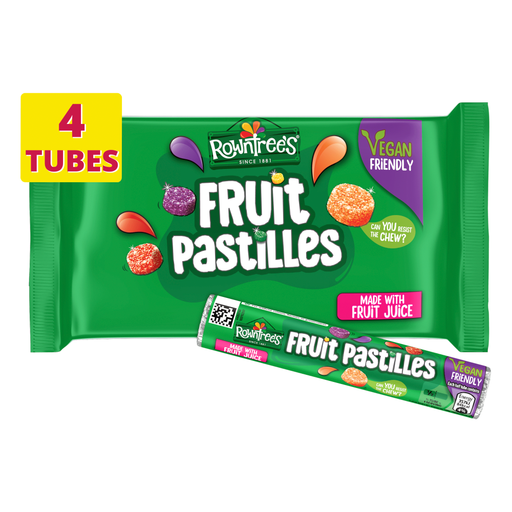 No image available
The stated four-pouch format gives you a unit size to consider for an occasional portion. Check whether the pouches are individually sealed, how the label defines a serving and any age warning before packing one for a child.
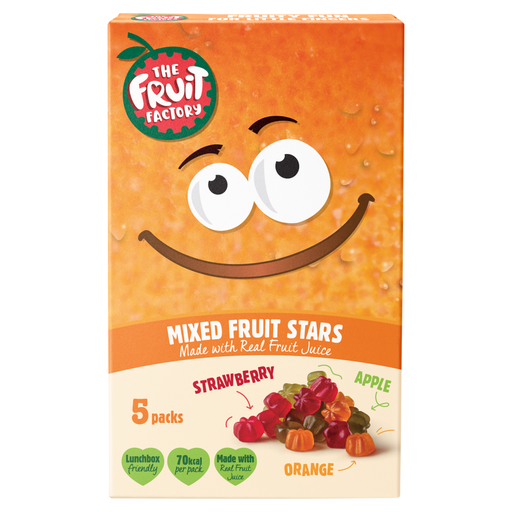 No image available
The five-pack format may be relevant when planning separate treats. Confirm each pack's weight, sealing and sugar declaration, and read the age warning on the current packaging before choosing it for a child.
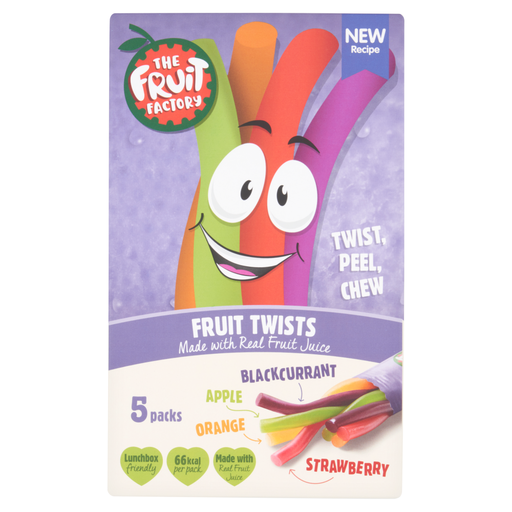 No image available
The five-pack format offers another fruit-sweet option to assess for an occasional snack. Check portion weight, sealing, sugars and the current ingredient and allergen label; the product information identifies wheat starch and an age-related choking warning.
Do not assume they are suitable. The Department for Education's guidance concerns food and drink provided in state-funded schools in England, while the Requirements for School Food Regulations 2014 define confectionery to include non-chocolate sweets. Check the requirements that apply to the provision in question; for a parent-packed snack, check the school's own policy separately.
The Department of Health and Social Care's England guidance addresses specified location and volume-price promotions of in-scope products, not a general ban on multipack sales. Whether a particular product and promotion fall within those restrictions requires a product-specific check.
Read the total-sugars figure alongside its stated serving and the per-100 g figure; neither automatically gives the amount in one pouch. Tesco, for example, lists 11.6 g total sugars per nine sweets for Rowntree's Pick & Mix. The NHS distinguishes the total sugars shown on labels from free sugars, so do not treat those figures as interchangeable.
No; check the exact product. Nestlé Confectionery UK says its core Rowntree's Fruit Pastilles, Fruit Gums, Pick & Mix and Jelly Tots products are vegan, but says Randoms, Squidgers and Lollies are not suitable for vegans or vegetarians. HARIBO describes its Jelly Beans as vegan.
Read the exact pack's age and choking warning. Marks & Spencer states that its Fruit Jellies are not suitable for children under 36 months because of a potential choking hazard; that warning should not be assumed to describe every other product.